
What if the person who appears to have everything together is actually carrying something they have never learned how to talk about?
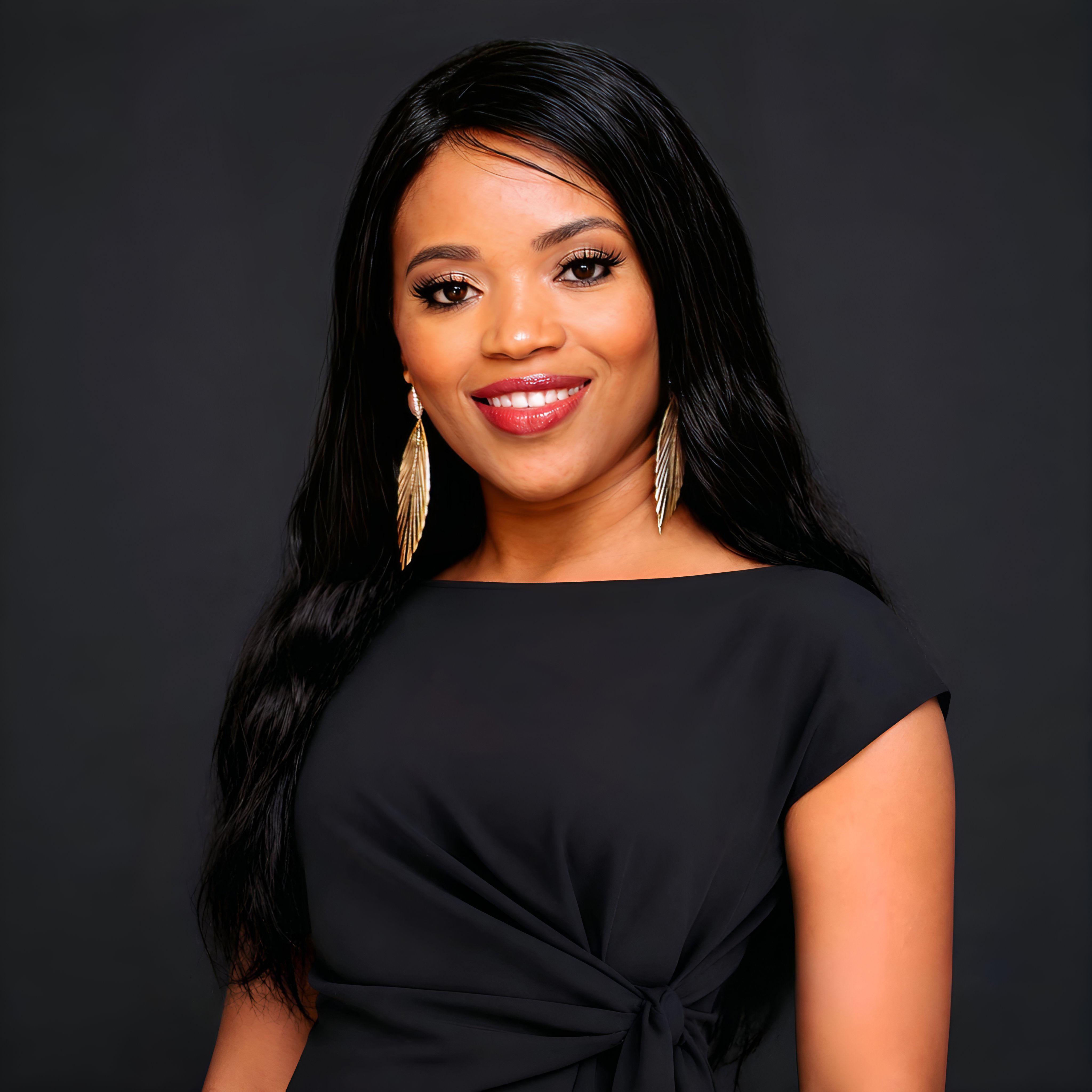
That question sits at the center of a fascinating conversation between Billy Dees and Dr. Nneka Oluoha, a Nigerian-American physician, novelist, and speaker whose work explores the intersection of mental health, culture, family, immigration, faith, identity, and resilience.
Dr. Oluoha is an internal medicine physician and hospitalist, caring for patients during some of the most difficult moments of their lives. But her experiences in medicine have also given her an unusual window into the stories people carry beneath the surface.
Those stories eventually became part of her work as a novelist.
Beyond the Statistics
One of the most interesting parts of the conversation is the role storytelling can play in helping people understand mental health.
Statistics can tell us how many people experience depression, anxiety, PTSD, or other mental health challenges. But numbers can become abstract. We hear them, process them for a moment, and then move on.
A story is different.
Dr. Oluoha explained that fiction allows readers to accompany a character through an experience. Instead of simply hearing that someone is struggling, we see the world through that person’s eyes. We become familiar with their circumstances, their relationships, their fears, and sometimes the things they cannot bring themselves to say.
That emotional connection can make an idea stick in a way that statistics often cannot.
And that is one of the reasons her novel, Live for Me Nkem, came to life.
When Mental Health Becomes a Family Story
At the center of Live for Me Nkem is Nkem, a Nigerian woman living in America who has struggled with chronic mental illness but has buried those struggles because mental health is not something she believes she can openly discuss.
Eventually, her struggle affects much more than Nkem herself.
Her husband finds himself carrying the family while watching his wife disappear emotionally. Her children see their mother becoming someone they don’t fully understand. The entire family is affected by something that nobody seems prepared to talk about.
That is an important distinction.
Mental health struggles rarely exist in isolation. Even when one person is experiencing the illness, the people around them can experience confusion, fear, frustration, exhaustion, and helplessness.
The story also explores the importance of empathy. Nkem’s husband initially struggles to understand what is happening. As the story develops, however, he begins to recognize that his wife’s behavior isn’t simply a matter of choice or willpower.
And eventually, Nkem learns to communicate what she needs—but she doesn’t do it alone.
She gets help.
Asking for Help Isn’t Always Easy
Billy and Dr. Oluoha also discussed something that sounds simple but can be remarkably difficult: asking for help.
People often create explanations for their struggles.
I just need to be stronger.
I just need some rest.
Things will get better when I make more money.
I just need someone to help with the kids for a few days.
Sometimes those things may genuinely help. But they can also become ways of explaining away a deeper problem.
Dr. Oluoha pointed out that forming a bond of trust between a patient and physician can be critical because people are much more likely to disclose what is really happening when they feel safe doing so.
That observation extends well beyond medicine.
Whether it’s a doctor, family member, friend, counselor, or someone else we trust, the ability to say “I’m not okay” can be the first step toward actually getting better.
Culture Can Shape What We Are Willing to Say
Dr. Oluoha’s Nigerian background adds another important dimension to the conversation.
She described growing up in a culture where certain mental health conditions were often hidden or treated as something to be ashamed of. Conversations that are more common today were once much more difficult to have.
She also discussed the expectations placed on people based on age and gender, particularly expectations placed on women.
Those cultural expectations can become deeply embedded in the way people see themselves—and in what they believe they are allowed to say or do.
But Dr. Oluoha’s experience also illustrates that culture isn’t necessarily something that has to dictate every aspect of a person’s identity.
Identity Isn’t Just One Thing
The conversation took an interesting turn when Billy and Dr. Oluoha discussed identity.
We often talk about identity as though every person has one defining characteristic that explains who they are.
Dr. Oluoha sees it differently.
She describes identity as fluid and made up of many different roles. She is a physician, a mother, a wife, and a Nigerian woman. Which part of that identity becomes most prominent can depend on the circumstances.
At work, she is a physician.
With her children, she is their mother.
In another setting, another part of her identity may become more prominent.
That idea challenges the notion that we have to reduce ourselves—or anyone else—to a single label.
Perhaps that’s particularly important in a world where people are often encouraged to sort themselves and everyone around them into increasingly narrow categories.
A person is rarely just one thing.
The Immigrant Experience Isn’t Always What We Imagine
Dr. Oluoha also shared some of her experience coming from Nigeria to the United States approximately twelve years ago.
Like many immigrants, some of her expectations were shaped by stories, movies, and the experiences of people who had already made the journey.
She imagined America somewhat like New York City: tall buildings, busy people, stable jobs, and plenty of money.
Then she arrived in Southern California.
There were fewer skyscrapers than she expected—and considerably more heat.
Her story is a reminder that the idea of a country can be very different from actually living there. Immigration isn’t simply a physical move from one place to another. It can involve recalibrating expectations, adapting to cultural differences, and figuring out where the various pieces of your identity fit.
Empathy Requires More Than an Opinion
Billy also brought up the difficulty of understanding people whose circumstances are very different from our own.
Homelessness provided one example.
It’s easy to reduce a complicated problem to a slogan: They just need a job.
Or to reduce it to another slogan: It’s all because of housing costs.
Reality, of course, can be considerably more complicated.
People can struggle with a variety of issues that affect their ability to function, maintain relationships, manage finances, or navigate modern society.
That doesn’t mean every explanation is equally valid or that every problem has an easy solution.
It does mean that understanding another person requires something more than immediately assigning blame.
That’s where empathy comes in.
And empathy doesn’t necessarily mean agreeing with someone. It means making an effort to understand what their experience might actually be before deciding that we already know the answer.
Writing as an Act of Resilience
For Dr. Oluoha, writing itself has been a lesson in resilience.
She talked about the realities of writing while working as a physician and raising young children. Early on, she approached writing with a certain discipline, particularly because her demanding schedule meant she had limited opportunities to work on her manuscript.
But eventually she realized something important: writing was supposed to be a source of enjoyment and stress relief, not another obligation.
Her advice to aspiring writers was refreshingly practical.
Write about something you genuinely care about. Do the research. Explore lived experiences. Find the best way to tell the story.
And understand that there will be days when you love your story and days when you absolutely hate it.
When that happens, remember why you started.
Sometimes the best thing a writer can do is close the laptop and walk away for a while.
Then come back.
A Conversation About More Than Mental Health
The conversation between Billy Dees and Dr. Nneka Oluoha ultimately reaches well beyond the subject of mental health.
It is about the stories we inherit from our families and cultures.
It’s about the identities we construct.
It’s about immigration and adapting to a new country.
It’s about the expectations we place on ourselves.
It’s about what happens when success becomes so closely tied to our identity that losing a job, money, status, or position feels like losing ourselves.
And perhaps most importantly, it’s about the courage required to admit that we don’t have everything figured out.
Dr. Oluoha’s novel uses fiction to explore those ideas through people rather than statistics. And that may be the most powerful takeaway from the conversation.
We don’t always understand another person’s struggle because someone gives us the right statistic.
Sometimes we understand because someone tells us a story.
And sometimes, in recognizing ourselves—or someone we love—in that story, we finally find the words to ask for help.
Listen to Billy Dees’ conversation with Dr. Nneka Oluoha for a thoughtful discussion about mental health, culture, identity, immigration, empathy, family, and the power of storytelling.
 Perfect Media Productions, LLC