Special Forces to Fantasy Fiction: Mike Simpson on Military Experience, History, Reinvention, and the Stories We Tell

What do Army Special Forces, emergency medicine, hunting escaped Nazis, and writing fantasy novels have in common? In the case of Mike Simpson, they are all chapters in one rather extraordinary life.
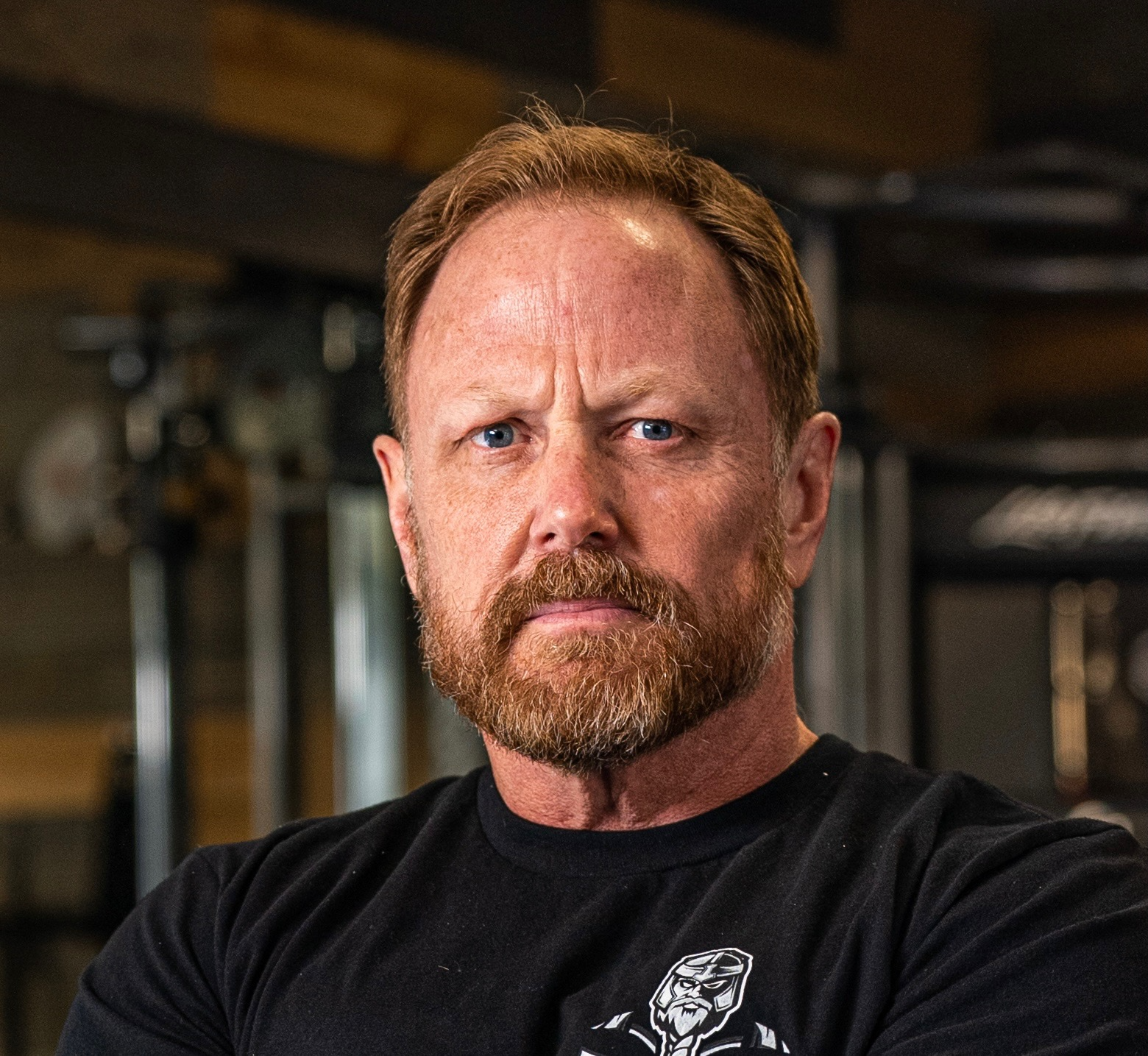
Bearded man in a black T-shirt posing in a gym
Mike Simpson

On this episode of The Billy Dees Podcast, I sit down with Mike Simpson, a former Army Ranger and Special Forces operator, emergency medicine physician, television personality, and now fantasy novelist. With 32 years of military service behind him, including six years in a Joint Special Operations Command (JSOC) Special Missions Unit, Simpson brings a perspective to the conversation that is difficult to manufacture. His experiences span combat operations, medicine, history, international investigations, and the creative world of fiction.

Hunting Hitler: Investigating History Without Starting With an Answer

One of the more unusual chapters in Simpson’s career was his involvement with the History Channel series Hunting Hitler. The premise was certainly attention-grabbing: could Adolf Hitler have escaped Germany at the end of World War II?

Simpson joined the production for its second season after being recruited based on his specialized military qualifications. The investigation took him to locations including Spain and Morocco, where the team examined historical evidence and explored possible escape routes.

What makes his account particularly interesting is the investigative philosophy he brought to the project. Rather than beginning with a predetermined conclusion, Simpson approached the assignment as an investigation. The objective was to examine the evidence, evaluate what could be established, and report what the findings suggested.

Our discussion moves beyond the television show’s premise and into the historical circumstances surrounding Hitler’s final days, his deteriorating health, the questions surrounding the identification of his remains, and the difficulty of separating documented history from speculation.

We also discuss how the world received information during World War II. Today, information can travel around the globe in seconds. That was certainly not the case in the 1940s. The ability of authoritarian governments to conceal atrocities, control information, and manipulate public perception was considerably different in an era before the internet and social media.

It is a reminder that understanding history requires more than recognizing familiar names. It requires understanding the circumstances, the people, and the environment in which events actually unfolded.

A Six-Thousand-Year-Old Hero and the World of Fantasy

Perhaps the biggest surprise is what Simpson decided to do after his military career.

Rather than following the familiar path of writing military thrillers, he chose fantasy.

His Fahlgrim Firebeard Saga centers on a character who has spent approximately 6,000 years protecting humanity and tracking down dangerous magical objects that could fall into the wrong hands.

Simpson describes the series as contemporary fantasy, with influences that bring together elements of Tolkien, Highlander, and Indiana Jones. The result is an imaginative combination of historical settings, mythology, adventure, and fantasy.

The character himself has a long history. In fact, Fahlgrim originated as a character Simpson played in Dungeons & Dragons decades ago. Eventually, he decided that this character deserved a much larger story.

We explore the relationship between mythology and storytelling, including the possibility that some ancient legends may have originated from people encountering things they couldn’t explain. Dragons, giants, elves, and other mythical creatures have captured the human imagination for generations. Simpson’s fictional universe takes a different approach: what if those things were real, and history simply remembered them as myth?

His third book even takes readers back to May 1945, during the final days of World War II, where Fahlgrim and an elven wizard are working with the Office of Strategic Services to recover Nazi plunder with potentially dangerous magical properties.

It’s an unusual blend of historical events and fantasy, but one that makes considerably more sense when you understand the author’s background.

Real-World Experience and the Craft of Writing

One of the more interesting parts of our conversation concerns how life experience influences creative work.

Simpson believes that good writing requires good observation. His characters are composites of people he has encountered throughout his military career, and many of their interactions reflect real conversations, leadership experiences, and observations about human behavior.

He even reads his dialogue aloud while writing, recognizing that something can look perfectly reasonable on a page but sound completely unnatural when spoken.

We also discuss the tendency for Hollywood to get military life wrong. From technical inaccuracies to the familiar portrayal of military officers as power-hungry villains, Simpson offers a firsthand perspective on the difference between cinematic storytelling and the realities of military service.

His point is an important one: people in uniform aren’t comic-book heroes, but they aren’t comic-book villains either. They are people, and portraying them convincingly requires understanding the environment in which they operate.

Reinvention: Why Life Doesn’t End at Forty

A recurring theme in this interview is the ability to reinvent yourself.

Simpson has experienced several distinct professional lives. He was an Army Ranger, a Special Forces operator, an emergency medicine physician, and now an author. Rather than viewing these as disconnected careers, he sees them as different chapters that have contributed to the person he is today.

That subject becomes especially meaningful when Simpson shares that he was diagnosed with prostate cancer while working on his second and third books. Although the cancer was isolated and treatable, the experience forced him to consider his own mortality and the importance of finishing what he had started.

His perspective is straightforward: if you’re still breathing, there is still an opportunity to do something different.

It’s a message that extends well beyond writing or military service. Too many people begin treating a certain age as the point where new ambitions should be abandoned. Simpson makes a compelling argument for doing just the opposite.

Military Readiness, National Security, and Lessons From History

The conversation eventually moves into more serious territory: the condition of the American military and the challenges facing national security.

Drawing on his 32 years of service, Simpson reflects on what he considers some of the military’s weakest periods, particularly the years leading up to September 11, 2001.

He discusses declining training emphasis, intelligence compartmentalization, reduced resources, and the importance of maintaining high standards even when the immediate threat environment appears less demanding.

One of his central observations is that military readiness cannot simply be switched on when a crisis arrives. The training, discipline, personnel, and institutional standards required for an effective fighting force have to be maintained before the next conflict begins.

We also examine the lessons of Vietnam, the transition from the Cold War, and the challenges of preparing for a different kind of warfare.

The war in Ukraine provides an important contemporary example. Drone technology, changing battlefield conditions, and the realities of peer-to-peer military conflict are forcing military planners to reconsider assumptions that may have been shaped by decades of fighting less conventional opponents.

Simpson emphasizes the importance of learning from people who are experiencing these conflicts firsthand and incorporating those lessons into American military training and preparedness.

Our discussion also explores America’s geographic advantages. Unlike many countries, the United States has two enormous oceans providing natural barriers, along with considerable agricultural resources and habitable land. Those advantages have shaped American security in ways that are sometimes taken for granted.

But geographic protection doesn’t eliminate every threat. We discuss terrorism, the possibility of unconventional attacks, and the psychological objective behind terrorism itself: creating fear and disrupting everyday life.

It is a sobering conversation about the difference between feeling secure and actually understanding what makes a country secure.

A Conversation That Goes Beyond the Headlines

What I particularly enjoyed about this interview is the range of experience Mike brings to the table. We move from World War II history to fantasy literature, from Hollywood’s portrayal of the military to the realities of national security, and from career reinvention to the importance of personal perspective.

There is no shortage of people willing to offer opinions about military affairs, history, or national security. There are considerably fewer who can draw on decades of firsthand experience to explain how those subjects look from the inside.

And then there’s the fantasy novelist who happens to have spent much of his life in some very real-world adventures.

This is exactly the kind of conversation I enjoy having on The Billy Dees Podcast: interesting people, unusual backgrounds, thoughtful perspectives, and subjects that don’t fit neatly into a single category.

Listen to the full conversation with Mike Simpson on The Billy Dees Podcast.

Connect with Mike Simpson

  • Website: drmikesimpson.com
  • Social media: Mike Simpson USA on Facebook, Instagram, and Reddit.
  • Books available through Amazon:
    • The Last Dungeon Crawler
    • Tears of the Dragon
    • The Sorceress in the Sundial

Note: The video version of the Billy Dees Podcast is now on Rumble.
Rage Bait, Political Miscalculations, Media Hypocrisy, and the Business of Keeping America Divided

Billy Dees and Cynthia Elliott tackle the midterm elections, political strategy, the attention economy, celebrity controversies, AI industry concerns, and the cultural debates shaping America and Europe.

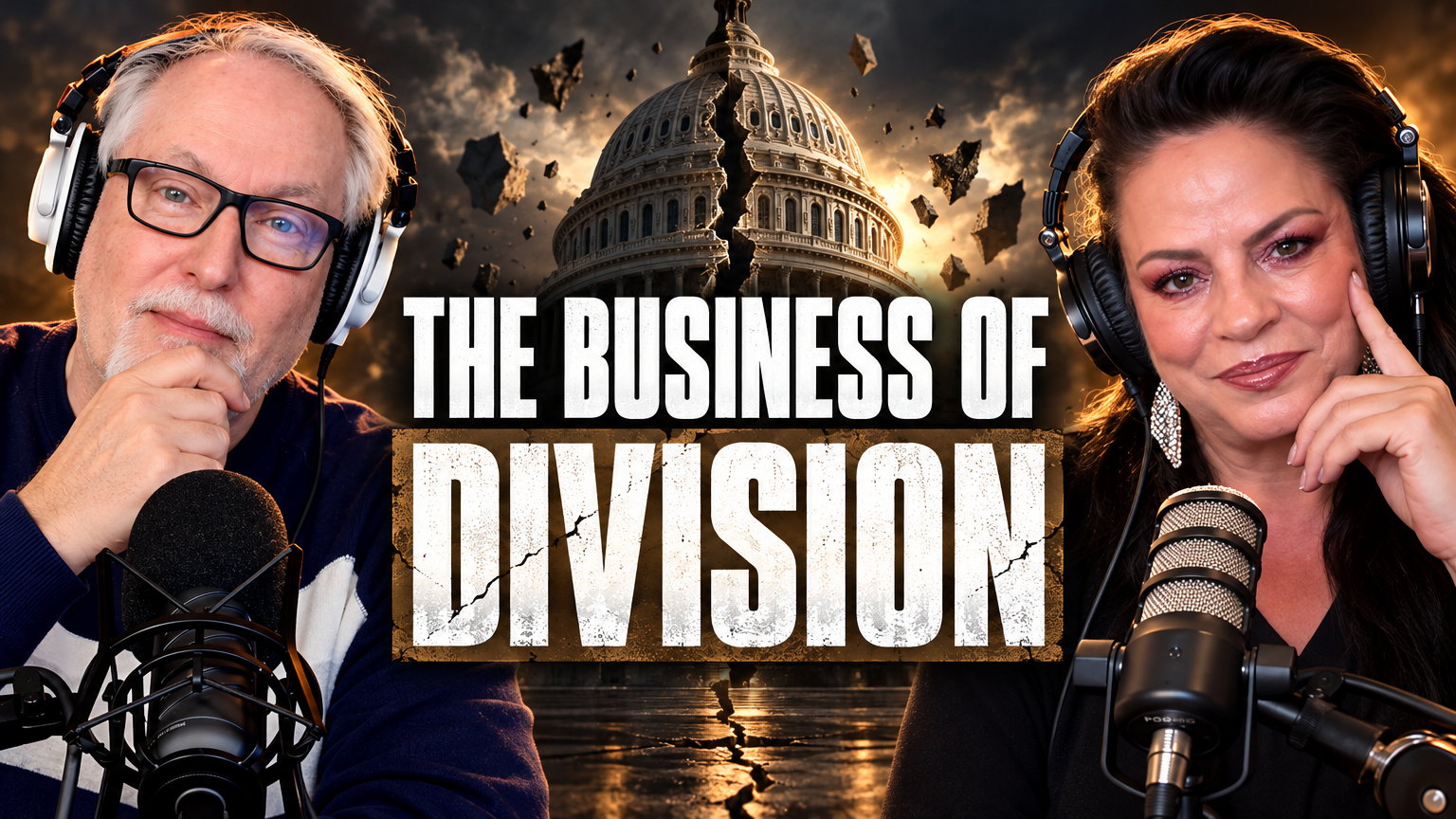
Podcast graphic featuring two hosts wearing headphones beside microphones, the U.S. Capitol in the background, and the title “The Business of Division.”

If there is one thing we seem to have an unlimited supply of these days, it’s outrage. Turn on the television, scroll through social media, or spend five minutes following the latest political controversy, and you’ll quickly discover that somebody is offended, somebody is being canceled, somebody is being accused of something, and somebody else is making money from all of it.

Welcome to the attention economy, where keeping people angry has become a remarkably effective business model.

On this episode of the Billy Dees Podcast, I am joined by returning guest Cynthia Elliott for a wide-ranging conversation that covers politics, media, culture, technology, and some of the increasingly uncomfortable questions facing American society.

We begin with the recent midterm elections and the political landscape, including the closely watched Ohio governor’s race between Amy Acton and Vivek Ramaswamy. The election provides an opportunity to examine more than just the results. We get into campaign strategy, candidate personalities, political branding, and the decisions that can make or break a campaign.

The Ohio race was particularly interesting because neither candidate generated overwhelming enthusiasm from everyone watching. We discuss the baggage each candidate brought into the race, the influence of wealth and political money, and the controversy surrounding the use of Amy Acton’s estranged mother in a campaign advertisement.

Regardless of where someone stood politically, the decision to use that particular family history as campaign material raised legitimate questions about judgment, strategy, and the boundaries of political campaigning. Sometimes a campaign doesn’t need its opponent to make a mistake. It simply needs to avoid making one itself.

And then there is the increasingly familiar problem of candidates who struggle with their own public image. Being wealthy, successful, or politically ambitious doesn’t automatically translate into leadership ability. Thin skin, arrogance, and an inability to read a room can be liabilities, particularly when voters are looking for someone they can trust.

The Media’s Outrage Machine

From politics, we move into something that has become almost impossible to avoid: rage bait.

A viral Ring camera video involving college students at Ole Miss becomes a national news story, raising questions about racial assumptions, social media amplification, and the speed at which public judgment is delivered.

There is a difference between calling out genuinely offensive behavior and turning every incident into a national referendum on American society. Context matters. Facts matter. And perhaps most importantly, the ability to distinguish between what we know and what we assume seems to be disappearing.

Cynthia and I discuss the role of legacy media in turning isolated incidents into larger cultural confrontations. Is the goal to inform the public, or is it to generate another round of outrage that keeps viewers watching?

The business model is not particularly complicated. Find something that makes people angry, give it a dramatic presentation, divide the audience into opposing camps, and let the argument continue on social media long after the original story has disappeared.

As I point out during the conversation, there are people on both sides of the political spectrum who have built careers around positioning themselves as protectors against some great threat. Their business depends on keeping that threat alive.

Cynthia makes an interesting observation: if Americans could find a way to stop treating each other as political enemies, a lot of people in the outrage business might suddenly find themselves looking for another line of work.

Perhaps it’s time to spend a little less energy fighting over red and blue and a little more time finding some purple in the middle.

Dave Chappelle, Comedy, and the Attention Economy

We also get into the controversy surrounding comedian Dave Chappelle and some of his recent remarks, including comments involving Charlie Kirk.

There was a time when comedy could push boundaries, offend people, and still make an audience think. Richard Pryor and George Carlin were masters of that particular art. They could make people laugh at something uncomfortable and then leave them thinking about what they had just heard.

But there is a difference between being provocative and simply trying to provoke.

Cynthia and I discuss how the attention economy has changed entertainment. Controversy generates attention, attention generates publicity, and publicity can translate into ticket sales, subscriptions, and revenue.

At some point, audiences have to ask themselves whether they are watching someone who is genuinely being funny or someone who has figured out that saying something outrageous is an effective way to stay relevant.

Not every controversial statement deserves a national discussion. And not every celebrity controversy deserves our participation.

Sometimes the best response is simply to move on.

Technology, Nvidia, and the Security Questions Behind Personal Decisions

The conversation takes another turn when Cynthia brings up developments surrounding Nvidia and allegations involving its leadership and a possible connection to Chinese intelligence.

The discussion explores the potential implications of personal relationships, corporate leadership, and national security, particularly when executives occupy positions of enormous influence within strategically important technology companies.

There is an important distinction between someone’s private life and decisions that could expose a company or sensitive information to outside influence.

When you’re operating at the highest levels of the technology industry, personal judgment can have consequences that extend well beyond your own household.

We discuss the risks associated with workplace relationships, executive behavior, corporate security, and the possibility that personal vulnerabilities can become organizational vulnerabilities.

In an industry as strategically important as artificial intelligence, those questions deserve serious attention.

The conversation also connects to Cynthia’s broader work through SoulTech, where her focus is human flourishing in the age of AI. As artificial intelligence becomes increasingly integrated into business, government, and everyday life, the human decisions surrounding that technology may prove just as important as the technology itself.

Immigration, Religion, and Europe’s Cultural Debates

One of the more contentious portions of the conversation involves immigration, religion, assimilation, and the cultural changes taking place throughout Europe.

Cynthia expresses strong concerns about what she sees as a growing disconnect between certain progressive political movements and the historical and cultural realities surrounding religious extremism, women’s rights, and individual freedoms.

We discuss the distinction between respecting someone’s right to practice a religion and examining political or ideological movements that may conflict with the principles of an open society.

These are difficult subjects, and they deserve more than slogans or accusations designed to shut down discussion.

Criticism of religious extremism should not automatically become hostility toward every individual who practices a particular faith. At the same time, protecting religious freedom does not mean abandoning the ability to question religious institutions, political movements, or cultural practices.

We also touch on the different approaches European nations have taken toward immigration, with particular attention to Poland, France, Germany, and the United Kingdom.

What happens when immigration policy, national identity, public safety, and cultural expectations collide? And what happens when governments appear unwilling or unable to have an honest conversation about the consequences?

These are questions that extend well beyond any single election or political party.

The Bigger Question: Who Benefits From All This Division?

One of the recurring themes throughout this episode is the relationship between attention, money, and manufactured outrage.

Whether we’re talking about political campaigns, cable news, celebrity controversies, social media personalities, or cultural disputes, there is often a financial incentive behind keeping people emotionally invested.

The more people argue, the more attention the argument receives. The more attention it receives, the more valuable it becomes.

And somewhere along the way, the actual issues that affect people’s lives get lost in the noise.

There is plenty to criticize on both sides of the political aisle. There are legitimate disagreements about immigration, economics, government, religion, technology, and the direction of the country. But meaningful discussion requires something that seems increasingly difficult to find: a willingness to examine issues without automatically treating everyone who disagrees as an enemy.

We cover a lot of ground in this conversation, and we certainly don’t agree on every subject. That’s part of the point.

Join Billy Dees and Cynthia Elliott for this wide-ranging episode covering politics, media manipulation, cultural controversies, artificial intelligence, and the increasingly complicated world we’re all trying to navigate.

Because if we’re going to spend this much time paying attention to the news, we might as well do a little thinking while we’re at it.

Also, a note for listeners:

We are now making our video presence known on Rumble. Please feel free to follow us there.

Herman Forwood on History, Political Tribalism, Government, and the Danger of Accepted Ideas

A promotional image featuring author Herman Forwood beside three book covers: 'Echoes of the Ancients,' 'Twilight of Democracy,' and 'Secrets & Murders.' Each book represents different genres: thriller/mystery, alternate history, and murder mystery/dystopian fiction. The background has a dark map design, and the text encourages exploring the books at HermanForwood.com.

What happens when we stop questioning the world around us? On this episode of The Billy Dees Podcast, Billy Dees sits down with author and podcaster Herman Forwood for a wide-ranging conversation about history, political division, modern government, international relations, and the growing influence of artificial intelligence. The discussion challenges listeners to look beyond familiar talking points and consider whether the ideas we accept as conventional wisdom deserve a closer examination.

Forwood is a lifelong student of history who takes an unconventional approach to exploring society. Rather than telling people what to think or forcing contemporary events into convenient historical comparisons, he uses thought experiments and fictional scenarios to challenge assumptions. His goal is not necessarily to provide definitive answers, but to encourage people to ask better questions.

And in a time when political discussions often resemble competing monologues rather than genuine conversations, that approach may be more valuable than ever.

When History Becomes a Political Weapon

One of the central themes of the conversation is how people use history to support what they already believe. Few historical figures are invoked as casually in modern political debate as Adolf Hitler. As Billy points out, comparing someone you dislike to Hitler has become a familiar rhetorical shortcut, often without much consideration of historical context.

Forwood argues that history is more complicated than simply identifying a past event that resembles something happening today. People can cherry-pick facts, select convenient comparisons, and construct arguments that reinforce their existing positions. The same historical record can be used to support opposing conclusions.

The conversation explores a deeper question: If societies repeatedly claim to have learned from history, why do they continue to make similar mistakes?

The Vietnam War, the Iraq War, and the consequences of foreign intervention provide examples for examining whether policymakers truly absorb the lessons of previous conflicts. Rather than declaring that two wars are identical, Forwood encourages a more productive discussion about the underlying decisions, assumptions, and institutional failures that can lead to repeated problems.

The challenge is not simply remembering what happened. It is understanding why people and institutions continue to make decisions that produce familiar consequences.

Political Bubbles and Competing Realities

Billy and Herman also examine the growing difficulty of having constructive conversations across political and ideological lines.

Man with dark hair and a trimmed beard, wearing a black shirt with blue accents, standing outdoors with arms crossed, smiling against a blurred natural background.
Herman Forwood

Billy reflects on an earlier era of American politics when political opponents could disagree sharply while still operating within a broadly shared understanding of the problems facing the country. Today, he worries that people increasingly inhabit separate information environments, where even basic facts and assumptions are disputed.

Forwood agrees that political tribalism has become a serious obstacle to meaningful discussion. In his view, the problem is not merely that people belong to different political camps. It is that someone’s argument may be rejected before it is even considered simply because it comes from the perceived opposing side.

That creates a troubling dynamic: A person can make a valid point about a shared problem, yet the point itself becomes irrelevant because of who is making it.

When political identity determines what someone is willing to accept as true, productive disagreement becomes increasingly difficult. The conversation asks whether people can recover the ability to examine ideas on their merits rather than automatically defending the positions of their preferred political tribe.

Can Fiction Make Us Think Differently?

Forwood’s approach to writing offers another way to explore these issues. He believes fiction can challenge social conventions in ways that straightforward commentary sometimes cannot.

His upcoming dystopian murder mystery, Murders and Secrets and Murders, grew in part from his observations about homeowners associations and the social dynamics of suburban communities. After moving from big-city life to the suburbs, Forwood became interested in the tribalism and boundaries that can develop even within seemingly ordinary neighborhoods.

His thought experiment takes the homeowners association concept several steps further. What if communities were organized around religion, intelligence, occupation, or other defining characteristics? What if living in one of these communities became the norm, while people who could not afford membership were left outside?

The premise is not simply an attack on homeowners associations. Instead, it asks readers to consider what happens when familiar social arrangements are expanded to their logical extremes.

A murder mystery provides a particularly useful vehicle for this exploration because the search for truth can expose the hidden tensions and darker realities beneath an apparently orderly society.

Forwood sees fiction as an opportunity to make readers reconsider ideas they might otherwise accept without question. Rather than delivering a lecture, a story can place readers inside an unfamiliar world and let them examine the consequences for themselves.

What Is the Role of Government in the Modern World?

The discussion then moves into one of its broadest subjects: whether Western governments are adapting to the societies they are supposed to serve.

Forwood questions whether political institutions designed in very different historical circumstances can adequately address the expectations and challenges of modern life. He points to growing public disengagement and the tendency for voters to swing between political extremes as signs that something may not be working as intended.

Billy adds a discussion of the American constitutional system, representative government, and the safeguards designed to prevent majority rule from becoming unchecked power.

The conversation also explores the differences between political systems and the assumption that one model of democracy can simply be exported to every society.

Examples involving Singapore, Norway, Iran, Iraq, and the Palestinian elections illustrate the complications of defining democracy and predicting its outcomes. An election may be conducted fairly without producing the result that outside observers prefer. A political system that works in one country may not translate easily into another with a different history, culture, or set of institutions.

The larger question is whether governments and their citizens are willing to discuss these complexities honestly.

Neither host nor guest offers a simple blueprint for reform. Instead, the emphasis is on asking whether political institutions are solving real problems and whether public debate has become too constrained by ideological labels to consider alternatives.

The Complicated Business of International Relationships

Foreign policy provides another opportunity to examine the gap between political rhetoric and real-world consequences.

Billy and Herman discuss the concept of frenemies—countries or political actors that may cooperate with the United States in certain circumstances while pursuing interests that conflict with American objectives in others.

The conversation revisits relationships involving Saddam Hussein, Saudi Arabia, Russia, and other international players, as well as the unintended consequences that can follow when governments support or empower particular actors for short-term strategic reasons.

Forwood argues that managing these relationships requires judgment, careful prioritization, and an understanding that international interests can change. Decisions made by one administration can create problems that subsequent administrations must confront.

The discussion also considers the influence of presidential advisers and the challenge of determining which recommendations will prove wise over time.

Foreign policy is rarely as simple as identifying friends and enemies. The difficult work lies in recognizing competing interests, anticipating consequences, and deciding when cooperation is useful—and when it becomes dangerous.

Artificial Intelligence: Innovation, Infrastructure, and Risk

Toward the end of the interview, Billy introduces a subject that is becoming increasingly difficult to ignore: artificial intelligence.

The discussion considers the potential for AI to be used by malicious actors, the vulnerabilities of critical infrastructure, and the challenges governments face in responding to rapidly advancing technology.

Forwood takes a critical look at today’s AI systems, arguing that current models should not be confused with human-like understanding or intelligence. He questions the enormous computing resources they require and suggests that the technology’s limitations are an important part of the public conversation.

He also challenges the assumption that regulation alone can eliminate the risks. Rules may create safeguards, but they cannot necessarily prevent determined bad actors from exploiting technology or guarantee that every possible danger has been anticipated.

Billy raises a related concern: Once powerful technology becomes widely available, attempting to prohibit it may not prevent hostile governments or individuals from developing and using it.

The exchange highlights a difficult balancing act. How do societies encourage useful innovation while preparing for misuse, infrastructure threats, and consequences that may not yet be fully understood?

It is a question that extends beyond the technology industry into national security, public policy, and the responsibilities of political leadership.

The Value of Asking Better Questions

What connects all these subjects—from historical comparisons and political polarization to dystopian fiction, government, foreign policy, and artificial intelligence—is a willingness to question accepted assumptions.

Herman Forwood is not presenting a single ideological answer to every problem. His approach is to examine familiar ideas, explore what might happen if they were taken further, and encourage readers and listeners to think through the implications.

That approach also reflects the spirit of The Billy Dees Podcast: thoughtful conversations that prioritize substance over political theater.

In an environment where every issue seems to demand an immediate opinion, perhaps one of the most useful things we can do is slow down long enough to examine the assumptions behind it.

History can inform us, but only if we are willing to look beyond the examples that confirm our beliefs. Fiction can challenge us, but only if we allow ourselves to consider uncomfortable possibilities. Democracy can function, but meaningful participation requires more than choosing a side and defending it at all costs. And technology can offer extraordinary possibilities while introducing risks that demand serious consideration.

The question is not whether everyone will agree. It is whether we can still have conversations that make disagreement worthwhile.

Listen to the full conversation with Herman Forwood on The Billy Dees Podcast. Explore the ideas, consider the thought experiments, and decide for yourself which assumptions deserve another look.

To learn more about Herman Forwood, explore his writing, essays, books, and other work at hermanforwood.com.

Military Strategy, Family Court Reform, and Making Government Work: Billy Dees Talks with Keith Barton

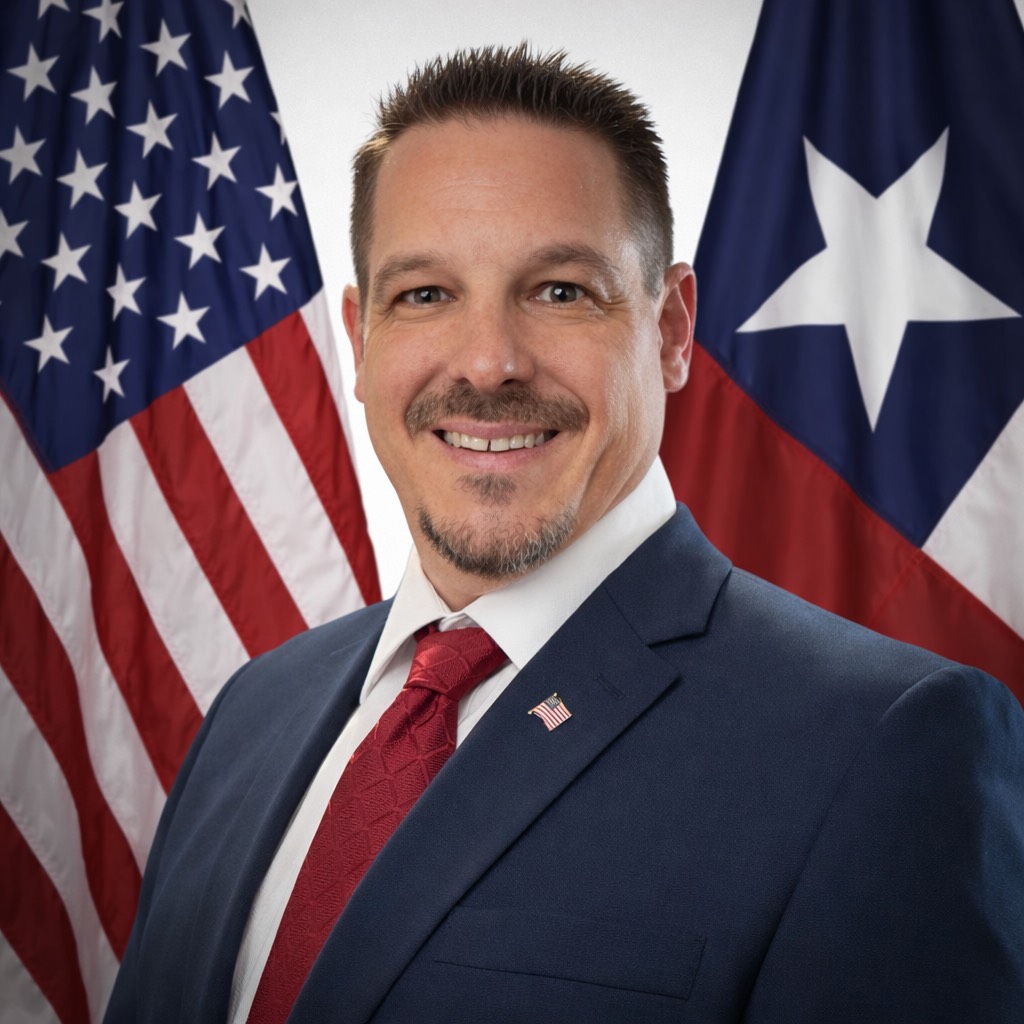
Portrait of a smiling man in a suit with a red tie, standing in front of the American and Texas flags.
Keith Barton

What happens when a 20-year Marine Corps veteran takes his experience in military aviation, logistics, and leadership and applies it to the problems facing American government? According to Keith Barton, the answer involves challenging conventional thinking, questioning entrenched systems, and bringing a little more accountability to the way things get done.

On this episode of The Billy Dees Podcast, Bill sits down with Keith Barton, a former Marine Corps aviator, author, congressional candidate, and advocate for family court reform. The conversation covers a wide range of subjects, from American military strategy and the lessons of Afghanistan to child custody laws, government spending, healthcare inefficiencies, and the influence of money in politics.

It’s a discussion about more than political talking points. Barton has a collection of ideas he believes could change how government operates, and he makes the case that many of the country’s problems aren’t necessarily unsolvable. Sometimes, the problem is the system itself.

From the Marine Corps to the Halls of Government

Barton brings an unusual background to the political conversation. A 20-year Marine Corps veteran, he served as a reconnaissance Marine, Huey helicopter pilot, logistics officer, and foreign adviser. His experiences have given him a firsthand perspective on military operations, leadership, and the challenges of carrying out a mission in complicated environments.

Bill and Barton begin by discussing the military’s warrior mindset, leadership, and the importance of keeping politics from interfering with military objectives. Their conversation turns to Afghanistan, Vietnam, and the broader question of what it means for the United States to win a war.

Winning the initial military engagement, Barton argues, is not the same as winning the larger conflict. He believes the United States has repeatedly struggled with the transition from defeating an opposing force to building the conditions necessary for a country to sustain itself.

The discussion also examines the ongoing conflict with Iran and the strategic decisions involved in confronting threats abroad. Bill raises questions about military objectives, the costs of prolonged engagements, and whether the United States has maintained the strategic advantage many Americans once took for granted.

Barton offers his perspective from a military and tactical standpoint, discussing the importance of appropriate equipment, sound planning, and understanding the difference between conventional warfare and insurgencies.

The result is a candid exchange about military strength, political decision-making, and the difficult choices involved in protecting American interests.

Family Court Reform: A Personal Fight with National Implications

One of the most significant portions of the conversation centers on Barton’s advocacy for family court reform.

His interest in the issue is personal. After taking his own custody case through a successful appellate court challenge in Florida, Barton began developing proposals aimed at changing the incentives and procedures he believes contribute to unfair outcomes for American families.

His central argument is that family courts should focus on the best interests of children without relying on assumptions about which parent is inherently better suited to raise them.

Barton questions why shared parenting arrangements are not more consistently reflected in custody outcomes, particularly when both parents are fit and capable. He also argues that federal funding structures can create unintended financial incentives that influence state family court systems.

During the interview, he explains his proposal to redirect federal funding away from the existing Title IV-D incentive structure and toward rewarding states for meeting measurable standards involving shared parenting, transparency, and compliance with their own laws.

He also advocates for greater judicial accountability, including clearer explanations of custody decisions and more transparent procedures.

For Barton, this is not simply a debate about fathers versus mothers. He believes the system should evaluate parents on their individual merits rather than gender-based assumptions, while preserving appropriate protections for children in cases involving serious abuse.

Bill and Barton discuss the emotional and financial consequences of contentious divorces, the importance of stable family environments, and the broader social costs that can follow when family relationships break down.

Whether listeners agree with Barton’s proposed solutions or not, the conversation raises important questions about how family courts operate, how decisions are evaluated, and whether existing policies consistently serve the children they are intended to protect.

Can Government Be Run More Like a Business?

Barton is also proposing a different approach to government efficiency.

Drawing on his experience in military logistics and large-scale distribution operations, he advocates applying Lean Six Sigma principles to federal government operations. The methodology, widely used in business and manufacturing, focuses on improving processes, identifying waste, measuring performance, and making continuous improvements.

Barton argues that government agencies should be held to similarly clear standards of efficiency and accountability.

His proposal, called the American Lean Act, would establish a framework for introducing targeted reforms through measurable performance goals, standardized procedures, and transparent reporting. Rather than attempting to dismantle government systems outright, he describes an approach designed to demonstrate improvements through individual legislative initiatives.

He also discusses proposals intended to address government waste, including his ideas for reviewing outdated legislation, improving oversight of organizations receiving federal funding, and increasing transparency around administrative costs.

The conversation moves beyond general complaints about government spending and into the practical question of how inefficiency might be identified and reduced.

Bill also raises an important distinction: not every government responsibility can be managed exactly like a conventional business. Healthcare, for example, involves human needs and risks that cannot always be evaluated through the same lens as manufacturing or commercial insurance.

Barton acknowledges that distinction while arguing that operational inefficiencies still create opportunities for meaningful savings.

The larger question is one taxpayers have been asking for years: Can government deliver better results without continually demanding more money?

Healthcare Costs, Shipping Regulations, and the Price of Inefficiency

The discussion of government efficiency leads into healthcare, where Bill questions the amount of money consumed by administrative layers that have little direct involvement in patient care.

Barton agrees that administrative overhead and inefficient supply chains deserve closer examination. He points to the potential for better logistics, improved coordination, and more effective management to reduce costs without sacrificing the services people need.

They also discuss prescription drug pricing and the challenges of making healthcare more affordable.

Another example involves the Jones Act, a federal shipping law that Barton argues contributes to high domestic shipping costs. He outlines his proposed Hall Act, which he says would create a middle-ground approach to increasing competition when domestic shipping companies do not accept available shipping contracts within a specified period.

Barton believes the proposal could improve shipping efficiency, reduce transportation costs, and eventually affect the prices consumers pay for everyday goods.

These proposals reflect a consistent theme throughout the interview: Barton believes that identifying the underlying causes of a problem is more useful than simply arguing about its symptoms.

Money, Influence, and the Political Process

No discussion of government reform would be complete without examining the influence of money in politics.

Bill raises questions about wealthy individuals, billionaires, campaign contributions, and the growing role of private wealth in shaping political priorities. The conversation considers whether voters can meaningfully limit that influence without infringing on constitutional rights.

Barton emphasizes personal responsibility, explaining that he intends to reject campaign contributions from industries whose interests could conflict with his policy positions.

He also argues that voters should pay greater attention to primary elections, when political parties are selecting the candidates who will eventually compete in general elections.

His message is straightforward: Voters should evaluate candidates based on their qualifications, integrity, and proposals rather than simply following the most recognizable name or the largest campaign budget.

For anyone frustrated with the political process, this portion of the conversation offers a reminder that elections are not just about choosing between two finalists. The choices made earlier can be just as consequential.

Keith Barton’s Vision for Congress

Barton is running for Congress in Texas in 2028, and his campaign is built around reforming systems he believes have become unnecessarily complicated, inefficient, or resistant to accountability.

In addition to the American Lean Act and his family court reform proposals, he discusses congressional term limits and the need for elected officials to remain connected to the people they represent.

He believes the federal government can benefit from clearer standards, better measurement, and a willingness to revise policies that fail to produce the intended results.

Barton is not approaching these issues solely as a political commentator. His proposals are informed by his background in military service, logistics, and operations, along with his personal experience navigating the family court system.

The question is whether the principles he describes can translate into workable legislation and gain enough support to become reality. That is where the discussion moves from theory into the challenges of American politics.

Beyond Politics: An Author with a Wide Range of Interests

Barton is also an author whose work spans several genres.

He discusses his Joey America children’s series, which introduces young readers to science, technology, engineering, and mathematics through engaging stories. He also writes standalone travel-friendly books designed to be completed during a short trip, along with military and science fiction thrillers.

Despite the variety of subjects, Barton says realism is a common thread throughout his writing. Even when exploring science fiction, he aims to make the stories as grounded and believable as possible.

His creative work offers another perspective on a guest whose professional life has included military aviation, logistics, public policy, and family advocacy.

A Conversation About Solutions, Not Just Complaints

Political conversations often get stuck in familiar territory. One side blames the other, everyone repeats their preferred talking points, and the audience is left wondering whether anything will actually change.

This episode of The Billy Dees Podcast takes a different route by exploring the specific proposals of a guest who believes government can work more effectively.

From military strategy and family court reform to healthcare logistics, shipping regulations, and government accountability, Keith Barton presents a broad set of ideas shaped by his own experiences and professional background.

Listeners may agree with some proposals and challenge others. That is part of the point. Serious conversations should leave room for questions, scrutiny, and thoughtful disagreement.

If you’re interested in public policy, military affairs, family law, or practical approaches to government reform, this episode offers plenty to consider.

Listen to Billy Dees and Keith Barton on the Billy Dees Podcast for a wide-ranging discussion about the problems Barton wants to solve, the reforms he believes are possible, and what it might take to make government more accountable to the people it serves.

Learn more about Keith Barton, his books, and his policy proposals at BartonForTexas.com.

Find the Billy Dees Podcast on major podcast platforms, and follow Billy Dees on X for new episodes, commentary, and updates.

What If History Took a Different Turn? A Conversation with Author Jon A. Gegenheimer

A man in a suit and glasses delivering a speech at a podium, with a bouquet on his lapel, and an American flag in the background.
Jon A. Gegenheimer

History is full of facts.

It is also full of things that never happened.

And that’s where things get interesting.

On the latest episode of the Billy Dees Podcast, I sat down with Jon A. Gegenheimer, a longtime attorney, elected court official, and author whose books take readers into the sometimes uncomfortable territory where history, fiction, law, morality, and human nature collide.

Gegenheimer describes his approach to historical fiction as essentially fact packaged as fiction. His novels are heavily researched and footnoted, with real historical people, places, events, and ideas providing the framework for stories that also allow room for imagination.

And then there is the bigger question:

What if?

That question sits at the center of his latest book, Churchill vs. Hitler: The Untold Golf Match That Changed History.

Yes, you read that correctly.

A golf match.

Between Winston Churchill and Adolf Hitler.

Three months before Hitler invaded Poland and World War II began.

The match never actually happened. That’s the point.

Gegenheimer’s alternative-history novel takes an event that could have happened, places it against a meticulously researched historical backdrop, and asks what might have followed. The story incorporates figures including Churchill, Sigmund Freud, Bernard Darwin, and Ian Fleming while exploring how Churchill’s supposed golf match with Hitler becomes a template for understanding his eventual confrontation with Nazi Germany.

It’s a fascinating premise because alternative history isn’t really about pretending the past was different.

It’s about understanding how easily it could have been different.

A Lawyer Who Became a Novelist

Gegenheimer’s background makes his approach to storytelling particularly interesting.

He spent decades working in law, including complex litigation, criminal law, bankruptcy, title law, and other areas of practice. He later moved into the administrative side of the court system, where he became involved in bringing technology into the justice system.

That legal background naturally finds its way into his fiction.

Trials, evidence, competing arguments, moral choices, and the consequences of decisions are recurring elements in his books. His novel The Griffin Murders, for example, is a murder mystery involving a Louisiana Supreme Court justice, a U.S. attorney, a series of murders, and a contentious issue involving the separation of church and state.

In other words, this isn’t simply fiction written by someone who happens to like history.

It’s fiction written by someone who has spent a considerable portion of his life watching people make decisions—and then deal with the consequences.

That’s fertile ground for a novelist.

Katrina, Creativity, and Starting Over

One of the more interesting parts of our conversation was how Gegenheimer became a writer in the first place.

Hurricane Katrina devastated New Orleans and disrupted virtually every aspect of his professional and personal life. With the courthouse shut down and his normal routine interrupted, he began looking for something productive to occupy his time.

Writing became part creative outlet, part intellectual exercise, and, as he described it, potentially a form of therapy following a traumatic experience.

His first major project grew from that period.

He began with September 11, 2001, and imagined a story extending decades into the future. The result was a futuristic work of historical fiction that attempted to project how history might unfold over several generations. Interestingly, some of the events he imagined in 2010 ended up looking less fictional as the years passed.

That’s another intriguing aspect of writing about the future:

Eventually, the future gets here.

And then you find out whether your imagination was actually imagination—or just a strangely early appointment with reality.

Churchill, Hitler, and the Problem With “What If?”

Our conversation eventually turned toward Winston Churchill and the question of leadership.

Gegenheimer’s interpretation of Churchill centers on his willingness to confront Hitler rather than appease him. He draws parallels between historical events surrounding World War II and contemporary questions about leadership and negotiation. Those comparisons are part of his broader interest in how lessons from history can inform the way people think about the present.

But the more interesting issue isn’t necessarily whether every historical comparison is perfect.

It’s the exercise of making the comparison.

History gives us the benefit of hindsight. Leaders don’t have that luxury.

They have incomplete information, competing advice, political pressure, personal biases, and sometimes only a narrow window in which to make a decision.

Then history gets to grade the paper.

That is one reason the “what if?” question can be so useful. It forces us to think about contingency—the possibility that a different decision, a different personality, or a different event could have produced a dramatically different outcome.

The Moral Dilemma

Another major theme of our conversation was morality.

Gegenheimer believes fiction can do more than entertain. He wants his stories to make readers think about reason, morality, competing perspectives, and the consequences of attempting to justify actions simply because someone believes the desired outcome is worthwhile.

That gets into one of the oldest questions in philosophy:

Does the end justify the means?

It’s an easy question to answer when you’re sitting comfortably on the sidelines.

It gets considerably harder when you’re the person standing in the middle of the dilemma.

That’s where good fiction can become more than escapism. Put a character into a situation where every available choice has consequences, and suddenly the reader has to participate in the decision.

There may not be a comfortable answer.

There may not even be an obvious answer.

And that’s exactly why moral dilemmas make good stories.

You Don’t Have to Quit Your Day Job to Write

There was also a practical side to our conversation that I think aspiring writers will appreciate.

Gegenheimer has written five stories over roughly two decades while maintaining his professional career and family life. His advice isn’t particularly glamorous—and that’s probably why it’s useful.

Write when you can.

Use the time you have.

Accept that some days—or even longer stretches—nothing may get written.

Then start again.

He describes writing as an incremental process and emphasizes persistence rather than expecting a first book to magically become a bestseller.

That’s probably good advice for almost any creative endeavor.

The glamorous part is publishing the finished work.

The unglamorous part is everything that happens before that.

History, Fiction, and a Crazy World

Near the end of our conversation, Gegenheimer talked about a future nonfiction project focused on a contemporary political figure and the events of the 21st century. He also discussed the growing role of artificial intelligence and his efforts to understand how AI might be incorporated into court functions while maintaining human oversight.

And that brought us right back to where the conversation began.

History.

Because we’re living through it.

Every day.

The strange thing about history is that people living through it rarely know which moments will eventually become the chapters everyone studies.

That’s the advantage of looking backward.

The disadvantage is that we don’t get to do that while we’re making the decisions.

Maybe that’s why books like Gegenheimer’s are interesting. They allow us to step outside the timeline for a moment and ask a question humans have been asking forever:

What if?

What if someone made a different decision?

What if a meeting happened that never happened?

What if two historical figures sat across from each other?

What if one event occurred three months earlier—or never occurred at all?

You can argue with the answers.

You can question the assumptions.

You can disagree with the author’s interpretation.

But if a story makes you stop and think about history, leadership, morality, and human behavior a little differently, it has accomplished something.

And that’s what I found particularly interesting about my conversation with Jon A. Gegenheimer.

It wasn’t simply a conversation about books.

It was a conversation about how we understand the past, how we imagine the future, and how much the decisions of individuals can change the course of history.

And yes, somehow, we managed to get there through golf.

That’s a pretty good reason to listen.

When Compassion Gets Turned Upside Down

A Billy Dees Podcast Commentary on False Compassion, Accountability, and a Society That Doesn’t Like Being Challenged

A middle-aged man with light brown hair and a beard is smiling while sitting next to a microphone, with audio equipment visible in the background.

What happens when compassion becomes so distorted that we begin feeling more sympathy for the person who committed the offense than for the person who suffered because of it?

That is the question at the heart of this Billy Dees Podcast commentary.

The episode begins with a thought from Archbishop Fulton Sheen, recorded decades ago, about what he called “false compassion”—the tendency to direct pity toward the person who committed the wrong rather than toward the person who was harmed.

That idea becomes the thread running through a much larger conversation about crime, mental health, victims, ideology, higher education, and what happens when a society becomes reluctant to draw clear moral and legal lines.

The Problem With Never Wanting to Be Challenged

Billy begins by acknowledging something that applies far beyond religion or politics: sometimes we avoid ideas because we already know they might challenge us.

It is easy to surround ourselves with information, people, and opinions that reinforce what we already believe. The difficult part is hearing something that makes us stop and ask whether our assumptions are actually correct.

That is one of the purposes of commentary on the podcast. It isn’t simply about passing along information or championing a political party. The goal is to put events into context, examine uncomfortable questions, and—hopefully—give listeners something to think about and talk about.

The episode then turns to one of the most disturbing questions in the discussion:

Can compassion become counterproductive when it removes accountability?

The Lindsay Clancy Case

Much of the commentary centers on the Lindsay Clancy case and the debate surrounding her mental health and criminal responsibility after the deaths of her three children.

Billy makes an important distinction. Mental illness is real, serious, and deserving of better treatment. He also acknowledges that there were apparent failures surrounding the care she received.

But acknowledging those issues doesn’t necessarily resolve the question of criminal accountability.

The discussion examines the tension between understanding why someone committed an act and determining what society should do when someone causes catastrophic harm.

Those are not necessarily the same question.

And that distinction becomes particularly important when the public response appears to shift attention away from victims and toward the person accused or convicted of causing the harm.

Who Gets Our Sympathy?

One of the most striking portions of the episode involves reactions from people who publicly expressed extraordinary support for Clancy and her attorney.

Billy questions the apparent willingness to portray someone accused of killing her children as a heroic or revolutionary figure.

His concern isn’t that people should be incapable of empathy. Quite the opposite.

The concern is what happens when empathy becomes so selective that the victims virtually disappear from the conversation.

The three children at the center of the case cannot tell their story. They cannot explain what happened to them. They cannot defend themselves.

That raises a difficult question:

Where should compassion begin?

And perhaps even more importantly:

Can we understand someone’s circumstances without excusing what they did?

When the Victim Disappears

The episode then broadens beyond the Clancy case to allegations surrounding sexual assault at a university.

Billy discusses allegations that a young woman was drugged and sexually assaulted by multiple fraternity members, along with questions about the subsequent disciplinary and legal response.

He is careful to acknowledge that he does not have access to everything investigators had when decisions were made. But he also argues that the allegations raise serious questions about how institutions respond when the people involved are students at prestigious universities.

The larger issue is not simply one particular case.

It is whether institutions sometimes become more concerned with protecting themselves, their reputations, or their preferred narratives than with confronting uncomfortable circumstances involving actual victims.

That question leads naturally into a much broader critique of higher education.

What Are We Paying For?

Billy argues that America should reconsider some of its assumptions about traditional college education.

For decades, the standard advice was straightforward: get a college degree because that is the path to a successful career.

But the world has changed.

Technology, artificial intelligence, skilled trades, and rapidly changing employment requirements have created new questions about what education should actually accomplish.

Do we need four years of traditional college before someone can begin specialized training?

Could some professions benefit from more direct educational paths?

And why have skilled trades such as electrical work, welding, and other technical professions sometimes been treated as lesser alternatives to a university education?

These are not questions about whether education matters.

They are questions about what education is supposed to do.

Billy argues that education should teach people how to think, develop useful skills, and prepare them to contribute to society—not simply provide an expensive credential.

The Sydney Sweeney Question

The commentary takes another unexpected turn with a discussion involving actress Sydney Sweeney.

Billy uses a social-media comparison involving Sweeney and Lindsay Clancy to illustrate what he sees as another example of distorted priorities.

The question presented to some women was essentially which woman represented a greater threat to women.

The responses, Billy argues, demonstrate just how dramatically cultural perceptions can become detached from proportionality.

Whatever someone’s opinion of Sweeney’s image, sexuality, advertising, or celebrity status, Billy asks listeners to consider the basic question:

How can cultural disagreement about an actress’s image be placed on the same moral scale as the killing of three children?

The point isn’t really about Sydney Sweeney.

It is about how easily ideological frameworks can alter the way people perceive reality.

Are We Losing Our Ability to Agree on Reality?

That may ultimately be the larger question behind the entire episode.

Billy isn’t arguing that everyone has to think alike. In fact, the podcast has long made room for different perspectives.

The concern is what happens when disagreement stops being about different interpretations of reality and becomes a situation where people appear to be living inside entirely different realities.

A healthy society can debate crime.

It can debate mental health.

It can debate feminism.

It can debate higher education.

It can debate sexuality, culture, politics, and social responsibility.

But underneath all of those debates should be some basic principles about human behavior, accountability, and the difference between a victim and a perpetrator.

The Conversation We Don’t Want to Have

The Fulton Sheen quote from the beginning of the episode comes back into focus toward the end.

The phrase “false compassion” isn’t presented as an argument against compassion itself. It is a warning about what can happen when compassion loses its connection to accountability and reality.

Understanding someone’s circumstances doesn’t require pretending the consequences don’t matter.

Mental illness can be real without eliminating every concept of responsibility.

A person can have experienced trauma without becoming immune from accountability.

An institution can believe in rehabilitation without ignoring victims.

And society can show compassion without forgetting who was harmed.

Perhaps the uncomfortable lesson is that compassion sometimes requires more than sympathy.

Sometimes it requires us to tell the truth—even when the truth makes us uncomfortable.

And sometimes the person who needs our compassion isn’t the person standing in front of the microphone asking for it.

Sometimes it’s the person who never gets the chance to speak again.

Content Note:

Seven fraternity members face lawsuit over alleged assault at Cornell. This is a developing story and is currently (Sept. 26, 2026) trending as The Cornell Seven. For more information visit People.

The Stories We Carry: Mental Health, Culture, Identity and Resilience with Dr. Nneka Oluoha

Dr. Nneka Oluoha

What if the person who appears to have everything together is actually carrying something they have never learned how to talk about?

That question sits at the center of a fascinating conversation between Billy Dees and Dr. Nneka Oluoha, a Nigerian-American physician, novelist, and speaker whose work explores the intersection of mental health, culture, family, immigration, faith, identity, and resilience.

Dr. Oluoha is an internal medicine physician and hospitalist, caring for patients during some of the most difficult moments of their lives. But her experiences in medicine have also given her an unusual window into the stories people carry beneath the surface.

Those stories eventually became part of her work as a novelist.

Beyond the Statistics

One of the most interesting parts of the conversation is the role storytelling can play in helping people understand mental health.

Statistics can tell us how many people experience depression, anxiety, PTSD, or other mental health challenges. But numbers can become abstract. We hear them, process them for a moment, and then move on.

A story is different.

Dr. Oluoha explained that fiction allows readers to accompany a character through an experience. Instead of simply hearing that someone is struggling, we see the world through that person’s eyes. We become familiar with their circumstances, their relationships, their fears, and sometimes the things they cannot bring themselves to say.

That emotional connection can make an idea stick in a way that statistics often cannot.

And that is one of the reasons her novel, Live for Me Nkem, came to life.

When Mental Health Becomes a Family Story

At the center of Live for Me Nkem is Nkem, a Nigerian woman living in America who has struggled with chronic mental illness but has buried those struggles because mental health is not something she believes she can openly discuss.

Eventually, her struggle affects much more than Nkem herself.

Her husband finds himself carrying the family while watching his wife disappear emotionally. Her children see their mother becoming someone they don’t fully understand. The entire family is affected by something that nobody seems prepared to talk about.

That is an important distinction.

Mental health struggles rarely exist in isolation. Even when one person is experiencing the illness, the people around them can experience confusion, fear, frustration, exhaustion, and helplessness.

The story also explores the importance of empathy. Nkem’s husband initially struggles to understand what is happening. As the story develops, however, he begins to recognize that his wife’s behavior isn’t simply a matter of choice or willpower.

And eventually, Nkem learns to communicate what she needs—but she doesn’t do it alone.

She gets help.

Asking for Help Isn’t Always Easy

Billy and Dr. Oluoha also discussed something that sounds simple but can be remarkably difficult: asking for help.

People often create explanations for their struggles.

I just need to be stronger.

I just need some rest.

Things will get better when I make more money.

I just need someone to help with the kids for a few days.

Sometimes those things may genuinely help. But they can also become ways of explaining away a deeper problem.

Dr. Oluoha pointed out that forming a bond of trust between a patient and physician can be critical because people are much more likely to disclose what is really happening when they feel safe doing so.

That observation extends well beyond medicine.

Whether it’s a doctor, family member, friend, counselor, or someone else we trust, the ability to say “I’m not okay” can be the first step toward actually getting better.

Culture Can Shape What We Are Willing to Say

Dr. Oluoha’s Nigerian background adds another important dimension to the conversation.

She described growing up in a culture where certain mental health conditions were often hidden or treated as something to be ashamed of. Conversations that are more common today were once much more difficult to have.

She also discussed the expectations placed on people based on age and gender, particularly expectations placed on women.

Those cultural expectations can become deeply embedded in the way people see themselves—and in what they believe they are allowed to say or do.

But Dr. Oluoha’s experience also illustrates that culture isn’t necessarily something that has to dictate every aspect of a person’s identity.

Identity Isn’t Just One Thing

The conversation took an interesting turn when Billy and Dr. Oluoha discussed identity.

We often talk about identity as though every person has one defining characteristic that explains who they are.

Dr. Oluoha sees it differently.

She describes identity as fluid and made up of many different roles. She is a physician, a mother, a wife, and a Nigerian woman. Which part of that identity becomes most prominent can depend on the circumstances.

At work, she is a physician.

With her children, she is their mother.

In another setting, another part of her identity may become more prominent.

That idea challenges the notion that we have to reduce ourselves—or anyone else—to a single label.

Perhaps that’s particularly important in a world where people are often encouraged to sort themselves and everyone around them into increasingly narrow categories.

A person is rarely just one thing.

The Immigrant Experience Isn’t Always What We Imagine

Dr. Oluoha also shared some of her experience coming from Nigeria to the United States approximately twelve years ago.

Like many immigrants, some of her expectations were shaped by stories, movies, and the experiences of people who had already made the journey.

She imagined America somewhat like New York City: tall buildings, busy people, stable jobs, and plenty of money.

Then she arrived in Southern California.

There were fewer skyscrapers than she expected—and considerably more heat.

Her story is a reminder that the idea of a country can be very different from actually living there. Immigration isn’t simply a physical move from one place to another. It can involve recalibrating expectations, adapting to cultural differences, and figuring out where the various pieces of your identity fit.

Empathy Requires More Than an Opinion

Billy also brought up the difficulty of understanding people whose circumstances are very different from our own.

Homelessness provided one example.

It’s easy to reduce a complicated problem to a slogan: They just need a job.

Or to reduce it to another slogan: It’s all because of housing costs.

Reality, of course, can be considerably more complicated.

People can struggle with a variety of issues that affect their ability to function, maintain relationships, manage finances, or navigate modern society.

That doesn’t mean every explanation is equally valid or that every problem has an easy solution.

It does mean that understanding another person requires something more than immediately assigning blame.

That’s where empathy comes in.

And empathy doesn’t necessarily mean agreeing with someone. It means making an effort to understand what their experience might actually be before deciding that we already know the answer.

Writing as an Act of Resilience

For Dr. Oluoha, writing itself has been a lesson in resilience.

She talked about the realities of writing while working as a physician and raising young children. Early on, she approached writing with a certain discipline, particularly because her demanding schedule meant she had limited opportunities to work on her manuscript.

But eventually she realized something important: writing was supposed to be a source of enjoyment and stress relief, not another obligation.

Her advice to aspiring writers was refreshingly practical.

Write about something you genuinely care about. Do the research. Explore lived experiences. Find the best way to tell the story.

And understand that there will be days when you love your story and days when you absolutely hate it.

When that happens, remember why you started.

Sometimes the best thing a writer can do is close the laptop and walk away for a while.

Then come back.

A Conversation About More Than Mental Health

The conversation between Billy Dees and Dr. Nneka Oluoha ultimately reaches well beyond the subject of mental health.

It is about the stories we inherit from our families and cultures.

It’s about the identities we construct.

It’s about immigration and adapting to a new country.

It’s about the expectations we place on ourselves.

It’s about what happens when success becomes so closely tied to our identity that losing a job, money, status, or position feels like losing ourselves.

And perhaps most importantly, it’s about the courage required to admit that we don’t have everything figured out.

Dr. Oluoha’s novel uses fiction to explore those ideas through people rather than statistics. And that may be the most powerful takeaway from the conversation.

We don’t always understand another person’s struggle because someone gives us the right statistic.

Sometimes we understand because someone tells us a story.

And sometimes, in recognizing ourselves—or someone we love—in that story, we finally find the words to ask for help.

Listen to Billy Dees’ conversation with Dr. Nneka Oluoha for a thoughtful discussion about mental health, culture, identity, immigration, empathy, family, and the power of storytelling.