
Billy Dees and Cynthia Elliott tackle the midterm elections, political strategy, the attention economy, celebrity controversies, AI industry concerns, and the cultural debates shaping America and Europe.
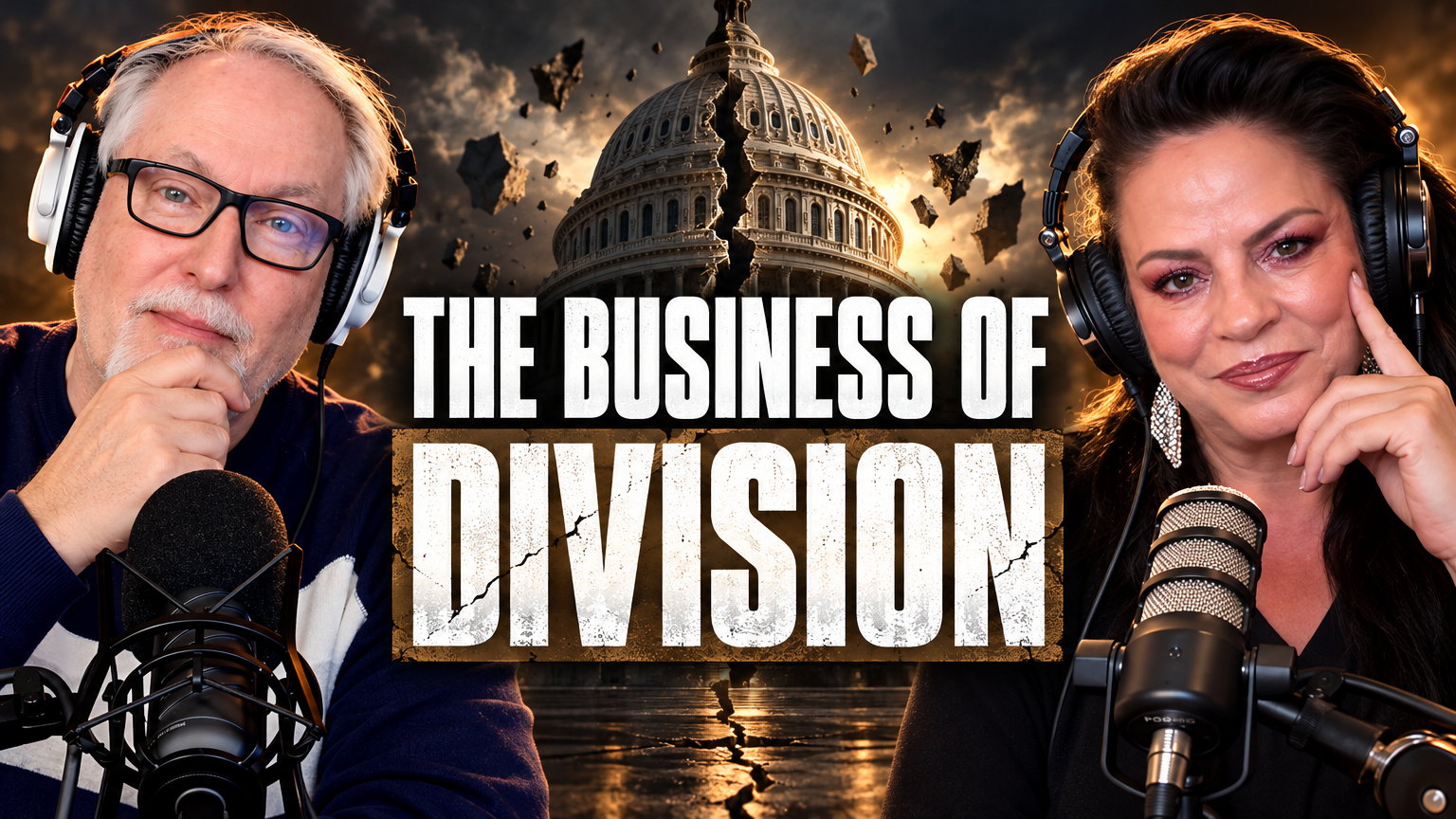
If there is one thing we seem to have an unlimited supply of these days, it’s outrage. Turn on the television, scroll through social media, or spend five minutes following the latest political controversy, and you’ll quickly discover that somebody is offended, somebody is being canceled, somebody is being accused of something, and somebody else is making money from all of it.
Welcome to the attention economy, where keeping people angry has become a remarkably effective business model.
On this episode of the Billy Dees Podcast, I am joined by returning guest Cynthia Elliott for a wide-ranging conversation that covers politics, media, culture, technology, and some of the increasingly uncomfortable questions facing American society.
We begin with the recent midterm elections and the political landscape, including the closely watched Ohio governor’s race between Amy Acton and Vivek Ramaswamy. The election provides an opportunity to examine more than just the results. We get into campaign strategy, candidate personalities, political branding, and the decisions that can make or break a campaign.
The Ohio race was particularly interesting because neither candidate generated overwhelming enthusiasm from everyone watching. We discuss the baggage each candidate brought into the race, the influence of wealth and political money, and the controversy surrounding the use of Amy Acton’s estranged mother in a campaign advertisement.
Regardless of where someone stood politically, the decision to use that particular family history as campaign material raised legitimate questions about judgment, strategy, and the boundaries of political campaigning. Sometimes a campaign doesn’t need its opponent to make a mistake. It simply needs to avoid making one itself.
And then there is the increasingly familiar problem of candidates who struggle with their own public image. Being wealthy, successful, or politically ambitious doesn’t automatically translate into leadership ability. Thin skin, arrogance, and an inability to read a room can be liabilities, particularly when voters are looking for someone they can trust.
The Media’s Outrage Machine
From politics, we move into something that has become almost impossible to avoid: rage bait.
A viral Ring camera video involving college students at Ole Miss becomes a national news story, raising questions about racial assumptions, social media amplification, and the speed at which public judgment is delivered.
There is a difference between calling out genuinely offensive behavior and turning every incident into a national referendum on American society. Context matters. Facts matter. And perhaps most importantly, the ability to distinguish between what we know and what we assume seems to be disappearing.
Cynthia and I discuss the role of legacy media in turning isolated incidents into larger cultural confrontations. Is the goal to inform the public, or is it to generate another round of outrage that keeps viewers watching?
The business model is not particularly complicated. Find something that makes people angry, give it a dramatic presentation, divide the audience into opposing camps, and let the argument continue on social media long after the original story has disappeared.
As I point out during the conversation, there are people on both sides of the political spectrum who have built careers around positioning themselves as protectors against some great threat. Their business depends on keeping that threat alive.
Cynthia makes an interesting observation: if Americans could find a way to stop treating each other as political enemies, a lot of people in the outrage business might suddenly find themselves looking for another line of work.
Perhaps it’s time to spend a little less energy fighting over red and blue and a little more time finding some purple in the middle.
Dave Chappelle, Comedy, and the Attention Economy
We also get into the controversy surrounding comedian Dave Chappelle and some of his recent remarks, including comments involving Charlie Kirk.
There was a time when comedy could push boundaries, offend people, and still make an audience think. Richard Pryor and George Carlin were masters of that particular art. They could make people laugh at something uncomfortable and then leave them thinking about what they had just heard.
But there is a difference between being provocative and simply trying to provoke.
Cynthia and I discuss how the attention economy has changed entertainment. Controversy generates attention, attention generates publicity, and publicity can translate into ticket sales, subscriptions, and revenue.
At some point, audiences have to ask themselves whether they are watching someone who is genuinely being funny or someone who has figured out that saying something outrageous is an effective way to stay relevant.
Not every controversial statement deserves a national discussion. And not every celebrity controversy deserves our participation.
Sometimes the best response is simply to move on.
Technology, Nvidia, and the Security Questions Behind Personal Decisions
The conversation takes another turn when Cynthia brings up developments surrounding Nvidia and allegations involving its leadership and a possible connection to Chinese intelligence.
The discussion explores the potential implications of personal relationships, corporate leadership, and national security, particularly when executives occupy positions of enormous influence within strategically important technology companies.
There is an important distinction between someone’s private life and decisions that could expose a company or sensitive information to outside influence.
When you’re operating at the highest levels of the technology industry, personal judgment can have consequences that extend well beyond your own household.
We discuss the risks associated with workplace relationships, executive behavior, corporate security, and the possibility that personal vulnerabilities can become organizational vulnerabilities.
In an industry as strategically important as artificial intelligence, those questions deserve serious attention.
The conversation also connects to Cynthia’s broader work through SoulTech, where her focus is human flourishing in the age of AI. As artificial intelligence becomes increasingly integrated into business, government, and everyday life, the human decisions surrounding that technology may prove just as important as the technology itself.
Immigration, Religion, and Europe’s Cultural Debates
One of the more contentious portions of the conversation involves immigration, religion, assimilation, and the cultural changes taking place throughout Europe.
Cynthia expresses strong concerns about what she sees as a growing disconnect between certain progressive political movements and the historical and cultural realities surrounding religious extremism, women’s rights, and individual freedoms.
We discuss the distinction between respecting someone’s right to practice a religion and examining political or ideological movements that may conflict with the principles of an open society.
These are difficult subjects, and they deserve more than slogans or accusations designed to shut down discussion.
Criticism of religious extremism should not automatically become hostility toward every individual who practices a particular faith. At the same time, protecting religious freedom does not mean abandoning the ability to question religious institutions, political movements, or cultural practices.
We also touch on the different approaches European nations have taken toward immigration, with particular attention to Poland, France, Germany, and the United Kingdom.
What happens when immigration policy, national identity, public safety, and cultural expectations collide? And what happens when governments appear unwilling or unable to have an honest conversation about the consequences?
These are questions that extend well beyond any single election or political party.
The Bigger Question: Who Benefits From All This Division?
One of the recurring themes throughout this episode is the relationship between attention, money, and manufactured outrage.
Whether we’re talking about political campaigns, cable news, celebrity controversies, social media personalities, or cultural disputes, there is often a financial incentive behind keeping people emotionally invested.
The more people argue, the more attention the argument receives. The more attention it receives, the more valuable it becomes.
And somewhere along the way, the actual issues that affect people’s lives get lost in the noise.
There is plenty to criticize on both sides of the political aisle. There are legitimate disagreements about immigration, economics, government, religion, technology, and the direction of the country. But meaningful discussion requires something that seems increasingly difficult to find: a willingness to examine issues without automatically treating everyone who disagrees as an enemy.
We cover a lot of ground in this conversation, and we certainly don’t agree on every subject. That’s part of the point.
Join Billy Dees and Cynthia Elliott for this wide-ranging episode covering politics, media manipulation, cultural controversies, artificial intelligence, and the increasingly complicated world we’re all trying to navigate.
Because if we’re going to spend this much time paying attention to the news, we might as well do a little thinking while we’re at it.
Also, a note for listeners:
We are now making our video presence known on Rumble. Please feel free to follow us there.

