Politics, Trust, and the Search for Common Sense- Billy Dees Talks with Chase Russell

What does it take to win a political campaign in an era when voters are increasingly skeptical of institutions, political parties, the media, and even one another?

That question is at the center of a wide-ranging conversation between Billy Dees and political strategist Chase Russell, president of Gray Eagle Strategies and author of Winning Without Millions. Russell has built his career around helping candidates compete without relying exclusively on establishment support or massive campaign budgets. His approach combines grassroots political strategy, marketing principles, modern technology, and an emphasis on personal character and trust.

The conversation begins with Florida politics, where Russell is a sixth-generation Floridian and has a particular interest in the state’s political direction. Much of the discussion centers on Byron Donalds and the Republican race for governor. Russell argues that voters are looking for candidates who understand both government and the practical concerns of everyday people. He also points to Florida’s fiscal record and its appeal to people who moved there during and after the COVID era because they viewed the state as comparatively free.

The discussion then moves north to Ohio and Vivek Ramaswamy’s campaign for governor. Russell sees Ramaswamy’s business background as potentially valuable in a state dealing with economic development, taxation, and competition for new businesses. For Russell, one of the important lessons of modern politics is that candidates need to understand more than traditional political structures. They also need to understand business, marketing, communication, and the changing expectations of voters.

Data Centers, AI and the Next Political Battleground

One of the more unexpected portions of the conversation involves data centers and artificial intelligence.

As data centers become larger and more energy-intensive, communities are beginning to question their environmental and economic impact. Russell believes those concerns deserve serious consideration, but he rejects the idea that the answer is simply to stop technological development.

He sees AI as both an economic issue and a national-security issue. If the United States slows down while countries such as China continue investing aggressively in artificial intelligence, Russell argues, America could put itself at a strategic disadvantage.

At the same time, he believes the public deserves better information about what these facilities actually require and what their environmental impact might be. Rather than relying on either technological hype or apocalyptic predictions, he argues for informed discussion, qualified experts, reasonable restrictions, and an honest assessment of the benefits and risks.

That idea becomes a recurring theme throughout the interview: new technology does not eliminate the need for common sense. It makes it more important.

Can Candidates Win Without the Establishment?

Russell explains that Gray Eagle Strategies grew out of his desire to help candidates who might otherwise be overlooked by traditional political organizations.

After leaving the military, Russell entered politics almost by accident. He eventually began working on campaigns and realized that many talented candidates had good ideas and strong character but lacked the money, connections, and establishment relationships normally associated with political success.

His solution was to bring lessons from the business and marketing world into political campaigns.

Rather than assuming that a candidate needs millions of dollars to win a local race, Russell focuses on identifying the candidate’s strengths, communicating directly with voters, and building campaigns around authenticity and effective outreach.

One of the biggest obstacles, he says, is the establishment mindset. Political organizations often operate through tight networks and familiar relationships. Russell believes candidates should be able to compete based on their ideas and character rather than simply their connections.

That philosophy is reflected in the title of his book, Winning Without Millions.

The Political Currency That Matters Most: Trust

Perhaps the most important part of the conversation concerns something that has become increasingly scarce in American public life: trust.

Russell tells candidates to tell the truth—even when the truth might not help them politically in the short term.

His argument is simple. Voters may disagree with a candidate, but honesty gives them something to respect. Once trust disappears, political communication becomes little more than manipulation.

Billy Dees and Russell discuss how dramatically public confidence in institutions has declined and how that loss of trust has contributed to the political environment we see today. Both point to a growing tendency for Americans to inhabit separate information bubbles, where people can be presented with the same facts and reach completely different conclusions.

That makes political strategy more complicated, but it also makes personal integrity more important.

Russell’s advice to candidates is to stick to their principles, avoid getting dragged into every controversy, and refuse to allow opponents or online personalities to dictate their message.

In an environment dominated by social media, that may be easier said than done.

Why Are Young Voters Moving Left?

Another significant portion of the interview focuses on younger Americans and the appeal of socialism and democratic-socialist politics.

Russell argues that conservatives make a mistake when they simply dismiss younger voters as lazy, uninformed, or unwilling to work. Instead, he believes politicians need to understand why so many young people feel economically and socially disconnected.

Housing costs, inflation, stagnant economic expectations, student debt, and the general difficulty of establishing financial independence have left many younger Americans frustrated. Russell argues that those frustrations create an opening for political movements promising dramatic change.

His advice to Republicans is not to respond primarily by attacking young voters or focusing on divisive social issues. Instead, conservatives need to offer a credible economic message and demonstrate that their principles can improve the lives of people who feel locked out of the American dream.

Billy Dees makes a similar point during the conversation: economic frustration can become a breeding ground for radicalism, particularly when younger people believe that the system no longer works for them.

The challenge, then, is not simply defeating an opposing ideology. It is demonstrating that traditional American principles—individual responsibility, economic opportunity, limited government, and personal liberty—still work.

Crime, Victims and the Culture of Victimhood

The conversation also takes a hard look at crime and the changing way American society talks about criminals and victims.

Dees argues that there was once a broad consensus that crime was something everyone opposed, regardless of political affiliation. Russell agrees, suggesting that crime was once a universal issue rather than a partisan one.

Both question the growing tendency to explain criminal behavior primarily through circumstances while losing sight of personal responsibility and the victims of crime.

At the same time, the conversation acknowledges that mental health issues can be serious and that society needs better mental-health resources. The disagreement comes when compassion is perceived as becoming an excuse for eliminating accountability.

Russell describes this as part of a broader cultural shift toward what he calls a victimhood mindset.

The larger question is whether America can rediscover a balance between compassion and accountability—recognizing the circumstances that influence people’s lives without pretending that individual choices have no consequences.

Free Speech and the Role of Citizen Journalism

Another important topic is free speech and the growing role of independent journalists and online investigators.

Dees and Russell discuss the controversy surrounding independent journalist Nick Shirley and efforts in California that they believe could restrict investigations into alleged fraud.

Their broader argument is that journalism should not be treated as an exclusive club. In the digital age, an individual with a camera, a computer, and an audience can investigate issues that traditional media organizations might overlook.

Russell argues that the fundamental question should be simple: Why would anyone oppose uncovering fraud involving taxpayer money?

The conversation also touches on the First Amendment’s role in protecting a free press and keeping government accountable. In an environment where anyone can publish information to a potentially enormous audience, the definition of journalism is changing—but the need for accountability remains.

Politics in an Age of AI

As the interview moves toward its conclusion, artificial intelligence becomes an important part of the discussion once again.

Russell warns that AI will make political misinformation and campaign attacks easier to produce. Candidates and voters alike will have to become much more skeptical about what they see online.

His advice is straightforward: if something doesn’t make sense, don’t automatically believe it. Not every political controversy is a conspiracy, and not every viral video represents reality.

For candidates, Russell recommends refusing to chase every attack. He points to Byron Donalds’ response to political criticism as an example of a candidate who declined to engage with what he considered foolishness.

The larger lesson is that candidates need to maintain their character and integrity even when the political environment around them becomes increasingly chaotic.

Can America Find Its Way Back to Common Sense?

Perhaps the most interesting conclusion to the conversation is that neither Dees nor Russell believes the country can solve its problems simply by electing a different group of politicians.

The deeper problem is cultural.

Americans increasingly disagree about basic facts, institutions have lost credibility, political tribes often defend their own side regardless of evidence, and younger generations are searching for something they can trust.

Russell believes the answer begins with returning to basic principles and common sense.

That does not necessarily mean agreeing on every political issue. In fact, the conversation recalls earlier periods when Americans with very different political philosophies—such as Ronald Reagan and Tip O’Neill, or Bill Clinton and Newt Gingrich—could disagree strongly while still operating within a shared understanding of reality.

That shared foundation appears to be what is missing today.

The interview ultimately becomes less about Republicans versus Democrats and more about whether Americans can recover the ability to discuss ideas honestly, recognize facts, hold people accountable, and disagree without treating political opponents as enemies.

Russell’s advice to candidates is to maintain their character, tell the truth, and run their race.

Dees’ closing observation adds another dimension to that message: in an age of increasingly powerful artificial intelligence, Americans may need to become more aware—not less—of how their own minds work, how they make decisions, and how easily they can be manipulated.

The technology is changing rapidly. Politics is changing with it. The challenge for voters and candidates alike may be figuring out how to keep a sense of reality in the middle of it all.

And perhaps, as both Billy Dees and Chase Russell suggest throughout the conversation, getting back to common sense would be a pretty good place to start.

What Italy’s Soccer Struggles Can Teach America About Education, Work and Critical Thinking

In a wide-ranging conversation on The Billy Dees Podcast, Billy Dees sits down with filmmaker and writer Sara Alessandrini for a discussion that begins with Italian soccer but quickly becomes a much larger examination of education, workplace culture, individualism, critical thinking, immigration, artificial intelligence and the challenges facing modern American society.

Alessandrini, who is originally from Italy and spent 11 years living in Los Angeles before moving to the New York area, approaches the conversation as an independent-minded observer rather than someone firmly aligned with either the political left or right. She explains that she is interested in ideas from both sides and believes the best approach is to examine what actually works rather than becoming trapped by political labels. That perspective becomes particularly important as the conversation moves between American and Italian institutions and cultures.

The Soccer Analogy

The discussion centers initially on Alessandrini’s Substack essay, “Italy’s Failure to Qualify for the World Cup Is a Warning to the United States, and It’s Not About Soccer.”

Italy has historically been one of the world’s great soccer nations, but Alessandrini points to the country’s repeated failure to qualify for the World Cup as evidence of deeper problems in how young players are developed. She discusses a major shift from a culture in which children developed their skills through hours of informal play toward a highly structured system in which coaches increasingly control how players behave on the field.

According to Alessandrini, the problem isn’t teamwork itself. Rather, it is what happens when teamwork becomes conformity. Young players can become so focused on following instructions, avoiding mistakes and doing what the coach expects that they lose the ability to take risks, improvise and think independently.

That distinction becomes the central metaphor of the interview: Are we developing people who know how to think, or people who simply know how to follow instructions?

From Soccer Fields to the Workplace

The soccer discussion leads directly into a conversation about American education and the modern workplace.

Alessandrini argues that she has observed a similar tendency among some American workers: an emphasis on procedures and instructions rather than problem-solving and independent thought. She describes situations from her professional experience in which employees were capable of following written instructions but struggled when they encountered a problem that wasn’t covered by those instructions.

For Alessandrini, that represents a fundamental weakness in education and workforce development. Memorizing information is not necessarily the same thing as understanding how a system works. Someone who understands the underlying system can adapt when circumstances change; someone who has simply memorized a procedure may be lost when the situation changes.

Billy Dees expands on that idea by discussing his own decades of experience in audio and media production. He points out that technicians from his generation often learned the fundamentals of electronics, signal flow, microphones and equipment before digital technology became dominant. As technology evolved, those fundamentals provided a foundation for learning new systems.

The conversation raises an important question for today’s workforce: What happens when people learn software without understanding the principles behind what the software is actually doing?

Is Higher Education Preparing People for Work?

The interview becomes particularly critical when Billy and Sara discuss American higher education.

Both question whether the traditional four-year college model is producing the kind of independent thinkers and skilled workers the economy needs. Alessandrini contrasts the American university system with the more specialized educational path she experienced in Italy, where students can receive considerably more focused training earlier in their education.

The discussion also addresses the enormous cost of American higher education and whether students are receiving enough practical value for the money they are spending.

Billy questions the assumption that everyone necessarily needs a traditional four-year degree, suggesting that education should be more directly connected to the profession or skill a person intends to pursue. Alessandrini adds her own experiences working with people in technical fields, including audiovisual production, where she encountered workers who had educational credentials but struggled with basic practical problem-solving.

The issue, she argues, isn’t simply whether someone has a degree. It’s whether that person knows how to learn.

Preparing for an AI-Driven Economy

That idea becomes even more important when the conversation turns to artificial intelligence.

Neither Billy nor Sara views AI simply as an apocalyptic threat. Instead, they see it as another major technological transformation that will change the nature of work.

If AI increasingly handles specific tasks, workers will need to be able to adapt, learn new skills and move between different kinds of work. Someone trained only to perform a narrow set of tasks could have a difficult time when those tasks disappear or change.

Alessandrini argues that learning how to learn may ultimately be more valuable than memorizing a fixed body of information. She points to her own career as an example: she has moved between different fields and continued developing new skills.

The lesson from the soccer analogy therefore becomes even more relevant: A successful system shouldn’t simply produce people who can execute today’s game plan. It should produce people capable of adapting when the game changes.

Immigration: Beyond the Political Talking Points

The conversation also moves into immigration, where Alessandrini argues that the debate is often reduced to two opposing extremes.

She points out that immigration serves multiple purposes and that the United States already has numerous categories of legal immigration, including employment-based visas, asylum, refugees and seasonal workers. The real question, she argues, should be what the country is trying to accomplish with its immigration system.

That leads to another theme running throughout the interview: before attempting to fix a system, define what the system is supposed to accomplish.

The same principle applies to education, immigration and healthcare. Without agreement about the desired outcome, political arguments tend to focus on competing slogans rather than practical solutions.

Looking at Other Countries Without Idealizing Them

One of the most interesting aspects of the conversation is that neither participant presents Italy as a perfect alternative to America.

Alessandrini repeatedly emphasizes that both countries have strengths and weaknesses. Her experience as an immigrant has given her an unusual perspective: she has lived within both systems and can compare them from personal experience.

She describes the United States as a country that gave her opportunities she believes would have been much more difficult to obtain in Italy. At the same time, she believes Americans can learn from successful elements of other countries.

That approach runs contrary to the tendency to treat political and cultural questions as competitions in which one country or ideology must be completely right and the other completely wrong.

The Larger Question: Can We Still Think for Ourselves?

By the end of the interview, the discussion has moved far beyond Italian soccer.

Billy and Sara talk about what they see as a growing tendency toward political and cultural tribalism, where people increasingly inhabit separate informational environments and sometimes appear to live in completely different versions of reality.

For Billy, one of the biggest losses has been what he describes as a former sense of “collective wisdom”—the idea that Americans could disagree strongly about solutions while still operating within the same basic understanding of reality.

Sara offers a somewhat more optimistic counterpoint. She reminds the audience that problems exist in every country and that people often see the best and worst of their own societies differently depending on their experiences.

That tension between optimism and skepticism gives the interview much of its character.

Ultimately, the conversation between Billy Dees and Sara Alessandrini isn’t really about soccer, college, immigration or even artificial intelligence individually. It is about how societies develop people—and whether those systems encourage curiosity, adaptability, competence and independent thought, or simply teach people to follow the rules of the system they happen to be in.

And that may be the most important question of all as education, employment and technology continue to change.

Truth, Free Speech, and the Search for Common Ground: My Conversation with Joel Rakow

I recently had a fascinating conversation with Joel Rakow, author of Life in Woke America: A Family’s Story of Truth and Betrayal Under Fire.

This discussion may come in a little hot for some people’s taste but that is okay, we do that here. Our discussion covered some pretty big topics: free speech, censorship, political polarization, China, the Constitution, and what happens when institutions begin deciding which ideas are acceptable and which ones should be pushed aside. Whatever your political perspective, I think these are conversations worth having because the questions surrounding truth and free expression affect all of us.

One of the most interesting parts of our conversation centered on the COVID-19 pandemic and the way information was handled during those early years. I told Joel that I could understand why political leaders initially relied heavily on medical experts during a crisis. When something potentially catastrophic is happening, nobody wants to ignore legitimate scientific advice. But as time went on, I believe it became increasingly difficult to separate public-health decisions from politics. Joel described a similar turning point for himself, particularly as he watched information and opinions that challenged the prevailing consensus get dismissed or attacked. For both of us, the larger issue wasn’t necessarily whether every controversial theory was correct. It was whether people should be allowed to ask questions and examine competing information without being silenced.

That idea of censorship became an important part of our discussion of Joel’s book. The novel is a work of fiction inspired by real events, including the discovery of a Chinese biological laboratory in California that became the subject of a congressional investigation. Joel uses that premise to tell a much broader story about a soldier, an orphan, institutional pressure, and the consequences of challenging powerful organizations. He also described what he believes has happened to his own book during the publishing and online distribution process, including what he calls “shadow banning.” His concern is that censorship doesn’t always look like someone explicitly saying “no.” Sometimes, he argues, it looks like a story simply disappearing from view, receiving little attention, or becoming difficult for people and even artificial-intelligence systems to find. Whether every example has an intentional explanation or not, the larger question is certainly worth examining: How do we know what we are not seeing?

We also talked about political movements and the Constitution. I made the point that I don’t think this is exclusively a left-versus-right issue. Both sides of American politics have had periods when movements have gone too far. Good intentions can produce bad outcomes, particularly when people become so convinced of their own righteousness that they stop listening to anyone who disagrees with them. Joel’s response was to focus on the Constitution as a framework for evaluating government and political power. That led to one of the more intriguing ideas of our conversation: his development of what he calls the Liberty Scorecard, an AI-based concept designed to examine government officials, candidates, institutions, and even cultural products according to constitutional principles. The goal, as Joel explained it, is to move beyond partisan opinion and give people another tool for evaluating whether actions and policies align with constitutional values.

Perhaps the biggest takeaway from my conversation with Joel Rakow is that we are living in an era when everyone has a voice, but that doesn’t necessarily mean everyone has access to the same information. Social media and artificial intelligence have dramatically changed who gets to participate in public conversations. That can be both empowering and dangerous. We have more information available to us than at any other point in history, yet we also have more opportunities to be isolated inside information bubbles that reinforce what we already believe. For me, the answer isn’t to silence opposing viewpoints. It’s the opposite. We need more open discussion, more questioning, and more willingness to hear ideas we may strongly disagree with. Truth doesn’t need protection from questions. If something is true, it should be able to withstand scrutiny. That was one of the central themes of my conversation with Joel, and it’s a subject I believe deserves considerably more discussion.

Grassroots Politics, Property Taxes, AI, and the Future of Kansas – Billy Dees Talks with Gubernatorial Candidate Stacy Rogers

On this episode of The Billy Dees Podcast, Billy sits down with Kansas gubernatorial candidate Stacy Rogers for an in-depth conversation about the issues shaping not only Kansas but many communities across America. Rather than relying on political talking points, Rogers offers a firsthand perspective from someone who has spent nearly two years traveling the state, meeting voters face-to-face in towns both large and small.

Stacy Rogers

The discussion begins with Rogers explaining what motivated her to seek one of the highest offices in Kansas. Frustrated by the direction of state government and believing many Kansans had become disillusioned with the political process, she decided to enter the race herself. Throughout the interview, she emphasizes a recurring theme: too many citizens feel ignored by government, and restoring trust begins with elected officials who are willing to listen rather than simply campaign.

One of the most compelling segments focuses on the growing controversy surrounding massive AI-driven data centers. While artificial intelligence continues to expand rapidly, Rogers argues that many communities are being asked to accept enormous industrial projects without adequate transparency. She discusses concerns over land use, water consumption, electrical infrastructure, noise pollution, and the long-term environmental impact of these facilities.

Billy explores the national implications of the AI boom, noting the exploding demand for computing power and questioning how America can remain competitive while also protecting local communities. The conversation highlights the difficult balance between technological innovation and responsible governance. Rogers maintains that progress is inevitable, but believes states must establish clear safeguards before approving projects that could permanently reshape local economies and landscapes.

Property taxes emerge as another major topic. Rogers argues that rising property taxes have become one of the greatest financial burdens facing Kansas homeowners, particularly retirees living on fixed incomes. She questions whether citizens should continue paying taxes indefinitely on homes they have already purchased outright. Billy notes that similar debates are taking place across Ohio and many other states, making the discussion especially relevant beyond Kansas.

The conversation also examines state spending, economic development incentives, and the use of STAR Bonds, a financing mechanism Kansas has employed for large projects. Rogers expresses concern that taxpayers often shoulder significant financial risks while investors receive the greatest rewards. Billy and Rogers also discuss the widely publicized effort to attract the Kansas City Chiefs across the state line, using it as an example of broader questions surrounding government incentives and fiscal responsibility.

Education occupies another substantial portion of the interview. Rogers believes the state’s education system needs significant reform despite receiving the largest share of the state budget. She argues that too much funding is consumed by administration while teachers remain underpaid and classrooms under-resourced. She advocates returning to foundational skills such as handwriting, reading, and practical education while reducing unnecessary bureaucracy.

Billy expands the discussion by examining how technology is changing education nationwide. From students relying on artificial intelligence to complete assignments to declining handwriting skills, both agree that education should focus on developing critical thinking rather than simply producing test scores. Rogers also emphasizes helping students become truly prepared for adulthood through practical skills and stronger academic fundamentals.

The interview takes on a broader philosophical tone as the discussion turns to the challenges facing American families. Rogers argues that many social problems are interconnected, linking education, housing costs, inflation, healthcare, nutrition, and economic opportunity. Rather than treating each issue in isolation, she suggests policymakers must examine the underlying causes affecting families across the country.

Perhaps the most distinctive aspect of the interview is Rogers’ campaign strategy itself. Instead of relying primarily on expensive advertising, she has traveled throughout Kansas visiting coffee shops, restaurants, libraries, senior centers, gas stations, and small businesses. Her goal has been to meet voters where they live and work rather than expecting them to attend campaign events. She explains that in several communities she became the first gubernatorial candidate residents had ever met in person.

Billy observes that this grassroots approach reflects what many Americans wish politics would become again—more personal, more accessible, and less driven by massive fundraising operations. Their conversation touches on the growing appetite among voters for candidates who present themselves as public servants rather than career politicians.

Throughout the episode, Billy maintains his trademark conversational interviewing style, allowing thoughtful discussion while occasionally injecting humor into serious topics. Rather than encouraging partisan conflict, the interview explores complex policy questions in a way that invites listeners to think critically about technology, government accountability, education, taxation, and civic engagement.

Whether you’re interested in state politics, the future of artificial intelligence, education reform, or the changing relationship between citizens and government, this episode offers a wide-ranging conversation that extends well beyond Kansas. It’s a thoughtful look at the challenges facing communities across America—and the importance of listening to the people who call those communities home.

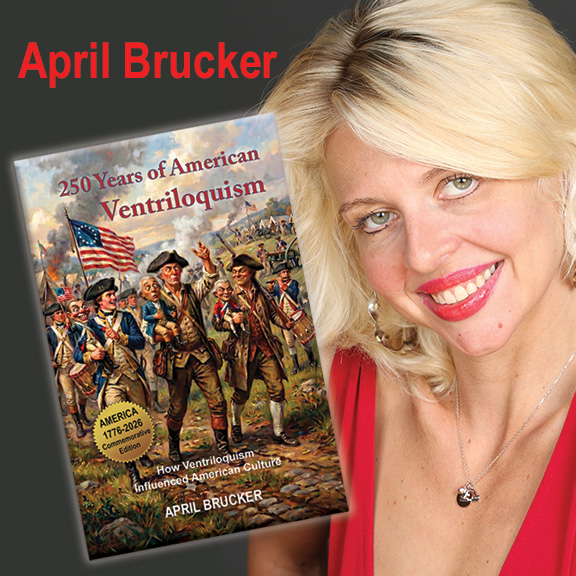
250 Years of American Ventriloquism – More Than Talking Dummies with April Brucker

Most people think of ventriloquism as a novelty act—a performer with a puppet delivering jokes from a comedy stage. But according to author, comedian, actress, and professional ventriloquist April Brucker, the art form has played a much larger role in American history than most people realize. On this episode of The Billy Dees Podcast, Billy sits down with April to discuss her fascinating new book, 250 Years of American Ventriloquism: How Ventriloquism Influenced American Culture, and the surprising ways ventriloquism has shaped entertainment, broadcasting, politics, and popular culture.

The conversation explores the rich history of ventriloquism, tracing its influence from early American medicine shows and vaudeville stages to the golden age of radio and television. April explains how legendary performers such as Edgar Bergen and Charlie McCarthy helped redefine broadcasting, while later icons like Shari Lewis, Paul Winchell, and Willie Tyler expanded the art form into children’s programming and mainstream entertainment. Along the way, listeners will discover remarkable historical stories, including the groundbreaking career of Richard Potter, one of America’s earliest celebrity entertainers.

The interview also highlights April’s own journey into ventriloquism. From growing up in western Pennsylvania without cable television to becoming a nationally recognized performer appearing on Judge Jerry, My Strange Addiction, and What Would You Do?, she shares how persistence and passion helped build her career. The episode features appearances from her wisecracking puppet Mae Wilson, whose humor demonstrates why puppets often get away with saying things that people cannot. Their exchanges provide some of the funniest moments of the conversation while illustrating the timeless appeal of character comedy.

Billy and April also discuss how artificial intelligence, digital avatars, and emerging technology may influence the future of entertainment. Rather than seeing AI as a threat, April argues that ventriloquists have always embraced innovation while maintaining the uniquely human connection that live performance offers. The discussion touches on the psychology behind puppets, why audiences form emotional connections with them, and why ventriloquism continues to thrive despite changing media landscapes.

Whether you’re a fan of comedy, broadcasting history, live performance, or simply enjoy uncovering overlooked stories from American culture, this episode offers an entertaining and informative conversation filled with humor, history, and unexpected insights. It’s a reminder that some of the most fascinating chapters of American entertainment history come from places few people think to explore—and that a talking dummy might have more to teach us than we ever imagined.

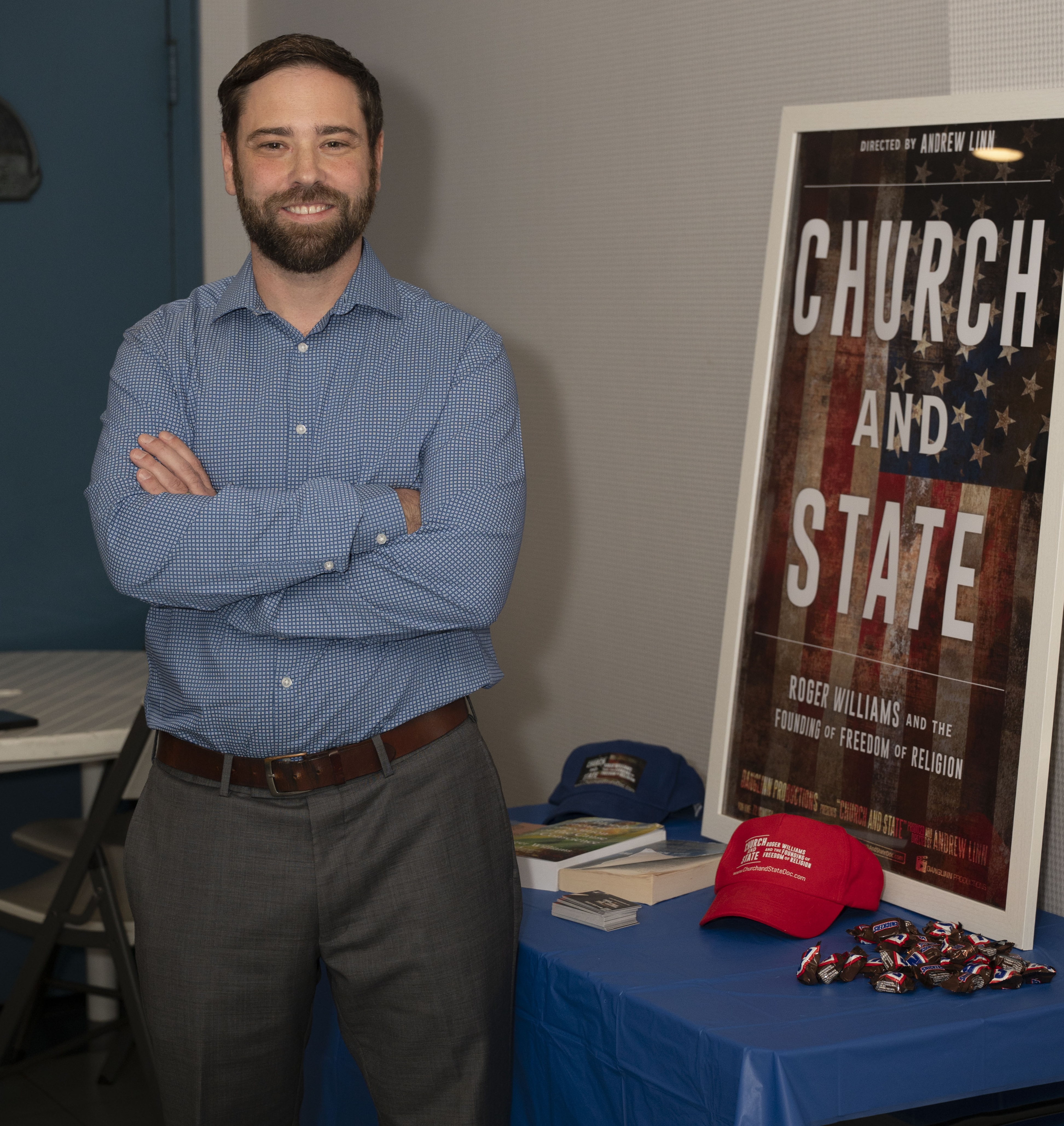
Church, State, and the Forgotten Founder of Religious Freedom

Andrew Linn

On this episode of The Billy Dees Podcast, Billy welcomes documentary filmmaker Andrew Linn to discuss his film Church and State: Roger Williams and the Founding of Freedom of Religion. The conversation explores one of the most frequently misunderstood concepts in American history—the separation of church and state—and the remarkable story of Roger Williams, a largely forgotten figure whose ideas helped shape religious liberty in the United States.

Linn explains that many Americans mistakenly interpret the separation of church and state as freedom from religion rather than freedom of religion. Through the story of Roger Williams, listeners learn how the founder of Rhode Island challenged the religious authorities of the Massachusetts Bay Colony and advocated for liberty of conscience at a time when dissent could lead to banishment or worse. Williams’ belief that faith could not be compelled by government became a cornerstone of the American experiment and helped establish one of the earliest examples of religious freedom in the world.

The discussion expands beyond history into the modern cultural and political landscape. Billy and Andrew examine the role of religion in public life, the influence of faith on the Founding Fathers, and the ongoing debate over how religious beliefs intersect with politics. They also explore the decline of traditional community institutions, the rise of cultural division, and the challenges of maintaining civil discourse in an increasingly polarized society.

Throughout the interview, Linn argues that understanding the true history behind religious liberty is essential to understanding America itself. Whether listeners are deeply religious, skeptical, or simply interested in history, this episode offers a thought-provoking examination of faith, freedom, and the principles that continue to shape public debate today. It’s a fascinating conversation that encourages listeners to look beyond modern talking points and revisit the historical roots of one of America’s most cherished freedoms.

This is the link to the Church and State Documentary Website where people can find several different ways to stream the Documentary and learn more info about the film. ChurchandStateDoc

Sidney Pines – Author of the Patriot’s Diary Series

Sidney Pines

In this episode of The Billy Dees Podcast, Billy sits down with author Sidney Pines, whose journey from political disengagement to conservative commentator inspired her bestselling Patriot Diary series. Pines describes herself as an “everyday American” who began noticing what she believed were inconsistencies in news coverage and government narratives during 2020. What started as personal research and journal entries for future generations eventually evolved into a published book series, beginning with Awakening: A Patriot’s Diary of American Deception and continuing with the recently released Golden Age Rising.

Throughout the conversation, Pines reflects on her political awakening and discusses how many Americans who previously paid little attention to politics found themselves drawn into national debates over the past several years. She argues that growing distrust in traditional institutions, media organizations, and government agencies has fueled interest in topics often labeled as conspiracy theories. Pines maintains that many issues once dismissed by mainstream commentators have later received broader public scrutiny, contributing to a growing skepticism among segments of the population.

Billy and Sidney also explore the increasing polarization in American society. Both note how political disagreements that once remained civil have, in many cases, evolved into deeply personal divisions among friends and family members. Pines emphasizes the importance of respectful dialogue and says she has little interest in forcing her views on others, preferring instead to share her perspective and allow people to reach their own conclusions. The discussion highlights concerns about how social media algorithms, partisan news coverage, and online echo chambers may reinforce existing beliefs rather than encourage open-minded discussion.

The conversation then turns to the changing media landscape. Billy discusses the decline of traditional broadcast news and the rise of podcasts and independent media as sources of information. Together, they examine the challenges of navigating a world where artificial intelligence, social media algorithms, and competing narratives make it increasingly difficult to determine what information can be trusted. While both acknowledge concerns about misinformation, they also see opportunities for alternative voices and independent creators to reach audiences outside traditional media channels.

The episode concludes with a discussion about the future of journalism, public discourse, and political commentary. Whether listeners agree with Sidney Pines’ viewpoints or not, the conversation offers a thoughtful look into the mindset of a growing segment of Americans who feel disconnected from mainstream institutions and are seeking alternative explanations for the events shaping the nation. It is an engaging discussion about belief, skepticism, media influence, and the evolving political landscape of modern America.

You can follow Sidney Pines on X @Sidney1776