Perfect Media Productions, LLC is a media production and digital marketing service. We produce audio for radio, podcasts, and voice-overs. We also record and/or edit video for websites and social media.
This is the production home of the Billy Dees Podcast and other great podcasts.
Our blog section features a variety of topics including media, business, and pop culture.
In this episode of The Billy D’s Podcast, Billy welcomes frequent co-host Cynthia Elliott—author, intuitive, nonprofit founder, and all-around multi-disciplinary creator—for a wide-ranging conversation that mixes commentary, personal experience, and cultural insight.
Cynthia Elliott
The discussion begins with Cynthia’s recent success as an author, as her books Memory Mansion and Unleashed Stompers climb the charts once again. But the episode quickly moves far beyond book promotion. Cynthia shares the mission behind her nonprofit, The SoulTech Foundation, which focuses on education, empowerment, and community building—particularly in underserved areas. One of its cornerstone initiatives is an AI Literacy Training Program designed to teach and certify 10,000 Americans with skills that will help them navigate an AI-driven future. The foundation also supports wellness programs, including meditation and yoga, to help people develop emotional and mental resilience.
Billy and Cynthia dive into deeper territory too—especially the growing dependence on AI, the importance of human self-awareness, and the mental health challenges emerging in the digital age. Cynthia discusses why she believes strengthening our inner life and presence is crucial as society becomes increasingly intertwined with technology.
The episode also explores Cynthia’s perspective on intuitive abilities, what people commonly misunderstand about the word “psychic,” and why she believes pattern recognition, energy awareness, and intuition are natural human capacities. Billy brings a scientific angle to the conversation, referencing studies on consciousness, the observer effect, and cutting-edge neural interface technologies like Neuralink.
Cynthia’s upcoming documentary, “Nirvana: A Psychic’s Journey to the Final Rebirth,” becomes another focal point. She explains how the project serves both as personal storytelling and as a resource for others navigating trauma, identity, and self-expression. The film also functions as a legacy for her son, offering him an honest narrative of her life and experiences.
Looking ahead, Cynthia shares several major events she’s leading or hosting:
TEDxMizner (February 4th): Featuring speakers discussing disruption in the age of AI.
Her Health Summit (October): A major event highlighting women’s health, especially for women over 40—an age group dramatically underrepresented in medical research.
SoulTech Magazine: A bi-monthly publication covering wellness, culture, spirituality, and updates from the foundation.
The conversation wraps with a discussion about the collective sense of global anxiety many people feel today—touching on social media’s influence, the “attention economy,” and why doom-scrolling contributes to emotional exhaustion.
This episode blends tech, spirituality, psychology, storytelling, and cultural commentary—capturing exactly what Billy D’s listeners expect: honest, curious conversation across a wide spectrum of ideas.
You can find Cynthia Elliott on X (Twitter) @Shamanisis
This episode was recorded live Friday November 14, 2025, at 8:00pm EST.
This conversation explores emerging technologies that blur the line between human experience and artificial intelligence. On one hand, there’s excitement about innovations like Google’s emotional AI, smart skin, and AR memory glasses, which could transform healthcare, education, therapy, and even human connection. Similarly, advances such as Samsung’s dream monitoring and Meta’s mind-reading interface hold promise for diagnosing mental health conditions, restoring communication for the paralyzed, and deepening our understanding of the brain. Tools like Microsoft’s holographic teleportation and training robots such as Kaiwa’s pregnancy simulator also highlight the potential of technology to expand learning and accessibility.
At the same time, the discussion raises deep ethical and societal concerns. Emotional AI and smart skin introduce risks of manipulation, surveillance, and commodification of intimacy. Technologies like AR glasses and dream monitoring threaten privacy at its most personal levels, while mind-reading interfaces raise questions about cognitive freedom. Even seemingly helpful innovations like pregnancy robots risk desensitization or erasing lived experiences.
Finally, the rise of sexualized robots and generative AI poses challenges around consent, objectification, addiction, and bias. Altogether, the conversation weighes the incredible opportunities of these tools against their potential to exploit, manipulate, or undermine core aspects of human dignity and trust.
This program was produced live Saturday August 23, 2025, at 8:00pm EST.
This installment of our Twitter interviews is with Jeanné Giddens, otherwise known as @TuneTalks to her Twitter followers. Jeanné is a talented song writer, voiceover artist, and host.
As an old school radio and audio recording guy, I have always felt the best way to record an interview is with the guest in the recording studio. The benefits of this are obvious. You can interact with your guest one on one and have complete control of the recording. However, there are times when this is just not practical. For example, in this case Jeanné is based in Florida and I am in Ohio.
Recording options in these types of cases vary and a lot depends on the guest. Many interview subjects do not have any audio gear. Others have busy schedules promoting their work and do not have the patience to be walked through a technical process of some kind. In these cases phone signals may be the most expedient choice and other times maybe a VOIP service will work just fine at getting the job done.
With Jeanné, however, there were better options available. She is in the audio production business and has good tools at her disposal. So, we decided to use Zencastr for this interview. In simple terms this type of technology does not record “over” the internet per say. Both subjects are recorded locally and then those two audio tracks are combined in post.
The results are terrific but there are also other important steps to take.
For one, use the most dependable connections with your gear. I would avoid using WiFi with your computer or using any type of wireless microphone or headset. Also, close all of the programs on your computer.
Let me throw in some information about microphones. There is a lot of confusion about USB microphones in particular.
There are basically four types of microphones in terms of how they capture sound; dynamic, condenser, ribbon, and contact. There are variations of each but those are the basic groups.
Many of the widely popular USB microphones are condenser microphones. I have heard them referred to as “digital” microphones and that term is as overused as “pro” is in the audio and video equipment industry. The key difference between a USB condenser microphone and a standalone XLR condenser is that the USB microphone has a USB interface built into it. Combination units in general are designed to hit a price point and as plug and play devices for their ease of use.
I have used USB microphones to have my clients record audio into their PowerPoint presentations. They are also good for gaming, YouTube, and for basic podcasting. I would stop short, however, of considering any USB microphone truly a professional’s first choice.
I have been in many radio stations, media production studios in advertising agencies, and music recording studios. I have never run across a USB microphone being used as a primary recording tool in any of these applications. An entry level pro audio interface alone costs more than the average USB microphone. Many voiceover agencies will ask what microphone that you are using and if the answer is a USB microphone that might be a missing check mark on your credentials list.
The sky is the limit in terms of what you can pay for pro audio gear but there are cost effective options. Yes, separates do cost more but come with some practical benefits in addition to better quality, namely interchangeability. That professional XLR microphone that you bought for your podcast will plug into a USB interface, a digital recorder, a mixing board and so on. You can also upgrade your interface or microphone without replacing both or purchase more microphones to use with the same interface.
For the interview with Jeanné I used a (XLR) Golden Age D2 dynamic microphone. I happen to like dynamic microphones for voiceovers but that is largely my preference. My favorite is probably the (XLR) Shure SM7B and my runner up would be the (XLR) Electro-Voice RE20. Jeanné used her (XLR) RODE NT1 which is a condenser microphone. Both the Golden Age D2 and the RODE NT1 are not “cheap” when compared to most USB microphones, however, in the professional ranks these microphones are extremely cost effective and for anyone considering getting started doing voice work these are good choices. For this particular interview we both also used Focusrite interfaces.
To sample the sound quality captured with these microphones and Zencastr here is an excerpt. Notice how it sounds almost as if both of us were in the same studio.
For your convenience the entire interview is available at the bottom of this post. The Billy Dees Podcast is also available on your favorite podcasting service including Apple Podcasts, Spotify, and iHeartRadio.
“In short, our leadership in science and in industry, our hopes for peace and security, our obligations to ourselves as well as others, all require us to make this effort, to solve these mysteries, to solve them for the good of all men, and to become the world’s leading space-faring nation.”
“There is no strife, no prejudice, no national conflict in outer space as yet. Its hazards are hostile to us all.”
“We choose to go to the moon. We choose to go to the moon in this decade and do the other things, not because they are easy, but because they are hard, because that goal will serve to organize and measure the best of our energies and skills, because that challenge is one that we are willing to accept, one we are unwilling to postpone, and one which we intend to win, and the others, too.”
– John F. Kennedy September 12, 1962
The above quotes are from the famous speech that President Kennedy gave which set the goal of putting a man on the Moon during the 1960’s. The space program at that time had the backdrop of the cold war. Space interests in regard to national security and intelligence continue to be serious issues of today. If you review the entire Kennedy speech, you will find that the message is about investing in science and technology as much as it is about exploring space.
NASA Image
We just marked the 50th anniversary of The United States Apollo 11, the first crewed mission to land on the Moon, on July 20, 1969.
The resources allocated for NASA are a fraction of the overall budget for the United States and are often tragically limited because of incredibly wasteful general spending. Yet, so much has been brought forth by the investment in space technology for our society in so many ways. It is the one government program that has paid off.
Here are just a few of the benefits that have been brought forth by the space program either directly or indirectly:
Semiconductor cubing, structural analysis, air quality monitors, virtual reality, aircraft controls, aerodynamics, microcomputers, GPS, design graphics, enriched baby food, water purification systems, scratch-resistant lenses, athletic shoes, shock-absorbing helmets, home security systems, smoke detectors, firefighting equipment, flat panel televisions, high-density batteries, trash compactors, food packaging and freeze-dried technology, solar energy, weather forecasting, telemetry systems, laser angioplasty, human tissue simulators, programmable pacemakers, arteriosclerosis detection, ultrasound scanners, automatic insulin pumps, portable x-ray devices, invisible braces, dental arch wire, palate surgery technology, clean room apparel, implantable heart aids, MRIs, bone analyzers, cataract surgery tools, magnetic liquids, advanced welding torches, gasoline vapor recovery, self-locking fasteners, machine tool software, laser wire strippers, lubricant coating processes, wireless communications, engine coatings, better brakes, weight saving technology, improved aircraft engines, advanced lubricants, energy storage systems, along with an array of other things.
Oh no! How could I have omitted golf ball aerodynamics?
Advancements in space technology have enhanced our way of life, given birth to new products and industries for our economy, and improved the safety of the society in which we live.
It is also of no small consideration for me that historically all of this progress has been under the umbrella of American leadership for the entire world. Although I am very glad that the world community has an interest in developing space technology, I do find it disconcerting that lately America seems perfectly content to go along for the ride. It is a common cliché reflecting the simplicity of any particular subject to say that, “It isn’t rocket science.” Well, as America’s math and science scores continue to lag behind large percentages of other populations pertaining to the world’s largest economies, it seems as though we prefer things not to be rocket science.
The United States can barely rouse a modicum of enthusiasm for serious space exploration. NASA’s ability to achieve new space-exploration milestones may very well be limping along because of the government’s disagreements about the agency’s priorities. That is a shame because other countries, including China, seem to be picking up the ball.
During a classic piece of news footage from the 1960s a reporter walked up to a woman in France and asked her how she felt about men walking on the Moon. Her answer was, “I knew the Americans could do it!” What, exactly, does the world know about us now?
To be fair, there has been renewed American enthusiasm for a mission to Mars. I hope it continues! The next big step for mankind, back to the moon and beyond, might very well come from private enterprises such as Elon Musk’s SpaceX and Amazon’s Blue Origin.
I believe many of the social ills we have in our society and around the world are largely because of a lack of an education and an appreciation for the sciences. None of us are composed of a better set of elements than anyone else. We are all stardust and life is incredibly short. If we are lucky, among the billions of orbits that the Earth has taken, only 80 or 90 some odd trips around the sun is all we get on our life’s journey.
The fragile biology of our bodies is supported by the same air, water, and nutrients that every living thing, which has ever existed on Earth, has thrived upon. Napoleon, Cleopatra, and even Tyrannosaurus Rex walked under the same sun and sky as we do. There haven’t been any new shipments of natural resources to the Earth. We rely heavily on the environment’s natural processes of decay and renewal, a system that we are rapidly beginning to outpace.
The more we know about our earthly home and how it relates to the incredible oneness that we all share, maybe the more likely it will be that we will make the world a harmonious place for all of us to share.
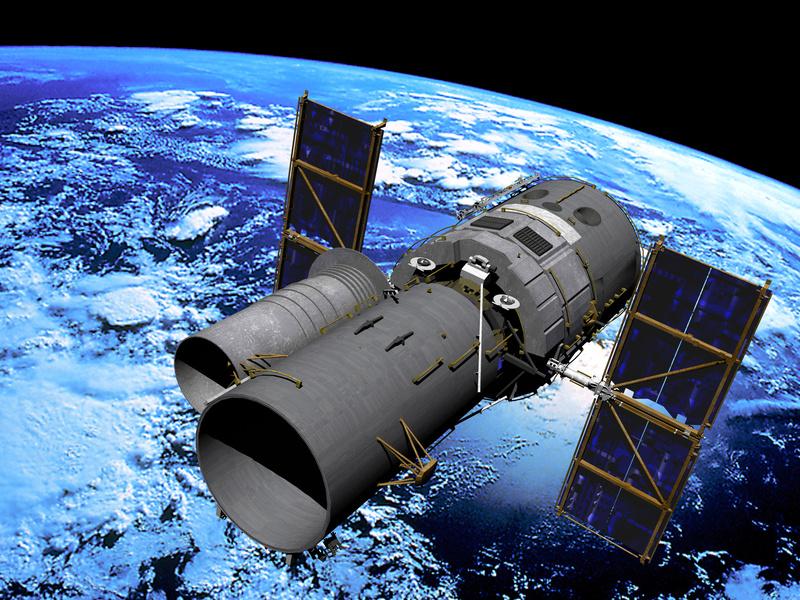
For my money, when you consider the benefits of the space program concerning our shared humanity, technology, medicine, and the list goes on; the investment is worth every dime.
Explorers have shaped and mapped our world. However, our world does not end at the top of our atmosphere. The planet on which we live is a product of a vast universe with endless possibilities. Our exploration into our existence is just beginning.



 “In short, our leadership in science and in industry, our hopes for peace and security, our obligations to ourselves as well as others, all require us to make this effort, to solve these mysteries, to solve them for the good of all men, and to become the world’s leading space-faring nation.”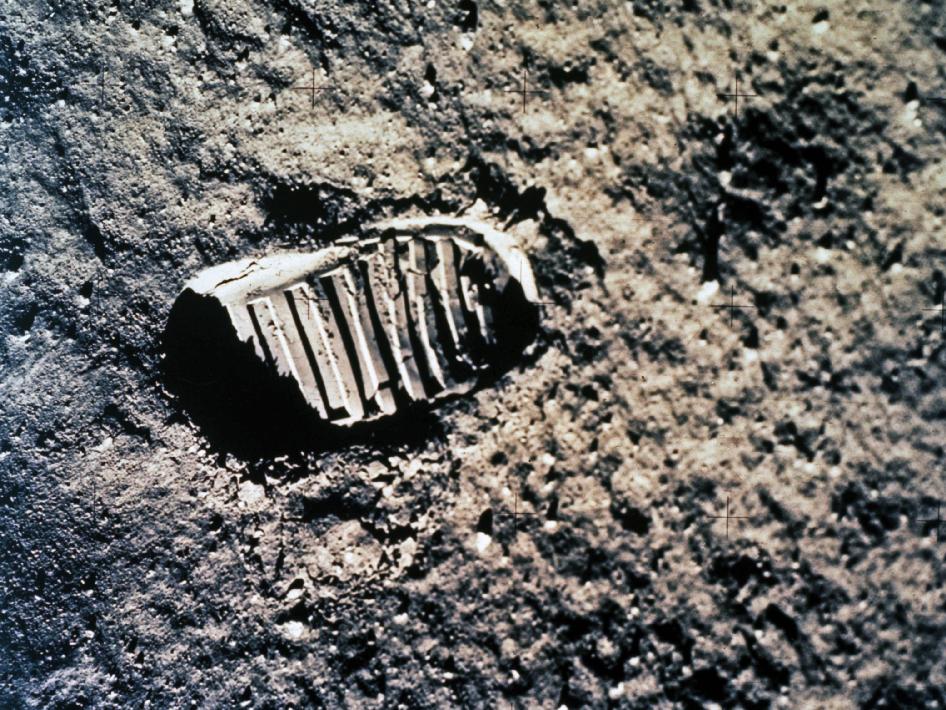
 For my money, when you consider the benefits of the space program concerning our shared humanity, technology, medicine, and the list goes on; the investment is worth every dime.
 Perfect Media Productions, LLC