Perfect Media Productions, LLC is a media production and digital marketing service. We produce audio for radio, podcasts, and voice-overs. We also record and/or edit video for websites and social media.
This is the production home of the Billy Dees Podcast and other great podcasts.
Our blog section features a variety of topics including media, business, and pop culture.
When people think about marketing, public appearances, political campaigns, or building a personal brand, they naturally tend to focus on the visuals. Cameras, lighting, graphics, staging, and presentation all get plenty of attention.
But there is another part of the equation that can make or break how you are perceived: audio.
In this video, I take a technical—and decidedly non-political—look at a recent video of Amy Acton that circulated online and became the subject of criticism from her opponents. My point isn’t about politics or about taking sides. It’s about what happened to the sound, and what could have been done differently.
Oddly enough, many Acton supporters who are defending this clip don’t fully understand what went wrong.
Live events create a complicated audio environment. The sound that works for an audience sitting in an auditorium isn’t necessarily the sound that should be sent to television, social media, or other media outlets. A live audience has its own acoustics, crowd noise, applause, cheering, and the natural sound coming from the stage. The media feed needs to be mixed separately so that the person speaking—and the reaction of the audience—sound natural and balanced.
In the example discussed in the video, the speaker’s microphone is isolated and sounds noticeably different from what you would expect when someone is addressing a crowd. A properly designed media mix could have combined the speaker’s microphone with strategically placed ambient microphones, creating a much more natural representation of the event.
And that’s the larger lesson.
Poor audio can make a good presentation look bad.
Whether you’re a business owner, CEO, political candidate, public speaker, nonprofit leader, or someone building a personal brand, everything you say is part of your brand. If the audio sounds harsh, thin, distorted, overly isolated, or disconnected from the environment, the audience may not consciously understand what’s wrong—but they will notice that something doesn’t sound right.
I’ve spent a good portion of my career working with audio, and I realize that people like me are sometimes dismissed as “audio geeks.”
That’s okay.
But when you’re putting yourself, your company, your campaign, or your organization in front of an audience, it might be worth listening to the audio geeks before the bad recording becomes the thing everyone remembers.
What happens when people stop listening to conversations and start reacting to headlines?
George Fontes
That question runs throughout my latest conversation with George Fontes, host of the WorldAblaze podcast. George and I had a wide-ranging discussion that touched on free speech, citizen journalism, social media, artificial intelligence, geopolitics, violent crime, and the increasingly difficult job of getting independent commentary in front of an audience.
One of the first subjects we explored was something that both of us have experienced firsthand: people forming strong opinions about content they haven’t actually consumed. A headline, thumbnail, or short video clip can be enough to trigger an immediate reaction. In an environment where many social-media users may only watch a few seconds of a video, context becomes increasingly difficult to maintain.
For independent podcasters, that creates a unique problem. Long-form conversations require an audience willing to listen, think, and consider an argument. Social media, meanwhile, rewards immediacy and reaction. George pointed out that people will sometimes criticize something he said without actually watching the video—or even realizing that the clip they are reacting to contains someone else’s words. I have experienced much the same thing. At times, people seem to be responding to what they assume we said rather than what we actually said.
Who Gets to Be a Journalist?
The conversation then moved into the controversy surrounding independent investigator and citizen journalist Nick Shirley and California’s efforts to address issues surrounding privacy and doxxing.
That raised a larger question: Who gets to be called a journalist?
George and I discussed the distinction between traditional journalism and citizen journalism. Does someone need to work for CNN, Fox News, The New York Times, or another established media organization before they have the right to ask questions, investigate a story, or document what they see?
The traditional media model has changed dramatically. Cameras and recording equipment are everywhere, and an individual with a smartphone can potentially document an event and distribute it to millions of people without going through a newsroom or corporate media organization.
That doesn’t mean every citizen journalist is automatically accurate or that every independent investigation is beyond criticism. It does mean that the public conversation about journalism, accountability, and who gets access to information has changed considerably.
For George and me, that also connects directly to the First Amendment and the importance of allowing people to question their government. Free speech isn’t supposed to protect us from hearing things we dislike. It exists, in large part, to protect the ability of citizens to challenge those who hold power.
Accountability, Crime and a Changing Culture
We also discussed the Lindsay Clancy case and the difficult questions surrounding responsibility, mental health, and violent crime.
The discussion wasn’t simply about one individual case. It was about a broader concern: Are we becoming increasingly willing to rationalize or excuse horrific behavior depending on who committed it or what explanation is offered?
Mental health issues can be serious factors in criminal cases, and determining responsibility is ultimately a matter for the courts. But George and I questioned whether society sometimes allows sympathy for a particular group or individual to overwhelm the fundamental issue of accountability.
For me, there is a larger principle involved. I don’t believe violent crime should become acceptable because of someone’s political ideology, background, gender, or circumstances. Violence against another person is still violence, regardless of who commits it.
The AI Race and America’s Future
Another fascinating part of our conversation involved artificial intelligence and the rapid expansion of data centers.
Data centers have become controversial in communities across the country, including Ohio, where concerns about land use, water consumption, energy demands, and development have generated considerable debate.
But there is another side to the issue.
Artificial intelligence is rapidly becoming a major component of global competition. George and I discussed the possibility that the United States could find itself in a strategic race with China over AI, computing infrastructure, robotics, and military applications.
That creates a difficult balancing act. America needs the infrastructure necessary to compete technologically, but that doesn’t mean communities should simply accept every proposal without scrutiny.
The question isn’t necessarily whether we should build data centers. The more important question may be how we build them while preserving the communities, resources, and quality of life that make those communities worth living in.
Technology is changing the physical landscape as well as the information landscape.
Is America Losing Its Personality?
That led to another unexpected part of the conversation: the increasing sameness of American communities.
I talked about a recent drive from Ohio to Florida and how striking it was to see the same restaurants, gas stations, stores, signs, and advertising messages appearing again and again along the highways.
When I was younger, traveling to another part of the country often felt like entering a different world. Regional culture, architecture, food, businesses, and local personalities gave different parts of America a distinct identity.
Today, many communities can feel interchangeable.
George and I discussed whether technology, economic development, national corporations, and urban planning are accelerating that trend. Whatever the cause, there is something worth preserving in the individuality of American communities.
Progress doesn’t necessarily have to mean everything looks the same.
Iran and the Geopolitical Chessboard
The conversation eventually turned toward one of the most complicated subjects in the world today: Iran.
George offered his perspective on the Iranian regime, U.S. policy, Israel, America’s allies, the Strait of Hormuz, and the challenges involved in attempting to resolve a conflict that has been developing for decades.
We discussed whether the United States is facing a stalemate and whether military pressure from a distance can ultimately accomplish what political and diplomatic strategies have not.
One of the points that stood out to me was the importance of understanding the history behind geopolitical conflicts. It is easy to reduce international affairs to a headline or a political talking point. The reality is considerably more complicated.
Iran, Israel, the United States, the United Kingdom, France, Oman, and other nations all have interests in the region, and decisions made in one part of the world can have consequences thousands of miles away.
The Independent Media Problem
Perhaps the most appropriate way to end the conversation was by talking about podcasting itself.
George and I have both watched podcasting evolve from a relatively independent medium into a massive industry. Algorithms increasingly determine what people see and hear. Social platforms can amplify an individual overnight—or make it nearly impossible for that person to reach an audience.
That creates an interesting contradiction.
We have more tools than ever to communicate directly with an audience, but we also have more gatekeepers than ever determining who actually gets discovered.
The solution isn’t to stop.
Independent voices still matter. Long-form conversations still matter. Asking questions still matters. And perhaps most importantly, being willing to say, “This is what I know right now, but I could be wrong,” matters.
Information changes. Circumstances change. New facts emerge. Sometimes the responsible thing to do is change your position when the evidence changes.
That’s not weakness. That’s how the search for truth is supposed to work.
My conversation with George Fontes covers a lot of ground, but underneath all of it is one recurring theme: the importance of independent thought in an age when everyone seems to have already decided what they believe before the conversation even begins.
We may not always agree. That’s the point.
The goal isn’t to eliminate disagreement. It’s to keep the conversation going.
I’ve been following the ongoing debate about audio podcasts versus video podcasts, and I have to admit, some of the arguments are interesting—and some of them are downright amusing.
One point that keeps coming up is that most podcasts are still consumed as audio. People listen while driving, exercising, working around the house, or doing just about anything else. That’s absolutely true.
The other common argument is that audio is easier for creators. You don’t have to worry about lighting, camera angles, editing visuals, or even what you’re wearing. If video stresses you out, the advice is often simple: skip it and just record audio.
From a practical standpoint, I understand that advice.
But I think something important gets lost when we reduce audio to simply being the easier option.
To me, spoken-word audio is an art form.
I can’t imagine legendary voices like Paul Harvey treating audio as the format they chose because they didn’t have to get dressed for the camera. Their voices carried emotion, personality, and imagination. They understood that the human voice has a unique ability to connect with people in a way that’s difficult to replicate anywhere else.
When someone listens to an audio podcast, your voice travels just a few inches into a microphone and ends up directly in their ears. It’s an incredibly personal experience. There are no visual distractions. The listener is focused entirely on your words, your pacing, your emotion, and your delivery.
That’s powerful.
As creators, I think we should approach audio differently than we often do. Instead of thinking, “At least I don’t have to be on camera,” we should ask ourselves:
How can I make this audio experience memorable?
How can I communicate genuine passion?
How can I paint pictures with nothing more than my voice?
How can I create a story that lives in the listener’s imagination?
Even subtle vocal inflection can completely change the way a story is experienced. A simple sentence can become suspenseful, emotional, humorous, or dramatic depending entirely on how it’s delivered.
That’s the beauty of audio.
Now, don’t misunderstand me—video absolutely has its place.
On The Billy Dees Podcast, many of the authors and guests I interview appreciate having professionally produced video. It gives them content they can share on YouTube, embed on their websites, and use across social media. That’s an important part of today’s content marketing landscape, and I understand why it matters.
But I don’t think audio should be viewed as the consolation prize.
Audio deserves its own creative approach.
When I record an audio-only episode, I want to think about rhythm, pacing, tone, pauses, and emotion. I want listeners to hear the enthusiasm in my voice and visualize what I’m describing. If they can build the scene in their own imagination, then the audio has done something video can’t always accomplish.
The next time you’re deciding between an audio podcast and a video podcast, don’t simply ask which one is easier.
Ask yourself which format best serves your message.
And if you choose audio, embrace it for what it is—not just a practical alternative, but a storytelling medium with a unique ability to connect, inspire, and leave a lasting impression.
On this episode of The Billy Dees Podcast, Billy sits down with Kansas gubernatorial candidate Stacy Rogers for an in-depth conversation about the issues shaping not only Kansas but many communities across America. Rather than relying on political talking points, Rogers offers a firsthand perspective from someone who has spent nearly two years traveling the state, meeting voters face-to-face in towns both large and small.
Stacy Rogers
The discussion begins with Rogers explaining what motivated her to seek one of the highest offices in Kansas. Frustrated by the direction of state government and believing many Kansans had become disillusioned with the political process, she decided to enter the race herself. Throughout the interview, she emphasizes a recurring theme: too many citizens feel ignored by government, and restoring trust begins with elected officials who are willing to listen rather than simply campaign.
One of the most compelling segments focuses on the growing controversy surrounding massive AI-driven data centers. While artificial intelligence continues to expand rapidly, Rogers argues that many communities are being asked to accept enormous industrial projects without adequate transparency. She discusses concerns over land use, water consumption, electrical infrastructure, noise pollution, and the long-term environmental impact of these facilities.
Billy explores the national implications of the AI boom, noting the exploding demand for computing power and questioning how America can remain competitive while also protecting local communities. The conversation highlights the difficult balance between technological innovation and responsible governance. Rogers maintains that progress is inevitable, but believes states must establish clear safeguards before approving projects that could permanently reshape local economies and landscapes.
Property taxes emerge as another major topic. Rogers argues that rising property taxes have become one of the greatest financial burdens facing Kansas homeowners, particularly retirees living on fixed incomes. She questions whether citizens should continue paying taxes indefinitely on homes they have already purchased outright. Billy notes that similar debates are taking place across Ohio and many other states, making the discussion especially relevant beyond Kansas.
The conversation also examines state spending, economic development incentives, and the use of STAR Bonds, a financing mechanism Kansas has employed for large projects. Rogers expresses concern that taxpayers often shoulder significant financial risks while investors receive the greatest rewards. Billy and Rogers also discuss the widely publicized effort to attract the Kansas City Chiefs across the state line, using it as an example of broader questions surrounding government incentives and fiscal responsibility.
Education occupies another substantial portion of the interview. Rogers believes the state’s education system needs significant reform despite receiving the largest share of the state budget. She argues that too much funding is consumed by administration while teachers remain underpaid and classrooms under-resourced. She advocates returning to foundational skills such as handwriting, reading, and practical education while reducing unnecessary bureaucracy.
Billy expands the discussion by examining how technology is changing education nationwide. From students relying on artificial intelligence to complete assignments to declining handwriting skills, both agree that education should focus on developing critical thinking rather than simply producing test scores. Rogers also emphasizes helping students become truly prepared for adulthood through practical skills and stronger academic fundamentals.
The interview takes on a broader philosophical tone as the discussion turns to the challenges facing American families. Rogers argues that many social problems are interconnected, linking education, housing costs, inflation, healthcare, nutrition, and economic opportunity. Rather than treating each issue in isolation, she suggests policymakers must examine the underlying causes affecting families across the country.
Perhaps the most distinctive aspect of the interview is Rogers’ campaign strategy itself. Instead of relying primarily on expensive advertising, she has traveled throughout Kansas visiting coffee shops, restaurants, libraries, senior centers, gas stations, and small businesses. Her goal has been to meet voters where they live and work rather than expecting them to attend campaign events. She explains that in several communities she became the first gubernatorial candidate residents had ever met in person.
Billy observes that this grassroots approach reflects what many Americans wish politics would become again—more personal, more accessible, and less driven by massive fundraising operations. Their conversation touches on the growing appetite among voters for candidates who present themselves as public servants rather than career politicians.
Throughout the episode, Billy maintains his trademark conversational interviewing style, allowing thoughtful discussion while occasionally injecting humor into serious topics. Rather than encouraging partisan conflict, the interview explores complex policy questions in a way that invites listeners to think critically about technology, government accountability, education, taxation, and civic engagement.
Whether you’re interested in state politics, the future of artificial intelligence, education reform, or the changing relationship between citizens and government, this episode offers a wide-ranging conversation that extends well beyond Kansas. It’s a thoughtful look at the challenges facing communities across America—and the importance of listening to the people who call those communities home.
Success stories often focus on accomplishments, titles, and accolades. But in a recent episode of The Billy Dees Podcast, Victoria Pelletier shared a much deeper story—one rooted in resilience, personal growth, and the power of embracing life’s challenges.
Victoria Pelletier
Known as the “Turnaround Queen” and “CEO Whisperer,” Victoria Pelletier is a corporate executive, bestselling author, board director, and sought-after speaker whose TEDx talk on healthy resilience has inspired audiences around the world. During her conversation with Billy Dees, she opened up about her difficult childhood, including being born to a drug-addicted teenage mother and spending time in the child welfare system before being adopted into a loving family. Rather than allowing adversity to define her future, Victoria used those experiences as fuel to build a remarkable career and develop a leadership philosophy grounded in empathy, accountability, and determination.
The discussion explored a wide range of topics, including leadership, diversity, personal branding, and the future of work in an age increasingly influenced by artificial intelligence. Victoria emphasized that effective leadership begins with recognizing the whole person, not just the employee. She explained how creating environments where people feel valued, included, and psychologically safe not only benefits individuals but also strengthens organizations through greater innovation, collaboration, and trust. The conversation also touched on the importance of diversity of thought and experience, highlighting how meaningful progress comes from bringing different perspectives together rather than placing people into rigid categories.
Billy and Victoria also examined the challenges AI presents for both businesses and society. While neither believes artificial intelligence will replace humanity, they discussed the importance of maintaining genuine human relationships, developing resilience through real-world experiences, and avoiding overreliance on technology for life’s most important decisions. Victoria stressed the need for organizations to thoughtfully redesign jobs, upskill employees, and build trust as technological changes reshape the workplace.
Perhaps the most inspiring portion of the interview centered on Victoria’s philosophy of “strategic intentionality”—the idea that success requires more than positive thinking. It demands discipline, purpose, and consistent action. While setbacks and hardships are inevitable, Victoria believes individuals always have a choice in how they respond. Her message of resilience, personal responsibility, and authentic leadership offers valuable lessons for anyone seeking to grow professionally or personally.
This episode is an insightful conversation about overcoming adversity, building meaningful relationships, leading with authenticity, and creating a life driven by purpose rather than circumstance. Whether you’re a business leader, entrepreneur, or simply someone looking for inspiration, Victoria Pelletier’s story provides both practical wisdom and a powerful reminder that resilience is often forged through life’s greatest challenges.
Victoria is an in demand public speaker on a variety of business, culture and motivational topics – please head over to her website to read her articles, order a copy of her books or book her for speaking engagements. Also, check out her TEDx Embracing Healthy Resilience.
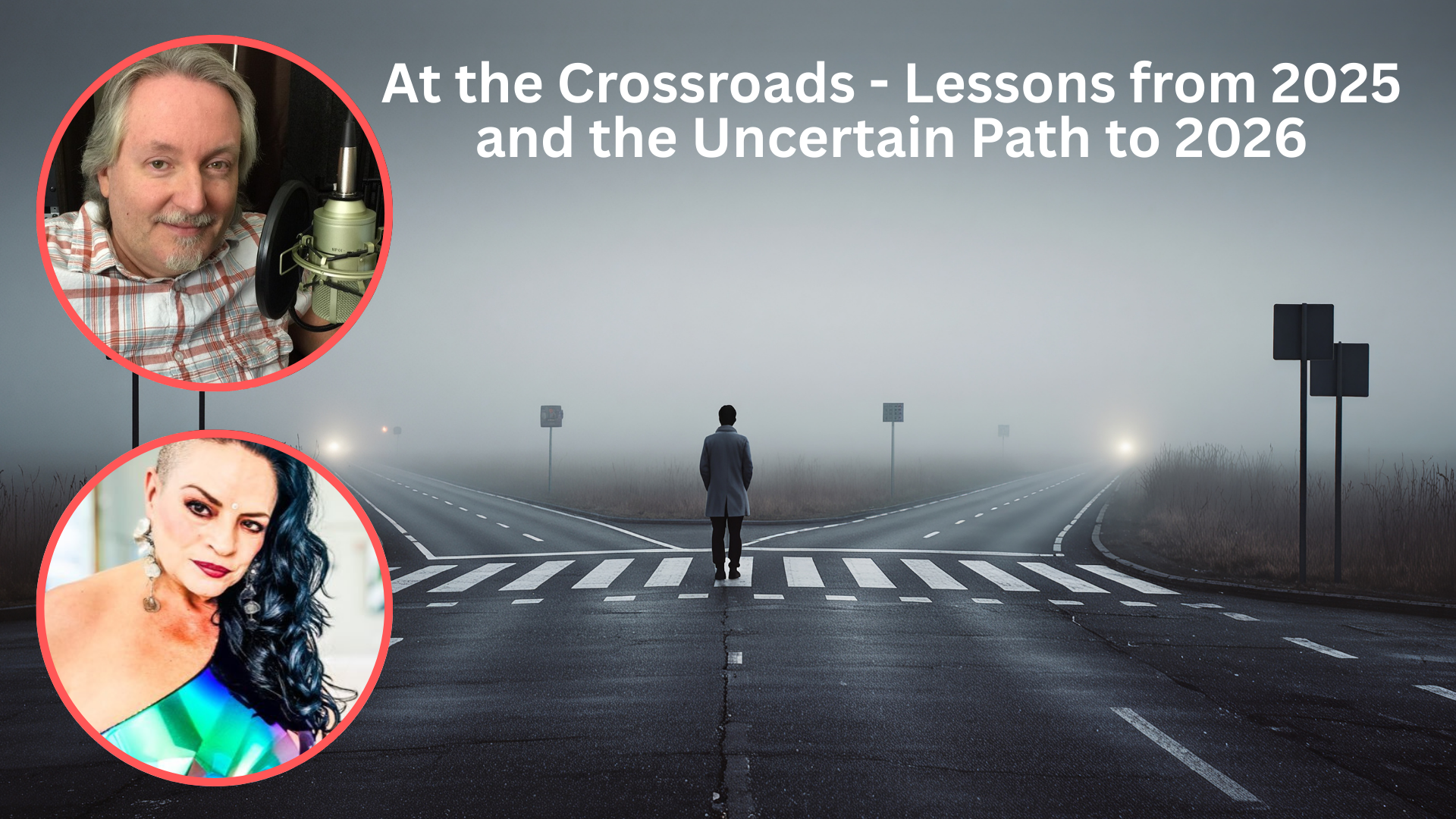
This episode of The Billy D’s Podcast brings back fan-favorite co-host Cynthia Elliott for a wide-ranging, thought-provoking conversation about where we’ve been—and where we’re headed.
Recorded at the end of a turbulent year, Billy and Cynthia reflect on the unpredictability of 2025 and look ahead to what 2026 may hold. With a mix of realism and cautious optimism, they explore the growing sense of unease many people feel, shaped by nonstop news cycles, cultural shifts, and rapid technological change.
At the heart of the discussion is artificial intelligence—its promise, its risks, and its unavoidable impact on jobs, mental health, and society at large. Cynthia draws on her work as an intuitive and founder of the SoulTech Foundation to unpack how AI could drive medical breakthroughs, reshape the workforce, and accelerate the Fourth Industrial Revolution, while also raising serious concerns about unemployment, regulation, and human purpose. The conversation goes beyond technology, touching on universal income, the mental health crisis, and why emotional intelligence and consciousness must evolve alongside machines if society is going to remain stable.
The episode also dives into broader cultural and geopolitical themes, including energy breakthroughs, the new space race, social media burnout, Hollywood’s declining influence, and the growing divide between toxic online narratives and real-world human connection.
Billy and Cynthia don’t shy away from uncomfortable topics—whether it’s political polarization, gender dynamics, or the erosion of community—but they approach them with candor and depth.
The result is a compelling end-of-year conversation that challenges listeners to think critically about the future, their own awareness, and what it will take to navigate the years ahead.
In this episode of The Billy D’s Podcast, Billy welcomes frequent co-host Cynthia Elliott—author, intuitive, nonprofit founder, and all-around multi-disciplinary creator—for a wide-ranging conversation that mixes commentary, personal experience, and cultural insight.
Cynthia Elliott
The discussion begins with Cynthia’s recent success as an author, as her books Memory Mansion and Unleashed Stompers climb the charts once again. But the episode quickly moves far beyond book promotion. Cynthia shares the mission behind her nonprofit, The SoulTech Foundation, which focuses on education, empowerment, and community building—particularly in underserved areas. One of its cornerstone initiatives is an AI Literacy Training Program designed to teach and certify 10,000 Americans with skills that will help them navigate an AI-driven future. The foundation also supports wellness programs, including meditation and yoga, to help people develop emotional and mental resilience.
Billy and Cynthia dive into deeper territory too—especially the growing dependence on AI, the importance of human self-awareness, and the mental health challenges emerging in the digital age. Cynthia discusses why she believes strengthening our inner life and presence is crucial as society becomes increasingly intertwined with technology.
The episode also explores Cynthia’s perspective on intuitive abilities, what people commonly misunderstand about the word “psychic,” and why she believes pattern recognition, energy awareness, and intuition are natural human capacities. Billy brings a scientific angle to the conversation, referencing studies on consciousness, the observer effect, and cutting-edge neural interface technologies like Neuralink.
Cynthia’s upcoming documentary, “Nirvana: A Psychic’s Journey to the Final Rebirth,” becomes another focal point. She explains how the project serves both as personal storytelling and as a resource for others navigating trauma, identity, and self-expression. The film also functions as a legacy for her son, offering him an honest narrative of her life and experiences.
Looking ahead, Cynthia shares several major events she’s leading or hosting:
TEDxMizner (February 4th): Featuring speakers discussing disruption in the age of AI.
Her Health Summit (October): A major event highlighting women’s health, especially for women over 40—an age group dramatically underrepresented in medical research.
SoulTech Magazine: A bi-monthly publication covering wellness, culture, spirituality, and updates from the foundation.
The conversation wraps with a discussion about the collective sense of global anxiety many people feel today—touching on social media’s influence, the “attention economy,” and why doom-scrolling contributes to emotional exhaustion.
This episode blends tech, spirituality, psychology, storytelling, and cultural commentary—capturing exactly what Billy D’s listeners expect: honest, curious conversation across a wide spectrum of ideas.
You can find Cynthia Elliott on X (Twitter) @Shamanisis
This episode was recorded live Friday November 14, 2025, at 8:00pm EST.