Podcasting Into Fall 2026 and Beyond

As we head into the fall season, I’m encouraged by where The Billy Dees Podcast stands. The past year has been one of our strongest in terms of audience growth, and it’s been rewarding to see the results of a deliberate, long-term strategy.

From the beginning, I’ve approached the podcast much like a traditional radio program. It isn’t a content marketing vehicle for another product or service—it is the product. That perspective has shaped every decision we’ve made over the past decade.

Several factors have contributed to our recent growth:

Building on a decade of consistency. With more than 10 years of publishing episodes, we’ve established a reputation for dependable, high-quality content and professional conversations.

Investing in podcast SEO. We’ve placed a greater emphasis on search optimization within the major podcast platforms, making it easier for new listeners to discover the show organically.

Prioritizing the audience experience. The podcast remains free across all major listening platforms and social media channels, including Substack. We also avoid interrupting the conversation with mid-roll advertising. Sponsor messages are limited to the beginning of each episode, allowing listeners to enjoy an uninterrupted discussion.

Respecting our audience’s time. Episodes average approximately 38 minutes and rarely exceed an hour, making them well-suited for commutes, workouts, and busy schedules.

Maintaining a professional editorial approach. The focus has always been on thoughtful interviews and informed commentary rather than outrage, personal attacks, or performative debate.

Growth in podcasting rarely happens overnight. It comes from consistently delivering value, refining your strategy, investing in discoverability, and respecting your audience.

I’m grateful to every guest who has shared their expertise and to every listener who has subscribed, shared an episode, or recommended the show to others. Thank you for being part of the journey. I’m looking forward to what we’ll accomplish together this fall.

Audio vs. Video Podcasts – Why Audio Is More Than Just the “Easier” Option

I’ve been following the ongoing debate about audio podcasts versus video podcasts, and I have to admit, some of the arguments are interesting—and some of them are downright amusing.

One point that keeps coming up is that most podcasts are still consumed as audio. People listen while driving, exercising, working around the house, or doing just about anything else. That’s absolutely true.

The other common argument is that audio is easier for creators. You don’t have to worry about lighting, camera angles, editing visuals, or even what you’re wearing. If video stresses you out, the advice is often simple: skip it and just record audio.

From a practical standpoint, I understand that advice.

But I think something important gets lost when we reduce audio to simply being the easier option.

To me, spoken-word audio is an art form.

I can’t imagine legendary voices like Paul Harvey treating audio as the format they chose because they didn’t have to get dressed for the camera. Their voices carried emotion, personality, and imagination. They understood that the human voice has a unique ability to connect with people in a way that’s difficult to replicate anywhere else.

When someone listens to an audio podcast, your voice travels just a few inches into a microphone and ends up directly in their ears. It’s an incredibly personal experience. There are no visual distractions. The listener is focused entirely on your words, your pacing, your emotion, and your delivery.

That’s powerful.

As creators, I think we should approach audio differently than we often do. Instead of thinking, “At least I don’t have to be on camera,” we should ask ourselves:

  • How can I make this audio experience memorable?
  • How can I communicate genuine passion?
  • How can I paint pictures with nothing more than my voice?
  • How can I create a story that lives in the listener’s imagination?

Even subtle vocal inflection can completely change the way a story is experienced. A simple sentence can become suspenseful, emotional, humorous, or dramatic depending entirely on how it’s delivered.

That’s the beauty of audio.

Now, don’t misunderstand me—video absolutely has its place.

On The Billy Dees Podcast, many of the authors and guests I interview appreciate having professionally produced video. It gives them content they can share on YouTube, embed on their websites, and use across social media. That’s an important part of today’s content marketing landscape, and I understand why it matters.

But I don’t think audio should be viewed as the consolation prize.

Audio deserves its own creative approach.

When I record an audio-only episode, I want to think about rhythm, pacing, tone, pauses, and emotion. I want listeners to hear the enthusiasm in my voice and visualize what I’m describing. If they can build the scene in their own imagination, then the audio has done something video can’t always accomplish.

The next time you’re deciding between an audio podcast and a video podcast, don’t simply ask which one is easier.

Ask yourself which format best serves your message.

And if you choose audio, embrace it for what it is—not just a practical alternative, but a storytelling medium with a unique ability to connect, inspire, and leave a lasting impression.

That’s where the real magic happens.

Resilience, Leadership, and the Human Side of Success – A Conversation with Victoria Pelletier

Success stories often focus on accomplishments, titles, and accolades. But in a recent episode of The Billy Dees Podcast, Victoria Pelletier shared a much deeper story—one rooted in resilience, personal growth, and the power of embracing life’s challenges.

Victoria Pelletier

Known as the “Turnaround Queen” and “CEO Whisperer,” Victoria Pelletier is a corporate executive, bestselling author, board director, and sought-after speaker whose TEDx talk on healthy resilience has inspired audiences around the world. During her conversation with Billy Dees, she opened up about her difficult childhood, including being born to a drug-addicted teenage mother and spending time in the child welfare system before being adopted into a loving family. Rather than allowing adversity to define her future, Victoria used those experiences as fuel to build a remarkable career and develop a leadership philosophy grounded in empathy, accountability, and determination.

The discussion explored a wide range of topics, including leadership, diversity, personal branding, and the future of work in an age increasingly influenced by artificial intelligence. Victoria emphasized that effective leadership begins with recognizing the whole person, not just the employee. She explained how creating environments where people feel valued, included, and psychologically safe not only benefits individuals but also strengthens organizations through greater innovation, collaboration, and trust. The conversation also touched on the importance of diversity of thought and experience, highlighting how meaningful progress comes from bringing different perspectives together rather than placing people into rigid categories.

Billy and Victoria also examined the challenges AI presents for both businesses and society. While neither believes artificial intelligence will replace humanity, they discussed the importance of maintaining genuine human relationships, developing resilience through real-world experiences, and avoiding overreliance on technology for life’s most important decisions. Victoria stressed the need for organizations to thoughtfully redesign jobs, upskill employees, and build trust as technological changes reshape the workplace.

Perhaps the most inspiring portion of the interview centered on Victoria’s philosophy of “strategic intentionality”—the idea that success requires more than positive thinking. It demands discipline, purpose, and consistent action. While setbacks and hardships are inevitable, Victoria believes individuals always have a choice in how they respond. Her message of resilience, personal responsibility, and authentic leadership offers valuable lessons for anyone seeking to grow professionally or personally.

This episode is an insightful conversation about overcoming adversity, building meaningful relationships, leading with authenticity, and creating a life driven by purpose rather than circumstance. Whether you’re a business leader, entrepreneur, or simply someone looking for inspiration, Victoria Pelletier’s story provides both practical wisdom and a powerful reminder that resilience is often forged through life’s greatest challenges.

Victoria is an in demand public speaker on a variety of business, culture and motivational topics – please head over to her website to read her articles, order a copy of her books or book her for speaking engagements. Also, check out her TEDx Embracing Healthy Resilience.

Rethinking the System: A Conversation with Tom Joseph on a “Moneyless” Path to Congress

In this episode of The Billy Dees Podcast, host Billy Dees sits down with Tom Joseph, founder of America’s Main Street Party, to explore an ambitious and unconventional idea: a “moneyless” nominating system for congressional candidates. At a time when public trust in political institutions is strained and campaign spending continues to dominate elections, Joseph presents a model designed to shift power away from wealthy donors and party elites, placing it directly into the hands of voters.

Tom Joseph

At the core of Joseph’s proposal is a competition-style primary process that eliminates campaign spending altogether. Candidates enter by earning grassroots support from constituents rather than financial backing, and they advance through multiple rounds based on public approval. The system relies on equal access to a shared digital platform, where candidates present their positions using the same amount of space, time, and visibility. By standardizing exposure and removing financial advantages, Joseph argues that voters can focus on substance over marketing, potentially leading to candidates with broader and more genuine public support.

The conversation also dives into the mechanics behind the idea, including the use of secure mobile technology, blockchain-based voting, and structured issue-based comparisons to help voters navigate large candidate pools. Joseph emphasizes that the system is designed to work within existing election laws, rather than requiring sweeping legislative changes. He also addresses practical concerns—such as accountability, scalability, and resistance from entrenched political interests—while acknowledging the challenges of introducing such a disruptive concept into a deeply established system.

Throughout the discussion, Billy Dees offers thoughtful skepticism, raising questions about voter behavior, the influence of partisanship, and whether the public truly wants a more nuanced and equitable process. This back-and-forth adds depth to the episode, highlighting both the promise and the uncertainty of Joseph’s vision. Ultimately, the episode presents a compelling exploration of what electoral reform might look like in a digital age—inviting listeners to consider whether a system less driven by money could lead to a more representative democracy.

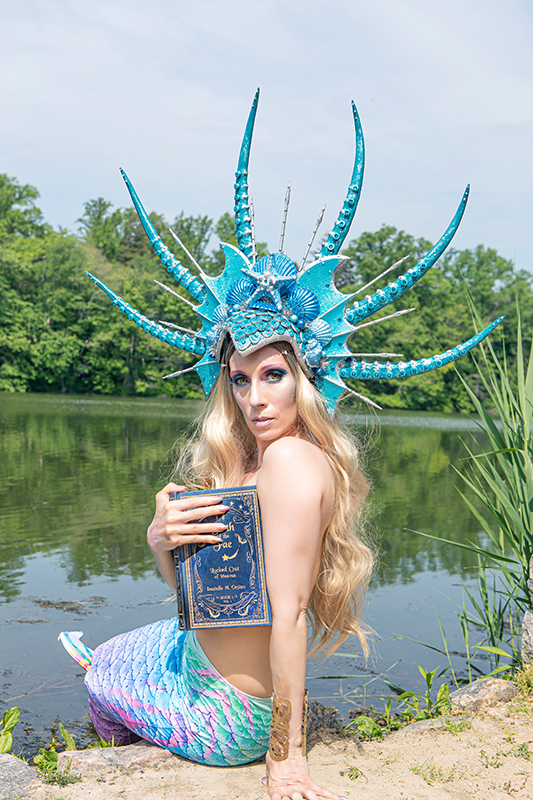
Danielle M. Orsino Talks Cosplay, Martial Arts, and Writing Fantasy

Danielle M. Orsino

This episode of the podcast features a lively and wide-ranging conversation between Billy Dees and fantasy author, martial artist, and cosplayer Danielle M. Orsino. The discussion begins with Orsino’s unconventional journey into writing, sparked by storytelling sessions with a patient undergoing medical treatment. From those humble beginnings, she developed her Legacies of Light and Dark series, building a creative career that blends instinctive storytelling with immersive character development. Her path highlights a recurring theme throughout the episode: creativity doesn’t always follow a traditional or “trained” route, and sometimes the most compelling stories emerge organically.

As the conversation unfolds, Orsino shares how her background in martial arts and cosplay deeply influences her writing process. She describes storytelling as a physical and emotional experience—often acting out scenes, embodying characters, and even using cosplay to better understand their personalities. This multidisciplinary approach sets her apart, especially in a genre often dominated by conventional methods. The discussion also offers practical insight for aspiring writers, touching on discipline, overcoming writer’s block, navigating the publishing industry, and learning when to trust—or question—editorial feedback.

The episode also explores broader themes in fantasy, fandom, and entertainment culture. Orsino speaks candidly about the challenges of being a female author in the fantasy space, where audience expectations can sometimes clash with her more traditional, non-romance-driven storytelling style. The conversation expands into commentary on Hollywood, the evolution of superhero media, and the growing influence of AI in creative industries. Throughout, the dialogue remains thoughtful and grounded, offering listeners a behind-the-scenes look at both the creative process and the shifting landscape of modern storytelling.

Find Danielle M. Orsino on Instagram

You can find the Billy Dees Podcast on all podcast platforms. Listen below on Spotify and YouTube.

Lorie Kleiner Eckert – What if Good Enough is Better Than Perfect?

Lorie Kleiner Eckert

This episode of The Billy Dees Podcast featuring Billy Dees and Lorie Kleiner Eckert centers on personal growth, resilience, and redefining what it means to live a fulfilling life. The conversation is anchored around Eckert’s book Chai on Life, which blends storytelling with practical life lessons drawn from her own experiences. Rather than offering abstract theories, she emphasizes “everyday wisdom”—simple, relatable insights that encourage listeners to find meaning in ordinary moments, embrace gratitude, and let go of the pressure to be perfect.

A major theme throughout the discussion is the rejection of perfectionism in favor of a more balanced, compassionate approach to life. Eckert introduces the idea that “good enough” can often be exactly what’s needed, depending on the situation. Through examples ranging from parenting to creative work, she argues that constantly striving for perfection can lead to burnout and missed opportunities, while accepting limitations can lead to greater productivity and peace of mind. The episode also explores self-acceptance, encouraging people to treat themselves with the same kindness they offer others and to quiet the internal voice of criticism.

The conversation also delves into navigating life’s inevitable changes—what Eckert calls “reinvention.” Whether facing challenges like divorce, aging, or career shifts, she advocates for maintaining healthy routines and taking small, consistent steps forward. Alongside this, the episode touches on mental health, the importance of seeking support without stigma, and how to stay grounded in a world filled with negativity and uncertainty. Overall, the podcast delivers an uplifting yet practical message: life is difficult, but with perspective, humor, and small daily efforts, it’s entirely possible to move forward and find joy.

A Busy Week for the Podcast Studio

We have had a busy week.

We had two studio prerecorded interviews and one live episode.

Sweet Inspiration – A True Story of Finding Your Voice

First up was Kristy Mickelsen. Kristy is the author of A Short Read Memoir – “Sweet Inspiration”

Kristy Mickelsen

This is from her book description:

“But later, when my high from the dope I had snorted early that morning wore off, I cried again for most of the night but not out of anger. This time it was out of fear. Fear of what was happening to me. Fear of what I had become. Fear of what was going to happen to my marriage, and the fear of losing my family – all to my addiction of the street drug, crystal meth.”

In this episode, Kristy Mickelsen shares the inspiration behind her memoir and the personal journey that shaped her path as an advocate, author, and podcast host. From overcoming challenges to finding her voice, Kristy offers a powerful and uplifting story that’s sure to resonate with listeners.

You can find Kristy on X @KristyBooks and more Kristy Mickelsen links are Here

Bill Thompson – Bridging Classic Radio and Modern Tech

Then we had radio veteran and TikTok influencer Bill Thompson on the program to talk about his new venture creating content for people over the age of 40 about how to use AI.

Bill Thompson

If you’re a fan of old-school radio, you’ll find Bill Thompson’s story especially compelling. A true veteran of the airwaves, Bill spent over 30 years behind the mic, interviewing some of the most fascinating figures of our time—leaders, inventors, entertainers, athletes, astronauts, and more. By the time he retired from radio in 2018, he’d recorded an astonishing archive of over 10,000 interviews.

Today, Bill brings those unforgettable moments back to life through his podcast, Now I’ve Heard Everything—a treasure trove of wit, wisdom, humor, and history.

But that’s not all.

Bill is also embracing the future by diving into the world of artificial intelligence. Through a new YouTube series, he’s helping adults over 40—especially those less tech-savvy—learn how to use AI in everyday, practical ways. He’s gathering real stories and questions from his audience to guide the series: What have you tried? What confused you? What do you want to learn?

Whether you’re reminiscing about radio’s golden era or curious about AI’s modern magic, Bill Thompson is here to share, teach, and inspire.

You can find Bill Thompson Here

On TikTok @heardeverything

Trump, Epstein, Colbert, and NPR – Commentary with Billy Dees LIVE!

Billy Dees

We finished out the week on Friday night with political and news commentary. Our previous live last week had a technical issue. The podcast itself was fine and was posted like always but this week we had no issues. The live-stream did well on X.

Hot Takes and Heated Topics!

In this lively episode, we dive into some of the most buzz-worthy stories in the media world. First up: a mysterious birthday letter allegedly from Donald Trump to Jeffrey Epstein resurfaces—just in time to stir up controversy. Is it coincidence, or calculated distraction?

Next, we react to the surprise cancellation of The Late Show with Stephen Colbert. What happened to the golden age of late-night laughs? We explore how these shows have shifted from light-hearted comedy to full-on political theater.

And finally, we take a hard look at NPR—once a trusted voice for public service journalism, now seen by many as another outlet for partisan commentary. What changed?

Don’t miss this fast-paced episode packed with insight, humor, and sharp commentary.

Note:

Thank you for listening. All these episodes are available on your favorite podcasting platform. For your convenience, they are listed below.