
When Truth Becomes Controversial: A Conversation with George Fontes

What happens when people stop listening to conversations and start reacting to headlines?

George Fontes

That question runs throughout my latest conversation with George Fontes, host of the World Ablaze podcast. George and I had a wide-ranging discussion that touched on free speech, citizen journalism, social media, artificial intelligence, geopolitics, violent crime, and the increasingly difficult job of getting independent commentary in front of an audience.

One of the first subjects we explored was something that both of us have experienced firsthand: people forming strong opinions about content they haven’t actually consumed. A headline, thumbnail, or short video clip can be enough to trigger an immediate reaction. In an environment where many social-media users may only watch a few seconds of a video, context becomes increasingly difficult to maintain.

For independent podcasters, that creates a unique problem. Long-form conversations require an audience willing to listen, think, and consider an argument. Social media, meanwhile, rewards immediacy and reaction. George pointed out that people will sometimes criticize something he said without actually watching the video—or even realizing that the clip they are reacting to contains someone else’s words. I have experienced much the same thing. At times, people seem to be responding to what they assume we said rather than what we actually said.

Who Gets to Be a Journalist?

The conversation then moved into the controversy surrounding independent investigator and citizen journalist Nick Shirley and California’s efforts to address issues surrounding privacy and doxxing.

That raised a larger question: Who gets to be called a journalist?

George and I discussed the distinction between traditional journalism and citizen journalism. Does someone need to work for CNN, Fox News, The New York Times, or another established media organization before they have the right to ask questions, investigate a story, or document what they see?

The traditional media model has changed dramatically. Cameras and recording equipment are everywhere, and an individual with a smartphone can potentially document an event and distribute it to millions of people without going through a newsroom or corporate media organization.

That doesn’t mean every citizen journalist is automatically accurate or that every independent investigation is beyond criticism. It does mean that the public conversation about journalism, accountability, and who gets access to information has changed considerably.

For George and me, that also connects directly to the First Amendment and the importance of allowing people to question their government. Free speech isn’t supposed to protect us from hearing things we dislike. It exists, in large part, to protect the ability of citizens to challenge those who hold power.

Accountability, Crime and a Changing Culture

We also discussed the Lindsay Clancy case and the difficult questions surrounding responsibility, mental health, and violent crime.

The discussion wasn’t simply about one individual case. It was about a broader concern: Are we becoming increasingly willing to rationalize or excuse horrific behavior depending on who committed it or what explanation is offered?

Mental health issues can be serious factors in criminal cases, and determining responsibility is ultimately a matter for the courts. But George and I questioned whether society sometimes allows sympathy for a particular group or individual to overwhelm the fundamental issue of accountability.

For me, there is a larger principle involved. I don’t believe violent crime should become acceptable because of someone’s political ideology, background, gender, or circumstances. Violence against another person is still violence, regardless of who commits it.

The AI Race and America’s Future

Another fascinating part of our conversation involved artificial intelligence and the rapid expansion of data centers.

Data centers have become controversial in communities across the country, including Ohio, where concerns about land use, water consumption, energy demands, and development have generated considerable debate.

But there is another side to the issue.

Artificial intelligence is rapidly becoming a major component of global competition. George and I discussed the possibility that the United States could find itself in a strategic race with China over AI, computing infrastructure, robotics, and military applications.

That creates a difficult balancing act. America needs the infrastructure necessary to compete technologically, but that doesn’t mean communities should simply accept every proposal without scrutiny.

The question isn’t necessarily whether we should build data centers. The more important question may be how we build them while preserving the communities, resources, and quality of life that make those communities worth living in.

Technology is changing the physical landscape as well as the information landscape.

Is America Losing Its Personality?

That led to another unexpected part of the conversation: the increasing sameness of American communities.

I talked about a recent drive from Ohio to Florida and how striking it was to see the same restaurants, gas stations, stores, signs, and advertising messages appearing again and again along the highways.

When I was younger, traveling to another part of the country often felt like entering a different world. Regional culture, architecture, food, businesses, and local personalities gave different parts of America a distinct identity.

Today, many communities can feel interchangeable.

George and I discussed whether technology, economic development, national corporations, and urban planning are accelerating that trend. Whatever the cause, there is something worth preserving in the individuality of American communities.

Progress doesn’t necessarily have to mean everything looks the same.

Iran and the Geopolitical Chessboard

The conversation eventually turned toward one of the most complicated subjects in the world today: Iran.

George offered his perspective on the Iranian regime, U.S. policy, Israel, America’s allies, the Strait of Hormuz, and the challenges involved in attempting to resolve a conflict that has been developing for decades.

We discussed whether the United States is facing a stalemate and whether military pressure from a distance can ultimately accomplish what political and diplomatic strategies have not.

One of the points that stood out to me was the importance of understanding the history behind geopolitical conflicts. It is easy to reduce international affairs to a headline or a political talking point. The reality is considerably more complicated.

Iran, Israel, the United States, the United Kingdom, France, Oman, and other nations all have interests in the region, and decisions made in one part of the world can have consequences thousands of miles away.

The Independent Media Problem

Perhaps the most appropriate way to end the conversation was by talking about podcasting itself.

George and I have both watched podcasting evolve from a relatively independent medium into a massive industry. Algorithms increasingly determine what people see and hear. Social platforms can amplify an individual overnight—or make it nearly impossible for that person to reach an audience.

That creates an interesting contradiction.

We have more tools than ever to communicate directly with an audience, but we also have more gatekeepers than ever determining who actually gets discovered.

The solution isn’t to stop.

Independent voices still matter. Long-form conversations still matter. Asking questions still matters. And perhaps most importantly, being willing to say, “This is what I know right now, but I could be wrong,” matters.

Information changes. Circumstances change. New facts emerge. Sometimes the responsible thing to do is change your position when the evidence changes.

That’s not weakness. That’s how the search for truth is supposed to work.

My conversation with George Fontes covers a lot of ground, but underneath all of it is one recurring theme: the importance of independent thought in an age when everyone seems to have already decided what they believe before the conversation even begins.

We may not always agree. That’s the point.

The goal isn’t to eliminate disagreement. It’s to keep the conversation going.
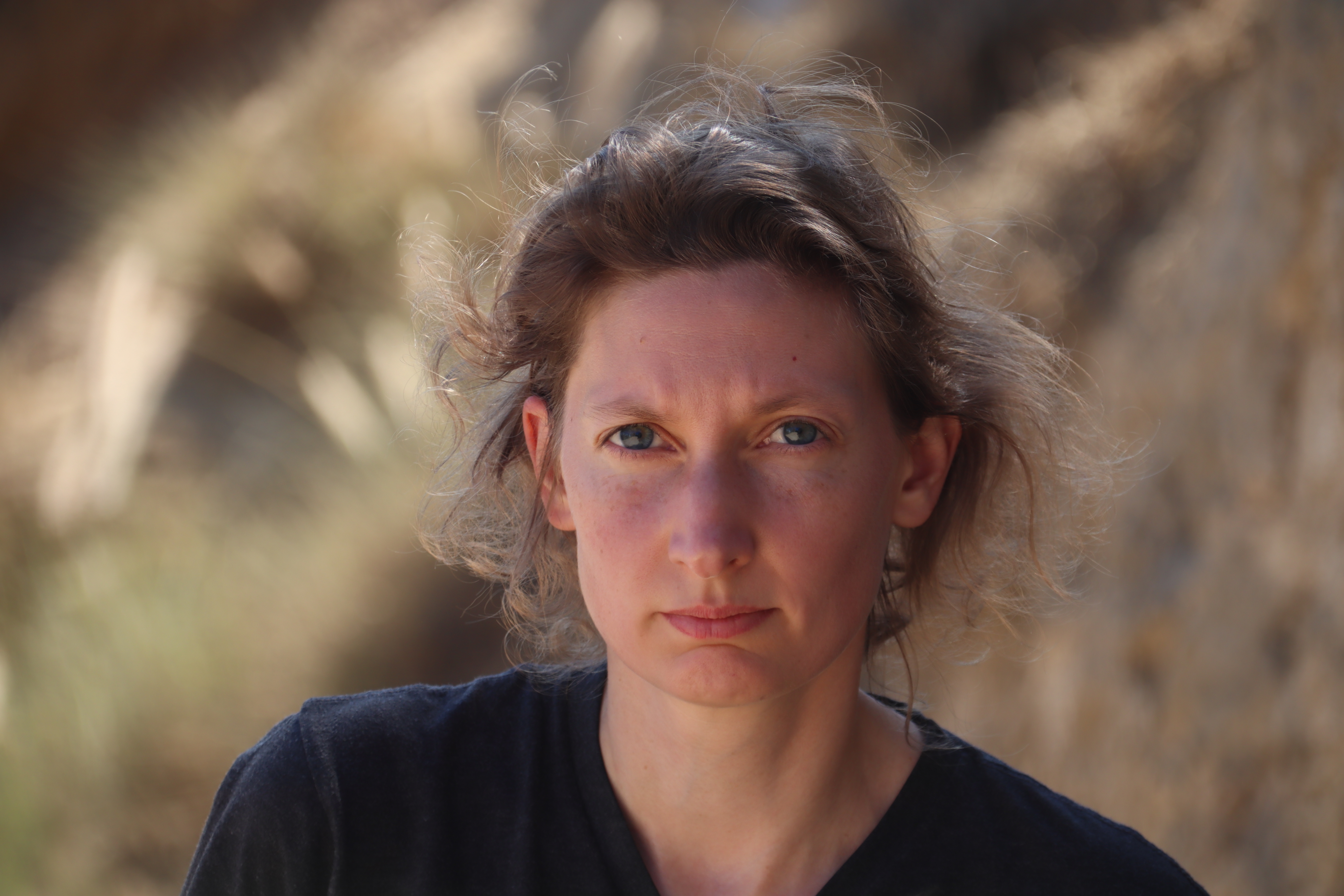
What Italy’s Soccer Struggles Can Teach America About Education, Work and Critical Thinking

In a wide-ranging conversation on The Billy Dees Podcast, Billy Dees sits down with filmmaker and writer Sara Alessandrini for a discussion that begins with Italian soccer but quickly becomes a much larger examination of education, workplace culture, individualism, critical thinking, immigration, artificial intelligence and the challenges facing modern American society.

Alessandrini, who is originally from Italy and spent 11 years living in Los Angeles before moving to the New York area, approaches the conversation as an independent-minded observer rather than someone firmly aligned with either the political left or right. She explains that she is interested in ideas from both sides and believes the best approach is to examine what actually works rather than becoming trapped by political labels. That perspective becomes particularly important as the conversation moves between American and Italian institutions and cultures.

The Soccer Analogy

The discussion centers initially on Alessandrini’s Substack essay, “Italy’s Failure to Qualify for the World Cup Is a Warning to the United States, and It’s Not About Soccer.”

Italy has historically been one of the world’s great soccer nations, but Alessandrini points to the country’s repeated failure to qualify for the World Cup as evidence of deeper problems in how young players are developed. She discusses a major shift from a culture in which children developed their skills through hours of informal play toward a highly structured system in which coaches increasingly control how players behave on the field.

According to Alessandrini, the problem isn’t teamwork itself. Rather, it is what happens when teamwork becomes conformity. Young players can become so focused on following instructions, avoiding mistakes and doing what the coach expects that they lose the ability to take risks, improvise and think independently.

That distinction becomes the central metaphor of the interview: Are we developing people who know how to think, or people who simply know how to follow instructions?

From Soccer Fields to the Workplace

The soccer discussion leads directly into a conversation about American education and the modern workplace.

Alessandrini argues that she has observed a similar tendency among some American workers: an emphasis on procedures and instructions rather than problem-solving and independent thought. She describes situations from her professional experience in which employees were capable of following written instructions but struggled when they encountered a problem that wasn’t covered by those instructions.

For Alessandrini, that represents a fundamental weakness in education and workforce development. Memorizing information is not necessarily the same thing as understanding how a system works. Someone who understands the underlying system can adapt when circumstances change; someone who has simply memorized a procedure may be lost when the situation changes.

Billy Dees expands on that idea by discussing his own decades of experience in audio and media production. He points out that technicians from his generation often learned the fundamentals of electronics, signal flow, microphones and equipment before digital technology became dominant. As technology evolved, those fundamentals provided a foundation for learning new systems.

The conversation raises an important question for today’s workforce: What happens when people learn software without understanding the principles behind what the software is actually doing?

Is Higher Education Preparing People for Work?

The interview becomes particularly critical when Billy and Sara discuss American higher education.

Both question whether the traditional four-year college model is producing the kind of independent thinkers and skilled workers the economy needs. Alessandrini contrasts the American university system with the more specialized educational path she experienced in Italy, where students can receive considerably more focused training earlier in their education.

The discussion also addresses the enormous cost of American higher education and whether students are receiving enough practical value for the money they are spending.

Billy questions the assumption that everyone necessarily needs a traditional four-year degree, suggesting that education should be more directly connected to the profession or skill a person intends to pursue. Alessandrini adds her own experiences working with people in technical fields, including audiovisual production, where she encountered workers who had educational credentials but struggled with basic practical problem-solving.

The issue, she argues, isn’t simply whether someone has a degree. It’s whether that person knows how to learn.

Preparing for an AI-Driven Economy

That idea becomes even more important when the conversation turns to artificial intelligence.

Neither Billy nor Sara views AI simply as an apocalyptic threat. Instead, they see it as another major technological transformation that will change the nature of work.

If AI increasingly handles specific tasks, workers will need to be able to adapt, learn new skills and move between different kinds of work. Someone trained only to perform a narrow set of tasks could have a difficult time when those tasks disappear or change.

Alessandrini argues that learning how to learn may ultimately be more valuable than memorizing a fixed body of information. She points to her own career as an example: she has moved between different fields and continued developing new skills.

The lesson from the soccer analogy therefore becomes even more relevant: A successful system shouldn’t simply produce people who can execute today’s game plan. It should produce people capable of adapting when the game changes.

Immigration: Beyond the Political Talking Points

The conversation also moves into immigration, where Alessandrini argues that the debate is often reduced to two opposing extremes.

She points out that immigration serves multiple purposes and that the United States already has numerous categories of legal immigration, including employment-based visas, asylum, refugees and seasonal workers. The real question, she argues, should be what the country is trying to accomplish with its immigration system.

That leads to another theme running throughout the interview: before attempting to fix a system, define what the system is supposed to accomplish.

The same principle applies to education, immigration and healthcare. Without agreement about the desired outcome, political arguments tend to focus on competing slogans rather than practical solutions.

Looking at Other Countries Without Idealizing Them

One of the most interesting aspects of the conversation is that neither participant presents Italy as a perfect alternative to America.

Alessandrini repeatedly emphasizes that both countries have strengths and weaknesses. Her experience as an immigrant has given her an unusual perspective: she has lived within both systems and can compare them from personal experience.

She describes the United States as a country that gave her opportunities she believes would have been much more difficult to obtain in Italy. At the same time, she believes Americans can learn from successful elements of other countries.

That approach runs contrary to the tendency to treat political and cultural questions as competitions in which one country or ideology must be completely right and the other completely wrong.

The Larger Question: Can We Still Think for Ourselves?

By the end of the interview, the discussion has moved far beyond Italian soccer.

Billy and Sara talk about what they see as a growing tendency toward political and cultural tribalism, where people increasingly inhabit separate informational environments and sometimes appear to live in completely different versions of reality.

For Billy, one of the biggest losses has been what he describes as a former sense of “collective wisdom”—the idea that Americans could disagree strongly about solutions while still operating within the same basic understanding of reality.

Sara offers a somewhat more optimistic counterpoint. She reminds the audience that problems exist in every country and that people often see the best and worst of their own societies differently depending on their experiences.

That tension between optimism and skepticism gives the interview much of its character.

Ultimately, the conversation between Billy Dees and Sara Alessandrini isn’t really about soccer, college, immigration or even artificial intelligence individually. It is about how societies develop people—and whether those systems encourage curiosity, adaptability, competence and independent thought, or simply teach people to follow the rules of the system they happen to be in.

And that may be the most important question of all as education, employment and technology continue to change.