
When Compassion Gets Turned Upside Down

A Billy Dees Podcast Commentary on False Compassion, Accountability, and a Society That Doesn’t Like Being Challenged

A middle-aged man with light brown hair and a beard is smiling while sitting next to a microphone, with audio equipment visible in the background.

What happens when compassion becomes so distorted that we begin feeling more sympathy for the person who committed the offense than for the person who suffered because of it?

That is the question at the heart of this Billy Dees Podcast commentary.

The episode begins with a thought from Archbishop Fulton Sheen, recorded decades ago, about what he called “false compassion”—the tendency to direct pity toward the person who committed the wrong rather than toward the person who was harmed.

That idea becomes the thread running through a much larger conversation about crime, mental health, victims, ideology, higher education, and what happens when a society becomes reluctant to draw clear moral and legal lines.

The Problem With Never Wanting to Be Challenged

Billy begins by acknowledging something that applies far beyond religion or politics: sometimes we avoid ideas because we already know they might challenge us.

It is easy to surround ourselves with information, people, and opinions that reinforce what we already believe. The difficult part is hearing something that makes us stop and ask whether our assumptions are actually correct.

That is one of the purposes of commentary on the podcast. It isn’t simply about passing along information or championing a political party. The goal is to put events into context, examine uncomfortable questions, and—hopefully—give listeners something to think about and talk about.

The episode then turns to one of the most disturbing questions in the discussion:

Can compassion become counterproductive when it removes accountability?

The Lindsay Clancy Case

Much of the commentary centers on the Lindsay Clancy case and the debate surrounding her mental health and criminal responsibility after the deaths of her three children.

Billy makes an important distinction. Mental illness is real, serious, and deserving of better treatment. He also acknowledges that there were apparent failures surrounding the care she received.

But acknowledging those issues doesn’t necessarily resolve the question of criminal accountability.

The discussion examines the tension between understanding why someone committed an act and determining what society should do when someone causes catastrophic harm.

Those are not necessarily the same question.

And that distinction becomes particularly important when the public response appears to shift attention away from victims and toward the person accused or convicted of causing the harm.

Who Gets Our Sympathy?

One of the most striking portions of the episode involves reactions from people who publicly expressed extraordinary support for Clancy and her attorney.

Billy questions the apparent willingness to portray someone accused of killing her children as a heroic or revolutionary figure.

His concern isn’t that people should be incapable of empathy. Quite the opposite.

The concern is what happens when empathy becomes so selective that the victims virtually disappear from the conversation.

The three children at the center of the case cannot tell their story. They cannot explain what happened to them. They cannot defend themselves.

That raises a difficult question:

Where should compassion begin?

And perhaps even more importantly:

Can we understand someone’s circumstances without excusing what they did?

When the Victim Disappears

The episode then broadens beyond the Clancy case to allegations surrounding sexual assault at a university.

Billy discusses allegations that a young woman was drugged and sexually assaulted by multiple fraternity members, along with questions about the subsequent disciplinary and legal response.

He is careful to acknowledge that he does not have access to everything investigators had when decisions were made. But he also argues that the allegations raise serious questions about how institutions respond when the people involved are students at prestigious universities.

The larger issue is not simply one particular case.

It is whether institutions sometimes become more concerned with protecting themselves, their reputations, or their preferred narratives than with confronting uncomfortable circumstances involving actual victims.

That question leads naturally into a much broader critique of higher education.

What Are We Paying For?

Billy argues that America should reconsider some of its assumptions about traditional college education.

For decades, the standard advice was straightforward: get a college degree because that is the path to a successful career.

But the world has changed.

Technology, artificial intelligence, skilled trades, and rapidly changing employment requirements have created new questions about what education should actually accomplish.

Do we need four years of traditional college before someone can begin specialized training?

Could some professions benefit from more direct educational paths?

And why have skilled trades such as electrical work, welding, and other technical professions sometimes been treated as lesser alternatives to a university education?

These are not questions about whether education matters.

They are questions about what education is supposed to do.

Billy argues that education should teach people how to think, develop useful skills, and prepare them to contribute to society—not simply provide an expensive credential.

The Sydney Sweeney Question

The commentary takes another unexpected turn with a discussion involving actress Sydney Sweeney.

Billy uses a social-media comparison involving Sweeney and Lindsay Clancy to illustrate what he sees as another example of distorted priorities.

The question presented to some women was essentially which woman represented a greater threat to women.

The responses, Billy argues, demonstrate just how dramatically cultural perceptions can become detached from proportionality.

Whatever someone’s opinion of Sweeney’s image, sexuality, advertising, or celebrity status, Billy asks listeners to consider the basic question:

How can cultural disagreement about an actress’s image be placed on the same moral scale as the killing of three children?

The point isn’t really about Sydney Sweeney.

It is about how easily ideological frameworks can alter the way people perceive reality.

Are We Losing Our Ability to Agree on Reality?

That may ultimately be the larger question behind the entire episode.

Billy isn’t arguing that everyone has to think alike. In fact, the podcast has long made room for different perspectives.

The concern is what happens when disagreement stops being about different interpretations of reality and becomes a situation where people appear to be living inside entirely different realities.

A healthy society can debate crime.

It can debate mental health.

It can debate feminism.

It can debate higher education.

It can debate sexuality, culture, politics, and social responsibility.

But underneath all of those debates should be some basic principles about human behavior, accountability, and the difference between a victim and a perpetrator.

The Conversation We Don’t Want to Have

The Fulton Sheen quote from the beginning of the episode comes back into focus toward the end.

The phrase “false compassion” isn’t presented as an argument against compassion itself. It is a warning about what can happen when compassion loses its connection to accountability and reality.

Understanding someone’s circumstances doesn’t require pretending the consequences don’t matter.

Mental illness can be real without eliminating every concept of responsibility.

A person can have experienced trauma without becoming immune from accountability.

An institution can believe in rehabilitation without ignoring victims.

And society can show compassion without forgetting who was harmed.

Perhaps the uncomfortable lesson is that compassion sometimes requires more than sympathy.

Sometimes it requires us to tell the truth—even when the truth makes us uncomfortable.

And sometimes the person who needs our compassion isn’t the person standing in front of the microphone asking for it.

Sometimes it’s the person who never gets the chance to speak again.

Content Note:

Seven fraternity members face lawsuit over alleged assault at Cornell. This is a developing story and is currently (Sept. 26, 2026) trending as The Cornell Seven. For more information visit People.
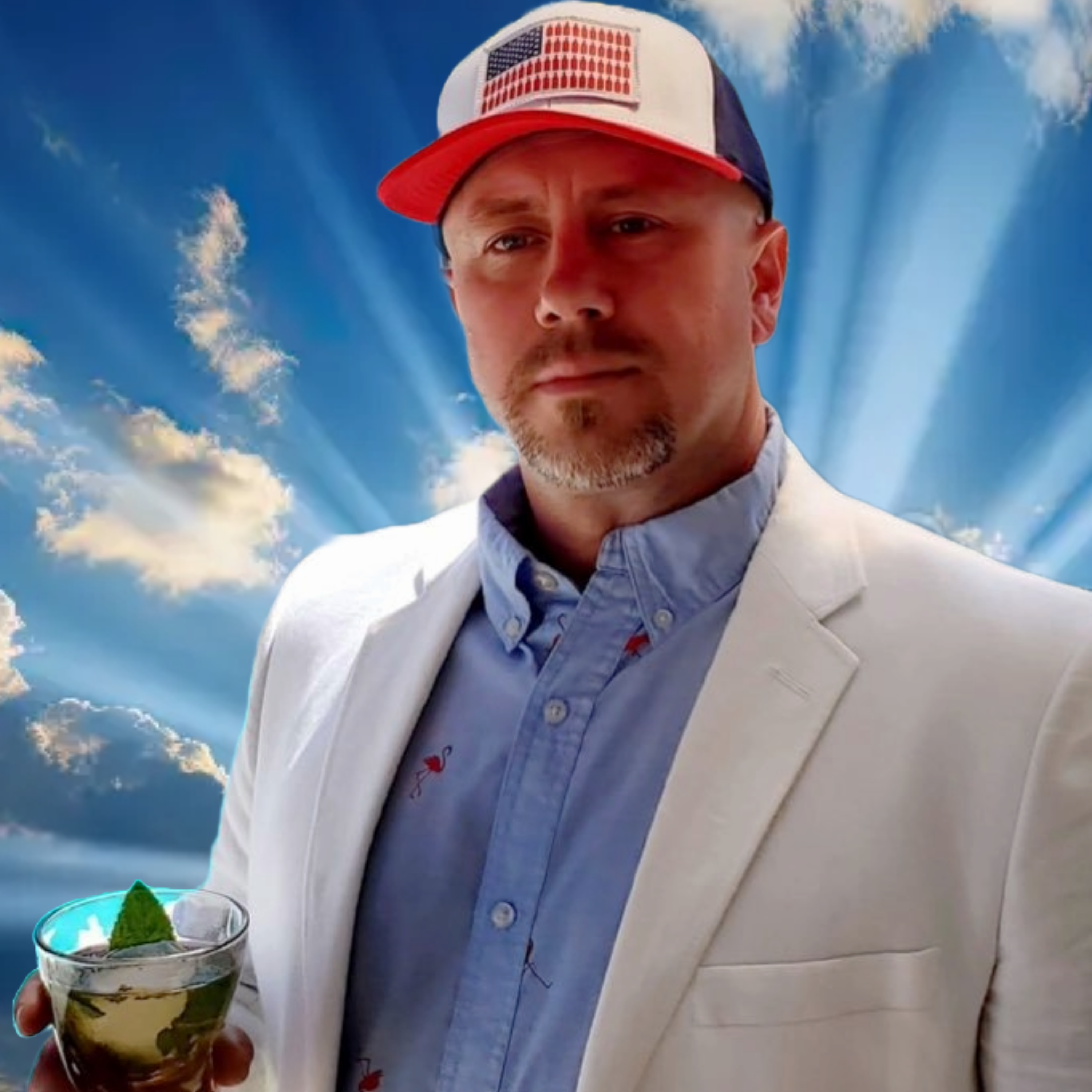
When Truth Becomes Controversial: A Conversation with George Fontes

What happens when people stop listening to conversations and start reacting to headlines?

George Fontes

That question runs throughout my latest conversation with George Fontes, host of the World Ablaze podcast. George and I had a wide-ranging discussion that touched on free speech, citizen journalism, social media, artificial intelligence, geopolitics, violent crime, and the increasingly difficult job of getting independent commentary in front of an audience.

One of the first subjects we explored was something that both of us have experienced firsthand: people forming strong opinions about content they haven’t actually consumed. A headline, thumbnail, or short video clip can be enough to trigger an immediate reaction. In an environment where many social-media users may only watch a few seconds of a video, context becomes increasingly difficult to maintain.

For independent podcasters, that creates a unique problem. Long-form conversations require an audience willing to listen, think, and consider an argument. Social media, meanwhile, rewards immediacy and reaction. George pointed out that people will sometimes criticize something he said without actually watching the video—or even realizing that the clip they are reacting to contains someone else’s words. I have experienced much the same thing. At times, people seem to be responding to what they assume we said rather than what we actually said.

Who Gets to Be a Journalist?

The conversation then moved into the controversy surrounding independent investigator and citizen journalist Nick Shirley and California’s efforts to address issues surrounding privacy and doxxing.

That raised a larger question: Who gets to be called a journalist?

George and I discussed the distinction between traditional journalism and citizen journalism. Does someone need to work for CNN, Fox News, The New York Times, or another established media organization before they have the right to ask questions, investigate a story, or document what they see?

The traditional media model has changed dramatically. Cameras and recording equipment are everywhere, and an individual with a smartphone can potentially document an event and distribute it to millions of people without going through a newsroom or corporate media organization.

That doesn’t mean every citizen journalist is automatically accurate or that every independent investigation is beyond criticism. It does mean that the public conversation about journalism, accountability, and who gets access to information has changed considerably.

For George and me, that also connects directly to the First Amendment and the importance of allowing people to question their government. Free speech isn’t supposed to protect us from hearing things we dislike. It exists, in large part, to protect the ability of citizens to challenge those who hold power.

Accountability, Crime and a Changing Culture

We also discussed the Lindsay Clancy case and the difficult questions surrounding responsibility, mental health, and violent crime.

The discussion wasn’t simply about one individual case. It was about a broader concern: Are we becoming increasingly willing to rationalize or excuse horrific behavior depending on who committed it or what explanation is offered?

Mental health issues can be serious factors in criminal cases, and determining responsibility is ultimately a matter for the courts. But George and I questioned whether society sometimes allows sympathy for a particular group or individual to overwhelm the fundamental issue of accountability.

For me, there is a larger principle involved. I don’t believe violent crime should become acceptable because of someone’s political ideology, background, gender, or circumstances. Violence against another person is still violence, regardless of who commits it.

The AI Race and America’s Future

Another fascinating part of our conversation involved artificial intelligence and the rapid expansion of data centers.

Data centers have become controversial in communities across the country, including Ohio, where concerns about land use, water consumption, energy demands, and development have generated considerable debate.

But there is another side to the issue.

Artificial intelligence is rapidly becoming a major component of global competition. George and I discussed the possibility that the United States could find itself in a strategic race with China over AI, computing infrastructure, robotics, and military applications.

That creates a difficult balancing act. America needs the infrastructure necessary to compete technologically, but that doesn’t mean communities should simply accept every proposal without scrutiny.

The question isn’t necessarily whether we should build data centers. The more important question may be how we build them while preserving the communities, resources, and quality of life that make those communities worth living in.

Technology is changing the physical landscape as well as the information landscape.

Is America Losing Its Personality?

That led to another unexpected part of the conversation: the increasing sameness of American communities.

I talked about a recent drive from Ohio to Florida and how striking it was to see the same restaurants, gas stations, stores, signs, and advertising messages appearing again and again along the highways.

When I was younger, traveling to another part of the country often felt like entering a different world. Regional culture, architecture, food, businesses, and local personalities gave different parts of America a distinct identity.

Today, many communities can feel interchangeable.

George and I discussed whether technology, economic development, national corporations, and urban planning are accelerating that trend. Whatever the cause, there is something worth preserving in the individuality of American communities.

Progress doesn’t necessarily have to mean everything looks the same.

Iran and the Geopolitical Chessboard

The conversation eventually turned toward one of the most complicated subjects in the world today: Iran.

George offered his perspective on the Iranian regime, U.S. policy, Israel, America’s allies, the Strait of Hormuz, and the challenges involved in attempting to resolve a conflict that has been developing for decades.

We discussed whether the United States is facing a stalemate and whether military pressure from a distance can ultimately accomplish what political and diplomatic strategies have not.

One of the points that stood out to me was the importance of understanding the history behind geopolitical conflicts. It is easy to reduce international affairs to a headline or a political talking point. The reality is considerably more complicated.

Iran, Israel, the United States, the United Kingdom, France, Oman, and other nations all have interests in the region, and decisions made in one part of the world can have consequences thousands of miles away.

The Independent Media Problem

Perhaps the most appropriate way to end the conversation was by talking about podcasting itself.

George and I have both watched podcasting evolve from a relatively independent medium into a massive industry. Algorithms increasingly determine what people see and hear. Social platforms can amplify an individual overnight—or make it nearly impossible for that person to reach an audience.

That creates an interesting contradiction.

We have more tools than ever to communicate directly with an audience, but we also have more gatekeepers than ever determining who actually gets discovered.

The solution isn’t to stop.

Independent voices still matter. Long-form conversations still matter. Asking questions still matters. And perhaps most importantly, being willing to say, “This is what I know right now, but I could be wrong,” matters.

Information changes. Circumstances change. New facts emerge. Sometimes the responsible thing to do is change your position when the evidence changes.

That’s not weakness. That’s how the search for truth is supposed to work.

My conversation with George Fontes covers a lot of ground, but underneath all of it is one recurring theme: the importance of independent thought in an age when everyone seems to have already decided what they believe before the conversation even begins.

We may not always agree. That’s the point.

The goal isn’t to eliminate disagreement. It’s to keep the conversation going.