Perfect Media Productions, LLC is a media production and digital marketing service. We produce audio for radio, podcasts, and voice-overs. We also record and/or edit video for websites and social media.
This is the production home of the Billy Dees Podcast and other great podcasts.
Our blog section features a variety of topics including media, business, and pop culture.
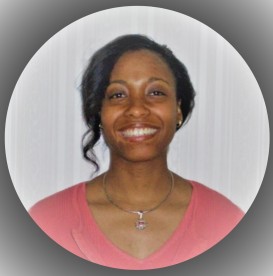
This interview is with Kay, who is an education and behavior specialist. During this time of quarantine and restricted activity, the regulation of children’s behavior can be more of an issue for parents and others. Kay covers topics related to why children act out and has suggestions as to how these situations should be handled.
For your convenience the interview is available below at the bottom of this post. Just hit play. The podcast episode is also available on most of the major podcasting platforms including Apple Podcasts, iHeartRadio, Spotify, and many others under the Billy Dees Podcast.
The episode is titled on these services as:
Interview with KayPal7 – Handling Behavior Issues from Children
I don’t claim to be an authority about LinkedIn Strategy. I do belong to several marketing and multimedia groups whose members requested that I put something together.
As a radio production person, podcaster, and multimedia creator I have found LinkedIn useful.
The days of LinkedIn being just a place for a static online resume are over. Video use has surged on LinkedIn. I would highly recommend LinkedIn to be apart of your overall content marketing strategy.
Our guest on this podcast episode is Mary Farr. Mary has been a guest before in regard to her book, “If I Could Mend Your Heart” which deals with the subject of managing grief. This sorrow may be due to the loss of life but also any event or circumstance which heavily impacts our lives.
We talk about these subjects again and this time around we discuss how the techniques of managing loss and stress may relate to people who are strongly being impacted by the Covid19 crisis.
Even though these are a difficult themes, this is not a depressing discussion. Mary’s message is that often times carving out an alternative and positive path in life can be a part of how we manage stress and difficult times.
Mary Farr and Billy Dees
Donna Cavanagh and Mary Farr have teamed up to offer non-profits and other organizations bulk and package rates for the book. For more information please contact Donna at Donna@HOPress-ShorehouseBooks.com. Donna also was responsible for setting up this interview for HumorOutcasts.com.
You can find more information about Mary Farr and her books on her blog Desire to Inspire.
For your convenience the interview is available below at the bottom of this post. Just hit play. The podcast episode is also available on most of the major podcasting platforms including Apple Podcasts, iHeartRadio, Spotify, and many others under the Billy Dees Podcast.
The episode is titled on these services as:
HumorOutcasts Interview with Mary Farr – If I Could Mend Your Heart
Daniela’s book gives you a view of therapy sessions from her side of the couch along with transcripts of what’s going through her mind as she’s working. Along with stories from her growing up and training years, the majority of the book spans 25 years of rural psychiatric practice. Written with candor and a light touch, these clinical and personal tales reveal a way of thinking that is essential for living actively, fully, and doing good work with a sense of wonder.
Daniela V. Gitlin, MD
The interview is lighthearted, informative, and entertaining. Even if mental health fields are not of a particular interest to you, her career journey and life experiences are worth a listen. Much of the same can be said about the book. If you are in the field of mental health I’m sure you will find the material that much more stimulating but even as a novice or just someone who is just curious about human behavior, the book might very well be worth your time.
For your convenience the interview is available below at the bottom of this post. Just hit play. The podcast episode is also available on most of the major podcasting platforms including Apple Podcasts, iHeartRadio, Spotify, and many others under the Billy Dees Podcast.
The episode is titled on these services as:
HumorOutcasts Interview with Daniela Gitlin Author of “Practice Practice Practice …”
Our guest on this episode of the Billy Dees Podcast is Catherine Bosley, an accomplished speaker, group consultant, personal coach, and television journalist.
Her mission is to help people stay safe in this day of increasing “digital dangers.”
Her passion is as an advocate of hope for those who have been victims of cyber humiliation and bullying. A better you can emerge on the other side once we find the steadfast inner strength that she believes we all possess.
During this interview Catherine talks about her background and experiences as a public figure and why she is such a strong advocate for online safety. We cover the topic of how some people are currently venting their negative opinions and frustrations regarding the Covid19 crisis on social media and how those online remarks could potentially come back to haunt them. We then discuss 5 online tips to avoid falling into this trap.
We also cover numerous categories of “digital dangers” that social media usage and online activities in general can often pose.
If the worst does happen, and we fall victim to a cyber catastrophe of some kind, the interview concludes with Catherine’s recommendations of how we can regain control of the situation.
You can find out more about Catherine Bosley on her website which is CatherineBosley.com. You can also find her on Twitter @CBosley19.
You can find my podcast interview with Catherine Bosley on most of the major podcast platforms under the Billy Dees Podcastincluding Apple Podcasts, Spotify, and iHeartRadio.
For your convenience the full interview is here:
We also have her TEDx talk from YouTube available right here:
I have been producing a fair amount of video content for my clients and employers for a long time. However, for whatever reason I haven’t had YouTube flashing prominently on my radar for myself.
There are two reasons why I have not. The Billy Dees Podcast has been a vehicle to demonstrate my audio production and radio skills.
It is the wheelhouse in which I feel comfortable. The last several years have been kind to my wheelhouse. Podcasts have exploded especially with streaming devices in the home and automobile. Audiobooks and even video creators who need voiceover work have also kept voice professionals busy. There was a time when being a voiceover professional was a niche profession and now there are schools and online courses to develop the skills of a burgeoning marketplace.
Secondly, work has a tendency to keep you busy, well, working. There are times when my time and creative juices have been squeezed out creating content for my clients. I very much enjoy helping others craft a message and being witness to their success. Their need for online video along with their demands has made me a better videographer and editor over the last number of years. I have found these collaborations very fulfilling and have made some great friends along the way. As the saying goes, however, there is only so much time in the day. What time I had to create content and promote myself went into such places as iTunes and Spotify.
So, why YouTube now?
I am somewhat of a small influencer on LinkedIn. Video content has risen prominently on the platform over the past two years or so. I have found myself in front of the camera more often. Additionally, I have been on TikTok. Don’t laugh. I admit I have more fun on there than I work but again, more on camera time. Therefore, I have a lot more video content that could use a home base.
I found myself revisiting YouTube. I decided I could mix up three types of content. First, the audio from my podcast episodes could be uploaded to the platform. Second, videos that I create for social media could also be placed on my channel. Third, YouTube offers a long-form video platform that could be used for content ranging from industry trends for multimedia, information about audio gear, and various categories of commentary along with whatever creative video stylings that happen to find my fancy.
As of April 2020 I now have an updated YouTube channel although it is still a work in progress.
Please, feel free to pay my YouTube channel a visit and subscribe if you wish.
The podcast itself will remain a strong focus of what I am doing and some great interviews are coming up. You can find the Billy Dees Podcast on almost any major podcast platform including Apple Podcasts, Spotify, and iHeartRadio.
Here is a recent video post from my channel. Has your content not been getting the traffic it normally gets since the Covid19 crisis? Here is why and don’t stop creating.
This installment of our Twitter interviews is with Jeanné Giddens, otherwise known as @TuneTalks to her Twitter followers. Jeanné is a talented song writer, voiceover artist, and host.
As an old school radio and audio recording guy, I have always felt the best way to record an interview is with the guest in the recording studio. The benefits of this are obvious. You can interact with your guest one on one and have complete control of the recording. However, there are times when this is just not practical. For example, in this case Jeanné is based in Florida and I am in Ohio.
Recording options in these types of cases vary and a lot depends on the guest. Many interview subjects do not have any audio gear. Others have busy schedules promoting their work and do not have the patience to be walked through a technical process of some kind. In these cases phone signals may be the most expedient choice and other times maybe a VOIP service will work just fine at getting the job done.
With Jeanné, however, there were better options available. She is in the audio production business and has good tools at her disposal. So, we decided to use Zencastr for this interview. In simple terms this type of technology does not record “over” the internet per say. Both subjects are recorded locally and then those two audio tracks are combined in post.
The results are terrific but there are also other important steps to take.
For one, use the most dependable connections with your gear. I would avoid using WiFi with your computer or using any type of wireless microphone or headset. Also, close all of the programs on your computer.
Let me throw in some information about microphones. There is a lot of confusion about USB microphones in particular.
There are basically four types of microphones in terms of how they capture sound; dynamic, condenser, ribbon, and contact. There are variations of each but those are the basic groups.
Many of the widely popular USB microphones are condenser microphones. I have heard them referred to as “digital” microphones and that term is as overused as “pro” is in the audio and video equipment industry. The key difference between a USB condenser microphone and a standalone XLR condenser is that the USB microphone has a USB interface built into it. Combination units in general are designed to hit a price point and as plug and play devices for their ease of use.
I have used USB microphones to have my clients record audio into their PowerPoint presentations. They are also good for gaming, YouTube, and for basic podcasting. I would stop short, however, of considering any USB microphone truly a professional’s first choice.
I have been in many radio stations, media production studios in advertising agencies, and music recording studios. I have never run across a USB microphone being used as a primary recording tool in any of these applications. An entry level pro audio interface alone costs more than the average USB microphone. Many voiceover agencies will ask what microphone that you are using and if the answer is a USB microphone that might be a missing check mark on your credentials list.
The sky is the limit in terms of what you can pay for pro audio gear but there are cost effective options. Yes, separates do cost more but come with some practical benefits in addition to better quality, namely interchangeability. That professional XLR microphone that you bought for your podcast will plug into a USB interface, a digital recorder, a mixing board and so on. You can also upgrade your interface or microphone without replacing both or purchase more microphones to use with the same interface.
For the interview with Jeanné I used a (XLR) Golden Age D2 dynamic microphone. I happen to like dynamic microphones for voiceovers but that is largely my preference. My favorite is probably the (XLR) Shure SM7B and my runner up would be the (XLR) Electro-Voice RE20. Jeanné used her (XLR) RODE NT1 which is a condenser microphone. Both the Golden Age D2 and the RODE NT1 are not “cheap” when compared to most USB microphones, however, in the professional ranks these microphones are extremely cost effective and for anyone considering getting started doing voice work these are good choices. For this particular interview we both also used Focusrite interfaces.
To sample the sound quality captured with these microphones and Zencastr here is an excerpt. Notice how it sounds almost as if both of us were in the same studio.
For your convenience the entire interview is available at the bottom of this post. The Billy Dees Podcast is also available on your favorite podcasting service including Apple Podcasts, Spotify, and iHeartRadio.
 This interview is with Kay, who is an education and behavior specialist. During this time of quarantine and restricted activity, the regulation of children’s behavior can be more of an issue for parents and others. Kay covers topics related to why children act out and has suggestions as to how these situations should be handled.
 Our guest on this podcast episode is Mary Farr. Mary has been a guest before in regard to her book,
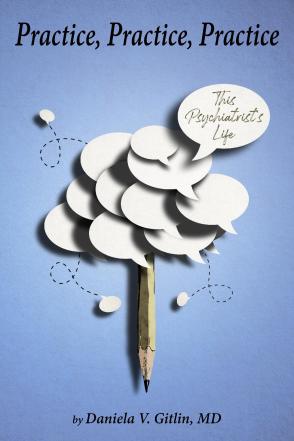 This HumorOutcasts interview is with Daniela V. Gitlin, MD who is the author of,


 Perfect Media Productions, LLC