What Italy’s Soccer Struggles Can Teach America About Education, Work and Critical Thinking

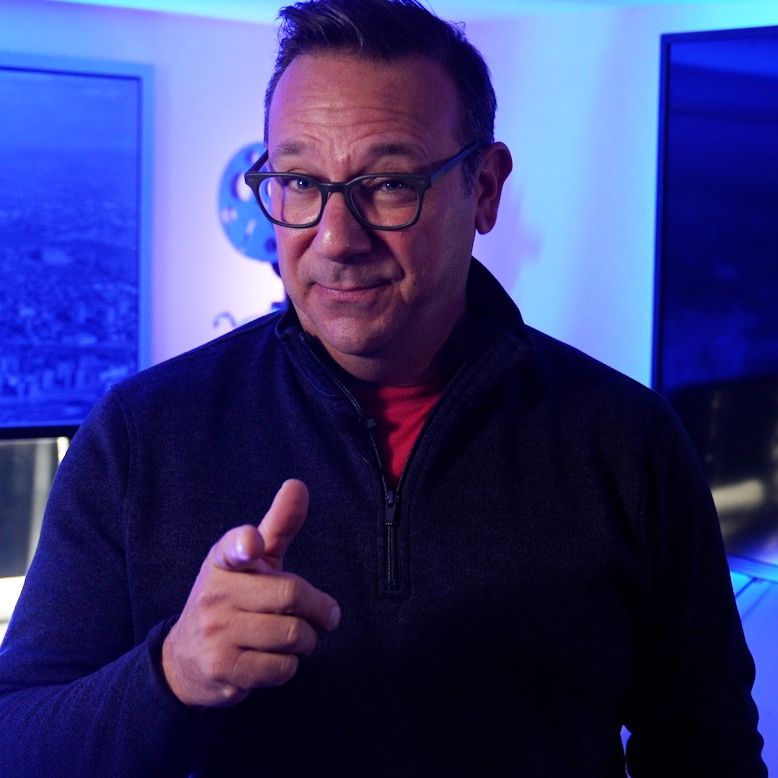
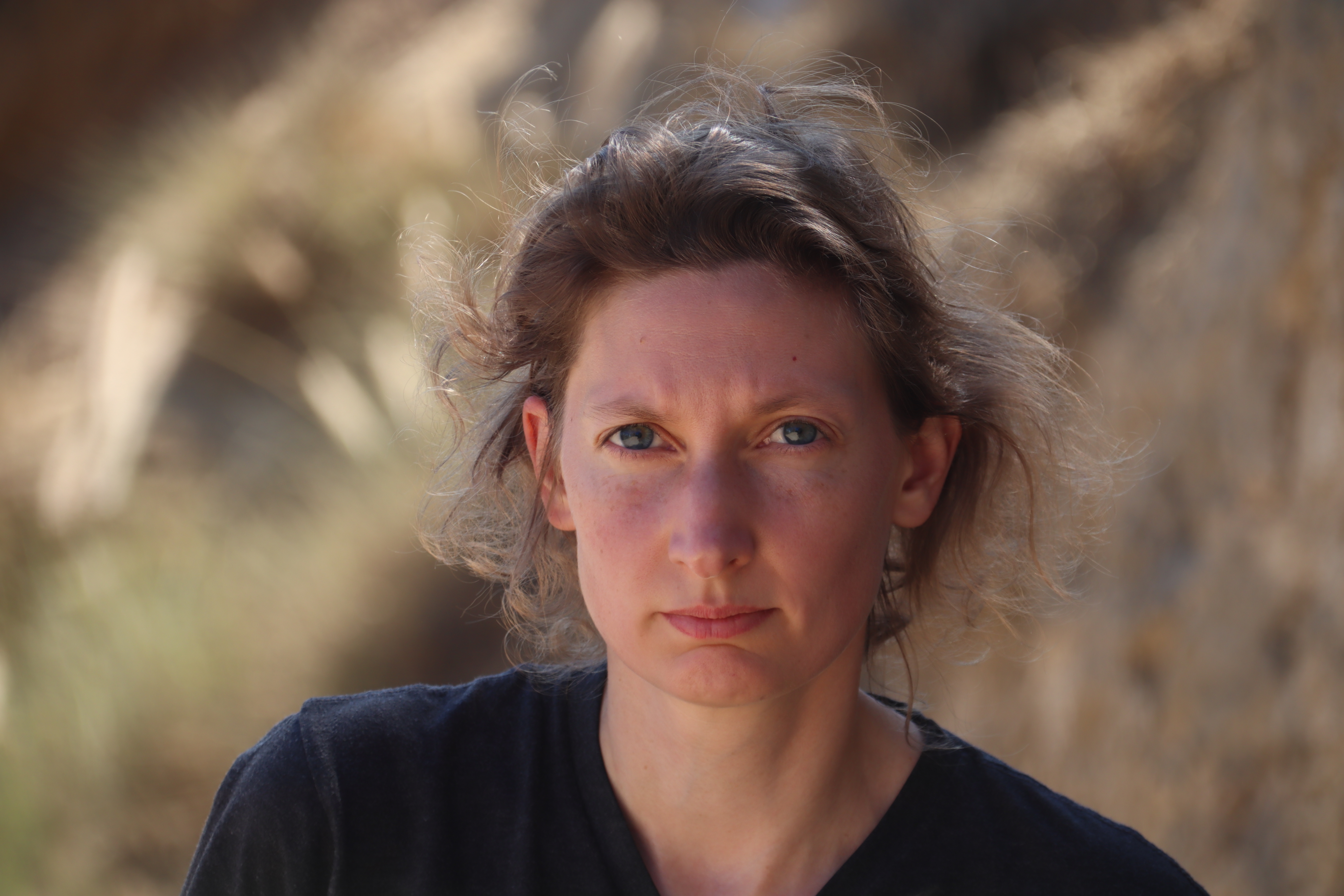
In a wide-ranging conversation on The Billy Dees Podcast, Billy Dees sits down with filmmaker and writer Sara Alessandrini for a discussion that begins with Italian soccer but quickly becomes a much larger examination of education, workplace culture, individualism, critical thinking, immigration, artificial intelligence and the challenges facing modern American society.

Alessandrini, who is originally from Italy and spent 11 years living in Los Angeles before moving to the New York area, approaches the conversation as an independent-minded observer rather than someone firmly aligned with either the political left or right. She explains that she is interested in ideas from both sides and believes the best approach is to examine what actually works rather than becoming trapped by political labels. That perspective becomes particularly important as the conversation moves between American and Italian institutions and cultures.

The Soccer Analogy

The discussion centers initially on Alessandrini’s Substack essay, “Italy’s Failure to Qualify for the World Cup Is a Warning to the United States, and It’s Not About Soccer.”

Italy has historically been one of the world’s great soccer nations, but Alessandrini points to the country’s repeated failure to qualify for the World Cup as evidence of deeper problems in how young players are developed. She discusses a major shift from a culture in which children developed their skills through hours of informal play toward a highly structured system in which coaches increasingly control how players behave on the field.

According to Alessandrini, the problem isn’t teamwork itself. Rather, it is what happens when teamwork becomes conformity. Young players can become so focused on following instructions, avoiding mistakes and doing what the coach expects that they lose the ability to take risks, improvise and think independently.

That distinction becomes the central metaphor of the interview: Are we developing people who know how to think, or people who simply know how to follow instructions?

From Soccer Fields to the Workplace

The soccer discussion leads directly into a conversation about American education and the modern workplace.

Alessandrini argues that she has observed a similar tendency among some American workers: an emphasis on procedures and instructions rather than problem-solving and independent thought. She describes situations from her professional experience in which employees were capable of following written instructions but struggled when they encountered a problem that wasn’t covered by those instructions.

For Alessandrini, that represents a fundamental weakness in education and workforce development. Memorizing information is not necessarily the same thing as understanding how a system works. Someone who understands the underlying system can adapt when circumstances change; someone who has simply memorized a procedure may be lost when the situation changes.

Billy Dees expands on that idea by discussing his own decades of experience in audio and media production. He points out that technicians from his generation often learned the fundamentals of electronics, signal flow, microphones and equipment before digital technology became dominant. As technology evolved, those fundamentals provided a foundation for learning new systems.

The conversation raises an important question for today’s workforce: What happens when people learn software without understanding the principles behind what the software is actually doing?

Is Higher Education Preparing People for Work?

The interview becomes particularly critical when Billy and Sara discuss American higher education.

Both question whether the traditional four-year college model is producing the kind of independent thinkers and skilled workers the economy needs. Alessandrini contrasts the American university system with the more specialized educational path she experienced in Italy, where students can receive considerably more focused training earlier in their education.

The discussion also addresses the enormous cost of American higher education and whether students are receiving enough practical value for the money they are spending.

Billy questions the assumption that everyone necessarily needs a traditional four-year degree, suggesting that education should be more directly connected to the profession or skill a person intends to pursue. Alessandrini adds her own experiences working with people in technical fields, including audiovisual production, where she encountered workers who had educational credentials but struggled with basic practical problem-solving.

The issue, she argues, isn’t simply whether someone has a degree. It’s whether that person knows how to learn.

Preparing for an AI-Driven Economy

That idea becomes even more important when the conversation turns to artificial intelligence.

Neither Billy nor Sara views AI simply as an apocalyptic threat. Instead, they see it as another major technological transformation that will change the nature of work.

If AI increasingly handles specific tasks, workers will need to be able to adapt, learn new skills and move between different kinds of work. Someone trained only to perform a narrow set of tasks could have a difficult time when those tasks disappear or change.

Alessandrini argues that learning how to learn may ultimately be more valuable than memorizing a fixed body of information. She points to her own career as an example: she has moved between different fields and continued developing new skills.

The lesson from the soccer analogy therefore becomes even more relevant: A successful system shouldn’t simply produce people who can execute today’s game plan. It should produce people capable of adapting when the game changes.

Immigration: Beyond the Political Talking Points

The conversation also moves into immigration, where Alessandrini argues that the debate is often reduced to two opposing extremes.

She points out that immigration serves multiple purposes and that the United States already has numerous categories of legal immigration, including employment-based visas, asylum, refugees and seasonal workers. The real question, she argues, should be what the country is trying to accomplish with its immigration system.

That leads to another theme running throughout the interview: before attempting to fix a system, define what the system is supposed to accomplish.

The same principle applies to education, immigration and healthcare. Without agreement about the desired outcome, political arguments tend to focus on competing slogans rather than practical solutions.

Looking at Other Countries Without Idealizing Them

One of the most interesting aspects of the conversation is that neither participant presents Italy as a perfect alternative to America.

Alessandrini repeatedly emphasizes that both countries have strengths and weaknesses. Her experience as an immigrant has given her an unusual perspective: she has lived within both systems and can compare them from personal experience.

She describes the United States as a country that gave her opportunities she believes would have been much more difficult to obtain in Italy. At the same time, she believes Americans can learn from successful elements of other countries.

That approach runs contrary to the tendency to treat political and cultural questions as competitions in which one country or ideology must be completely right and the other completely wrong.

The Larger Question: Can We Still Think for Ourselves?

By the end of the interview, the discussion has moved far beyond Italian soccer.

Billy and Sara talk about what they see as a growing tendency toward political and cultural tribalism, where people increasingly inhabit separate informational environments and sometimes appear to live in completely different versions of reality.

For Billy, one of the biggest losses has been what he describes as a former sense of “collective wisdom”—the idea that Americans could disagree strongly about solutions while still operating within the same basic understanding of reality.

Sara offers a somewhat more optimistic counterpoint. She reminds the audience that problems exist in every country and that people often see the best and worst of their own societies differently depending on their experiences.

That tension between optimism and skepticism gives the interview much of its character.

Ultimately, the conversation between Billy Dees and Sara Alessandrini isn’t really about soccer, college, immigration or even artificial intelligence individually. It is about how societies develop people—and whether those systems encourage curiosity, adaptability, competence and independent thought, or simply teach people to follow the rules of the system they happen to be in.

And that may be the most important question of all as education, employment and technology continue to change.


Truth, Free Speech, and the Search for Common Ground: My Conversation with Joel Rakow

I recently had a fascinating conversation with Joel Rakow, author of Life in Woke America: A Family’s Story of Truth and Betrayal Under Fire.

This discussion may come in a little hot for some people’s taste but that is okay, we do that here. Our discussion covered some pretty big topics: free speech, censorship, political polarization, China, the Constitution, and what happens when institutions begin deciding which ideas are acceptable and which ones should be pushed aside. Whatever your political perspective, I think these are conversations worth having because the questions surrounding truth and free expression affect all of us.

One of the most interesting parts of our conversation centered on the COVID-19 pandemic and the way information was handled during those early years. I told Joel that I could understand why political leaders initially relied heavily on medical experts during a crisis. When something potentially catastrophic is happening, nobody wants to ignore legitimate scientific advice. But as time went on, I believe it became increasingly difficult to separate public-health decisions from politics. Joel described a similar turning point for himself, particularly as he watched information and opinions that challenged the prevailing consensus get dismissed or attacked. For both of us, the larger issue wasn’t necessarily whether every controversial theory was correct. It was whether people should be allowed to ask questions and examine competing information without being silenced.

That idea of censorship became an important part of our discussion of Joel’s book. The novel is a work of fiction inspired by real events, including the discovery of a Chinese biological laboratory in California that became the subject of a congressional investigation. Joel uses that premise to tell a much broader story about a soldier, an orphan, institutional pressure, and the consequences of challenging powerful organizations. He also described what he believes has happened to his own book during the publishing and online distribution process, including what he calls “shadow banning.” His concern is that censorship doesn’t always look like someone explicitly saying “no.” Sometimes, he argues, it looks like a story simply disappearing from view, receiving little attention, or becoming difficult for people and even artificial-intelligence systems to find. Whether every example has an intentional explanation or not, the larger question is certainly worth examining: How do we know what we are not seeing?

We also talked about political movements and the Constitution. I made the point that I don’t think this is exclusively a left-versus-right issue. Both sides of American politics have had periods when movements have gone too far. Good intentions can produce bad outcomes, particularly when people become so convinced of their own righteousness that they stop listening to anyone who disagrees with them. Joel’s response was to focus on the Constitution as a framework for evaluating government and political power. That led to one of the more intriguing ideas of our conversation: his development of what he calls the Liberty Scorecard, an AI-based concept designed to examine government officials, candidates, institutions, and even cultural products according to constitutional principles. The goal, as Joel explained it, is to move beyond partisan opinion and give people another tool for evaluating whether actions and policies align with constitutional values.

Perhaps the biggest takeaway from my conversation with Joel Rakow is that we are living in an era when everyone has a voice, but that doesn’t necessarily mean everyone has access to the same information. Social media and artificial intelligence have dramatically changed who gets to participate in public conversations. That can be both empowering and dangerous. We have more information available to us than at any other point in history, yet we also have more opportunities to be isolated inside information bubbles that reinforce what we already believe. For me, the answer isn’t to silence opposing viewpoints. It’s the opposite. We need more open discussion, more questioning, and more willingness to hear ideas we may strongly disagree with. Truth doesn’t need protection from questions. If something is true, it should be able to withstand scrutiny. That was one of the central themes of my conversation with Joel, and it’s a subject I believe deserves considerably more discussion.

Podcasting Into Fall 2026 and Beyond

As we head into the fall season, I’m encouraged by where The Billy Dees Podcast stands. The past year has been one of our strongest in terms of audience growth, and it’s been rewarding to see the results of a deliberate, long-term strategy.

From the beginning, I’ve approached the podcast much like a traditional radio program. It isn’t a content marketing vehicle for another product or service—it is the product. That perspective has shaped every decision we’ve made over the past decade.

Several factors have contributed to our recent growth:

• Building on a decade of consistency. With more than 10 years of publishing episodes, we’ve established a reputation for dependable, high-quality content and professional conversations.

• Investing in podcast SEO. We’ve placed a greater emphasis on search optimization within the major podcast platforms, making it easier for new listeners to discover the show organically.

• Prioritizing the audience experience. The podcast remains free across all major listening platforms and social media channels, including Substack. We also avoid interrupting the conversation with mid-roll advertising. Sponsor messages are limited to the beginning of each episode, allowing listeners to enjoy an uninterrupted discussion.

• Respecting our audience’s time. Episodes average approximately 38 minutes and rarely exceed an hour, making them well-suited for commutes, workouts, and busy schedules.

• Maintaining a professional editorial approach. The focus has always been on thoughtful interviews and informed commentary rather than outrage, personal attacks, or performative debate.

Growth in podcasting rarely happens overnight. It comes from consistently delivering value, refining your strategy, investing in discoverability, and respecting your audience.

I’m grateful to every guest who has shared their expertise and to every listener who has subscribed, shared an episode, or recommended the show to others. Thank you for being part of the journey. I’m looking forward to what we’ll accomplish together this fall.

The Movies Never Really Died – A Conversation with Mike Scalere About the Past, Present, and Future of Cinema

You can subscribe to the Billy Dees Podcast with no paywalls on your favorite podcast platform.

Mike Scalere

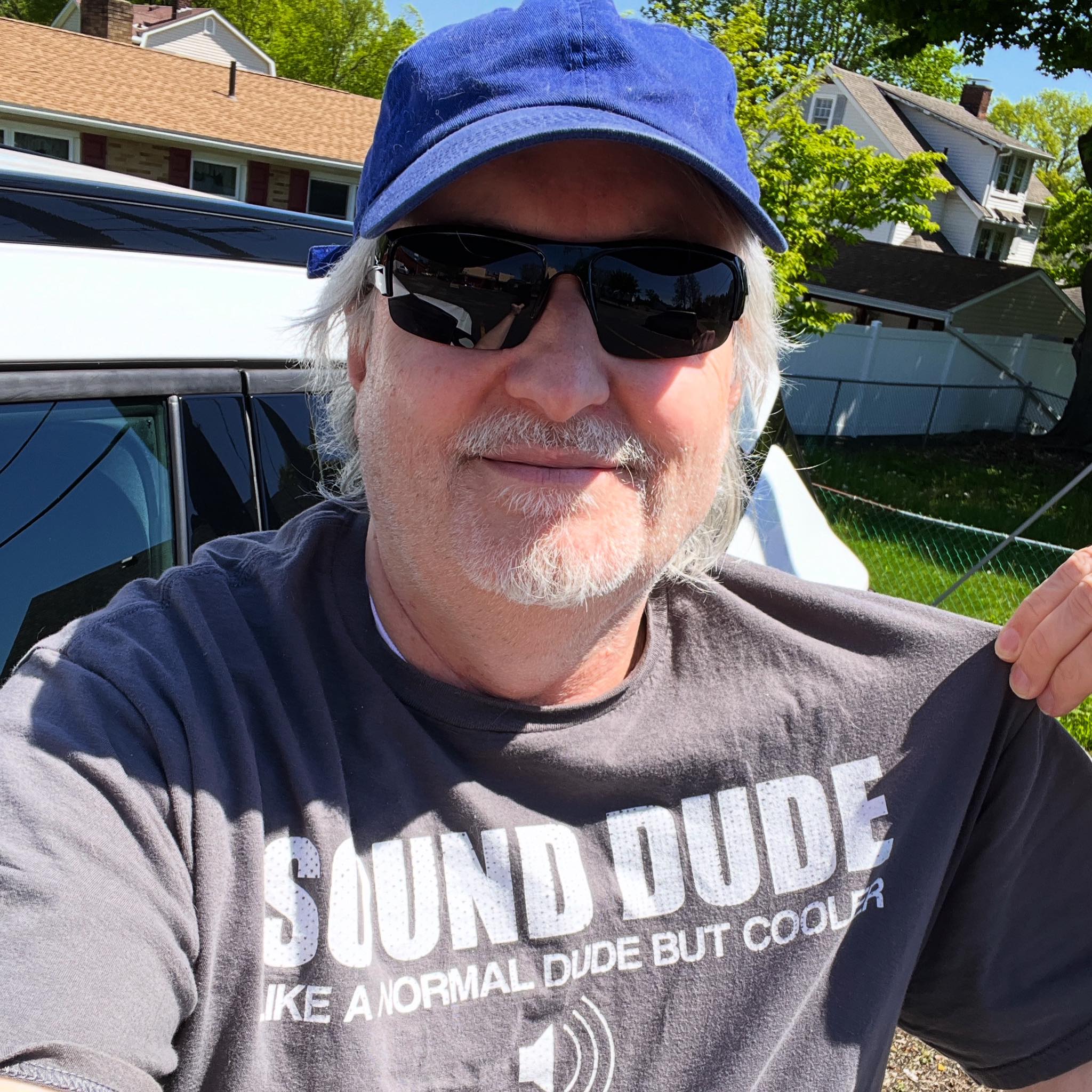
There’s something timeless about talking with people who genuinely love movies. Not just the latest blockbuster, but the history, technology, storytelling, and artistry that have shaped film for more than a century. That’s exactly what happened when I sat down with filmmaker and film historian Mike Scalere.

Mike studied cinema at NYU, spent two decades working in television with HBO and The History Channel, and now produces thoughtful film content through his Scolarious platform. What followed wasn’t simply a discussion about favorite movies—it became a journey through the evolution of cinema itself and why great storytelling continues to matter in an era dominated by streaming, social media, and artificial intelligence.

The Magic Behind the Movies

Like many filmmakers, Mike’s fascination with movies began as a child. An Industrial Light & Magic book showing how Star Wars and Indiana Jones created their visual effects sparked a lifelong curiosity.

Instead of ruining the illusion, learning how films were made only deepened his appreciation. That sense of wonder remains central to our conversation: understanding the craft doesn’t diminish the magic—it enhances it.

Hollywood’s Golden Age

Our discussion explored how World War II unintentionally accelerated filmmaking technology. Cameras originally designed for military use eventually found their way into film production, while advances in sound recording and photography transformed Hollywood.

The post-war years created what many consider cinema’s Golden Age. Families flocked to theaters because movies weren’t just entertainment—they were an event. Before television became widespread, theaters offered newsreels, comedy shorts, cartoons, and feature films all in one experience.

Mike pointed out an interesting historical irony: early Hollywood executives were actually skeptical of color films because audiences associated color with cartoons. Black-and-white represented “reality,” while color seemed too fantastical—until films like The Wizard of Oz forever changed public perception.

Television Changed Everything

The arrival of television in the 1950s forced Hollywood to rethink its approach.

Instead of trying to imitate television, movie studios doubled down on spectacle. Wider screens, CinemaScope, VistaVision, Technicolor, stereophonic sound, and epic productions gave audiences something they simply couldn’t experience at home.

As we discussed, cinema didn’t lose to television—it evolved because of it.

Television excelled at live broadcasts. Whether it was The Ed Sullivan Show, the moon landing, or breaking news, TV owned immediacy. Movies responded by becoming larger, grander, and more immersive.

The Rise of More Mature Storytelling

The 1960s brought another transformation.

With the gradual end of the Hays Code, filmmakers began tackling more complex adult themes. Rather than relying solely on clear-cut heroes and villains, audiences embraced morally complicated characters and realistic storytelling.

Films such as Midnight Cowboy and The Good, the Bad and the Ugly reflected a changing culture, while television remained constrained by broadcast standards.

We also discussed how events like the assassination of President Kennedy fundamentally changed television news, planting the seeds for today’s 24-hour news cycle while cinema continued pushing artistic boundaries.

The Incredible Run of the 1970s

For many film lovers—including both of us—the 1970s may represent one of cinema’s greatest decades.

The Godfather, Jaws, Star Wars, and countless other classics fundamentally changed filmmaking.

Mike offered fascinating insight into why Jaws worked so well. The famous mechanical shark frequently malfunctioned, forcing Steven Spielberg to hide it rather than show it. Ironically, what began as a production problem became one of the film’s greatest strengths. Sometimes what audiences don’t see is more terrifying than what they do.

Our conversation also touched on Spielberg’s remarkable visual storytelling, John Williams’ unforgettable music, and how practical filmmaking techniques continue influencing directors today.

VHS, Home Theater, and the Digital Revolution

Few topics generate more nostalgia than the VHS versus Beta debate.

We explored why VHS ultimately won despite Beta’s technical superiority. Licensing strategies, affordability, convenience, and market saturation all played significant roles.

That naturally led into discussions about LaserDisc, DVD, Blu-ray, surround sound, and the rise of home theater during the 1990s.

While technology dramatically improved the home viewing experience, great films like Forrest Gump, Pulp Fiction, Saving Private Ryan, Titanic, and The Shawshank Redemption proved audiences still craved unforgettable stories.

Streaming Didn’t Kill Movies

Many predicted streaming would permanently replace theaters, especially during the COVID pandemic.

Mike doesn’t believe that happened.

Instead, he argues that audiences still want communal experiences.

Movies like Top Gun: Maverick, Barbie, Oppenheimer, and other major theatrical events reminded everyone why seeing a film on the big screen remains special.

Streaming offers convenience.

Theaters offer shared experiences.

Those two things aren’t necessarily in competition.

Practical Effects Still Matter

One of our favorite topics was the continued appeal of practical filmmaking.

Whether discussing Ben-Hur’s legendary chariot race, Christopher Nolan shooting The Odyssey on large-format film, or Tom Cruise performing his own stunts, we agreed there’s something audiences instinctively recognize when what they’re watching is real.

Computer-generated imagery certainly has its place, but practical filmmaking creates a sense of authenticity that’s difficult to replicate.

Artificial Intelligence and the Human Element

Perhaps the most thought-provoking part of our conversation centered on AI.

Mike expressed concern that artificial intelligence risks removing the human element from filmmaking.

Behind every great movie are countless people making creative decisions—writers, directors, actors, editors, cinematographers, composers, lighting crews, and production teams.

Those human choices give films personality.

While AI may become another useful production tool, replacing creativity altogether would sacrifice much of what makes cinema meaningful in the first place.

The Next Generation of Filmmakers

One encouraging trend Mike highlighted is the emergence of filmmakers who built audiences on YouTube and social media before transitioning into feature films.

Rather than simply uploading longer online videos, many are embracing traditional storytelling while bringing fresh ideas and entirely new audiences into theaters.

Every generation shapes cinema differently.

Today’s creators may very well define tomorrow’s classics.

Why Movies Continue to Matter

At its heart, this conversation wasn’t really about cameras, formats, or special effects.

It was about storytelling.

Technology will continue changing. Distribution models will evolve. New platforms will emerge.

But compelling stories—told by passionate creators—continue connecting people across generations.

As Mike says, “Film is about community.”

Whether you’re discussing Ben-Hur, Star Wars, Jaws, The Godfather, or the latest theatrical release, movies become meaningful because they give us something to talk about long after the credits roll.

That’s why cinema has survived every challenge thrown at it over the past century—and why it will likely continue evolving for many years to come.

Find Mike Scalere on YouTube @Scalerious and TikTok

Audio vs. Video Podcasts – Why Audio Is More Than Just the “Easier” Option

I’ve been following the ongoing debate about audio podcasts versus video podcasts, and I have to admit, some of the arguments are interesting—and some of them are downright amusing.

One point that keeps coming up is that most podcasts are still consumed as audio. People listen while driving, exercising, working around the house, or doing just about anything else. That’s absolutely true.

The other common argument is that audio is easier for creators. You don’t have to worry about lighting, camera angles, editing visuals, or even what you’re wearing. If video stresses you out, the advice is often simple: skip it and just record audio.

From a practical standpoint, I understand that advice.

But I think something important gets lost when we reduce audio to simply being the easier option.

To me, spoken-word audio is an art form.

I can’t imagine legendary voices like Paul Harvey treating audio as the format they chose because they didn’t have to get dressed for the camera. Their voices carried emotion, personality, and imagination. They understood that the human voice has a unique ability to connect with people in a way that’s difficult to replicate anywhere else.

When someone listens to an audio podcast, your voice travels just a few inches into a microphone and ends up directly in their ears. It’s an incredibly personal experience. There are no visual distractions. The listener is focused entirely on your words, your pacing, your emotion, and your delivery.

That’s powerful.

As creators, I think we should approach audio differently than we often do. Instead of thinking, “At least I don’t have to be on camera,” we should ask ourselves:

  • How can I make this audio experience memorable?
  • How can I communicate genuine passion?
  • How can I paint pictures with nothing more than my voice?
  • How can I create a story that lives in the listener’s imagination?

Even subtle vocal inflection can completely change the way a story is experienced. A simple sentence can become suspenseful, emotional, humorous, or dramatic depending entirely on how it’s delivered.

That’s the beauty of audio.

Now, don’t misunderstand me—video absolutely has its place.

On The Billy Dees Podcast, many of the authors and guests I interview appreciate having professionally produced video. It gives them content they can share on YouTube, embed on their websites, and use across social media. That’s an important part of today’s content marketing landscape, and I understand why it matters.

But I don’t think audio should be viewed as the consolation prize.

Audio deserves its own creative approach.

When I record an audio-only episode, I want to think about rhythm, pacing, tone, pauses, and emotion. I want listeners to hear the enthusiasm in my voice and visualize what I’m describing. If they can build the scene in their own imagination, then the audio has done something video can’t always accomplish.

The next time you’re deciding between an audio podcast and a video podcast, don’t simply ask which one is easier.

Ask yourself which format best serves your message.

And if you choose audio, embrace it for what it is—not just a practical alternative, but a storytelling medium with a unique ability to connect, inspire, and leave a lasting impression.

That’s where the real magic happens.

Are Wireless Microphones Really Worth It for Content Creators Just for the Sake of Being Wireless?

If you’ve spent any time looking at microphones lately, you’ve probably noticed that wireless models are everywhere. One microphone that’s been getting a lot of attention is the Maono PD200W, and after spending some time with it, I can honestly say it’s a solid microphone for the money. (About $119.00) It delivers surprisingly good sound quality, and its wireless connection performs well at short distances. If you’re looking for an affordable option for creating content on your phone or other mobile devices, it’s certainly worth considering.

That said, I always try to evaluate new technology with one simple question: Does it actually improve the final product? If the answer is no, I’m usually hesitant to recommend it.

Wireless technology is a perfect example.

The biggest advantage of going wireless isn’t better sound—it’s convenience. There are absolutely situations where wireless microphones are the right choice. If I’m covering a news event in the field, I’m going to use a wireless lavalier microphone. If I’m running sound for a live event and the lead singer wants to move freely around the stage, a wireless microphone is almost essential.

But those situations are the exception, not the rule.

For most studio recordings, podcasts, livestreams, or YouTube videos, a microphone is sitting on a boom arm or desktop stand. Once it’s in place, it doesn’t move. In that case, I have to ask: why add another layer of technology that doesn’t improve the audio?

Throughout my career in broadcasting and live sound, I’ve learned to appreciate simple, dependable equipment. Take the legendary Shure SM57, for example. It’s been trusted everywhere from presidential podiums to rock concerts for decades. It’s versatile, durable, sounds great, and with a wired connection, it’s incredibly reliable.

The more technology you introduce, the more potential points of failure you create.

With a wireless microphone, you now have to think about the transmitter, the receiver, battery life, charging, and possible wireless interference. During a live performance, troubleshooting those issues can become stressful in a hurry. That’s one reason professional wireless systems often cost close to $1,000—they’re engineered to minimize those risks.

Even then, experienced sound engineers often keep a wired microphone ready as a backup.

For content creators, the conversation is a little different. The Maono PD200W isn’t trying to compete with high-end broadcast microphones. It’s designed for people creating videos on their phones, recording social media content, or working away from a traditional desk setup. In that role, it does a very good job.

What I don’t buy into is the idea that wireless somehow makes a microphone more desirable simply because it is wireless.

Many demonstrations compare a wireless microphone held close to someone’s mouth against a phone’s built-in microphone several feet away. Of course the dedicated microphone sounds better. That’s largely because of microphone placement and something called the proximity effect—the closer a quality microphone is to your mouth, the richer and fuller your voice will sound. You don’t need wireless technology to achieve that.

In fact, one of my biggest pet peeves is seeing podcast guests trying to do interviews using only the microphone built into their laptop. Even an inexpensive external microphone—wired or wireless—is going to make a dramatic difference.

At the end of the day, I think the Maono PD200W is a good microphone. It sounds better than I expected, the wireless performance is stable, and it’s an affordable option for mobile content creators. If that’s how you plan to use it, I think you’ll be pleased.

But if you’re recording at a desk, behind a microphone that’s already mounted on a stand, I’d encourage you to ask the same question I always do: What am I really gaining by going wireless?

Sometimes convenience is worth it. Sometimes it isn’t.

For me, reliable audio will always come first.

Why Every Entrepreneur Needs an Exit Plan Before They Need One

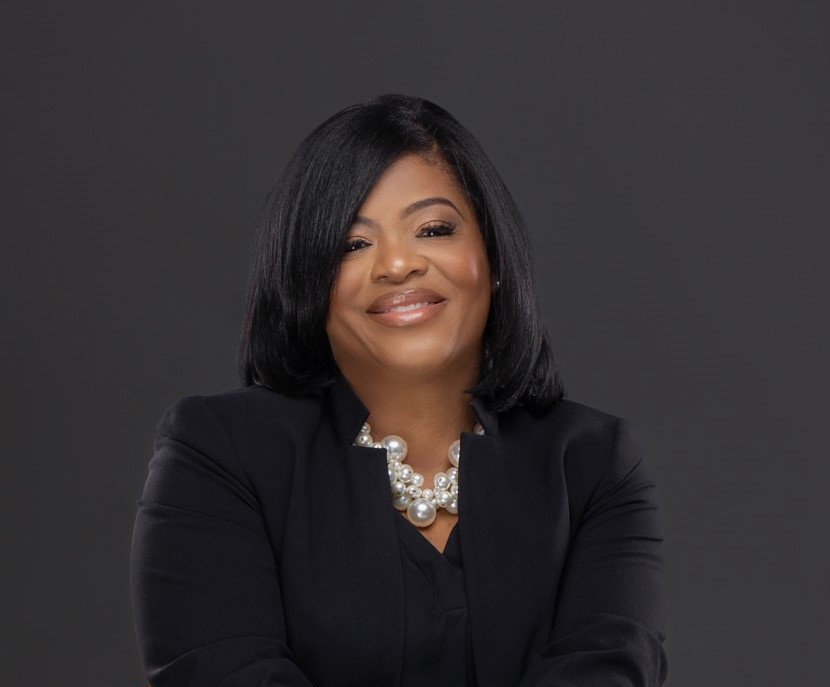
Starting a business is often celebrated as the ultimate expression of independence, ambition, and creativity. But what happens when it’s time to step away—or when life unexpectedly forces that decision? That’s the central question explored in Billy Dees’ engaging conversation with entrepreneur attorney and business strategist Scherrie L. Prince, who helps founders build businesses that are designed not only to grow, but to last.

Scherrie L. Prince

Throughout the discussion, Prince emphasizes a concept that many entrepreneurs overlook: every business should begin with the end in mind. Too many owners focus exclusively on launching and growing their companies without considering succession, disability, partnership disputes, retirement, or even death. Her philosophy is simple—if you don’t create a plan for your business and your estate, the state already has one waiting for you, and chances are you won’t like it. She encourages entrepreneurs to think about exit strategies from “day zero,” long before they believe they’ll ever need one.

The conversation also dives into the importance of building a solid legal and operational foundation. Prince explains that every business owner should have essential documents in place, including updated beneficiary designations, wills or trusts when appropriate, and clear partnership or operating agreements. These aren’t just legal formalities—they’re safeguards that protect families, business partners, employees, and the future of the company itself. As businesses become more visible, they also become more vulnerable to lawsuits, financial problems, employee disputes, and internal conflicts, making preparation even more critical.

Billy and Scherrie also challenge one of today’s most common business myths: that every company must constantly chase explosive growth. Prince argues that success isn’t measured by becoming the next Amazon or Walmart. For many entrepreneurs, building a stable, profitable business that supports their desired lifestyle is a far greater achievement than endless expansion. Growth should always align with the owner’s personal goals—not someone else’s definition of success. This refreshing perspective reminds listeners that sustainable businesses often outperform businesses that grow too quickly and become overextended.

Another fascinating segment explores why partnerships often begin with excitement but later become strained. Prince compares business partnerships to marriages, noting that people change over time and unforeseen challenges inevitably arise. Without clear agreements that outline responsibilities, conflict resolution, ownership rights, and exit procedures, even the strongest partnerships can deteriorate into expensive legal disputes. The lesson is clear: difficult conversations at the beginning of a business relationship are far easier than difficult lawsuits later.

Artificial intelligence also enters the conversation, not as an apocalyptic threat, but as a practical business tool that must be managed responsibly. Billy raises concerns about AI’s growing role in both business and personal decision-making, especially among younger generations. Prince agrees that AI can significantly improve efficiency, but cautions that companies must establish policies governing its use. Mishandling confidential information through AI platforms could expose businesses to data breaches, legal liability, and the loss of valuable intellectual property. Like any tool, AI provides tremendous benefits only when used thoughtfully.

One of the most inspiring parts of the interview centers on the entrepreneurial mindset itself. Billy points out that small business owners are often unfairly portrayed as greedy or uncaring, when in reality many sacrifice personal comfort simply to make payroll and support their employees. Prince echoes that sentiment, explaining that entrepreneurship requires resilience, courage, and long-term thinking. She distinguishes between founders who become trapped working in their businesses and those who eventually learn to work on them by building systems, delegating responsibility, and developing leadership rather than trying to do everything themselves.

For aspiring entrepreneurs, Prince offers one of the episode’s most memorable ideas: consider the cost of inaction. Many people hesitate to start businesses because they’re afraid of failure, yet they rarely calculate the opportunities they’re losing by doing nothing. Time will pass regardless. The question becomes whether you’ll spend those years building something of your own or wondering what might have happened if you’d taken the leap. Success doesn’t require knowing everything on day one—it requires surrounding yourself with trusted advisors and remaining willing to learn along the way.

Billy Dees closes the conversation by highlighting Prince’s own mission through her Play Big Faster Podcast, where she shares practical advice with founders and business leaders. Just like this interview, her work focuses on actionable strategies rather than empty motivation. Listeners walk away with valuable insights on legal planning, business growth, leadership, succession, and the importance of building companies that are prepared for both opportunity and uncertainty.

This episode serves as an excellent reminder that entrepreneurship isn’t simply about starting a business—it’s about building something resilient enough to survive life’s inevitable changes. Whether you’re launching your first venture, growing an established company, or simply dreaming about becoming your own boss someday, Billy Dees and Scherrie L. Prince deliver practical wisdom that can help entrepreneurs make smarter decisions today while preparing for tomorrow.