Truth, Free Speech, and the Search for Common Ground: My Conversation with Joel Rakow

I recently had a fascinating conversation with Joel Rakow, author of Life in Woke America: A Family’s Story of Truth and Betrayal Under Fire.

This discussion may come in a little hot for some people’s taste but that is okay, we do that here. Our discussion covered some pretty big topics: free speech, censorship, political polarization, China, the Constitution, and what happens when institutions begin deciding which ideas are acceptable and which ones should be pushed aside. Whatever your political perspective, I think these are conversations worth having because the questions surrounding truth and free expression affect all of us.

One of the most interesting parts of our conversation centered on the COVID-19 pandemic and the way information was handled during those early years. I told Joel that I could understand why political leaders initially relied heavily on medical experts during a crisis. When something potentially catastrophic is happening, nobody wants to ignore legitimate scientific advice. But as time went on, I believe it became increasingly difficult to separate public-health decisions from politics. Joel described a similar turning point for himself, particularly as he watched information and opinions that challenged the prevailing consensus get dismissed or attacked. For both of us, the larger issue wasn’t necessarily whether every controversial theory was correct. It was whether people should be allowed to ask questions and examine competing information without being silenced.

That idea of censorship became an important part of our discussion of Joel’s book. The novel is a work of fiction inspired by real events, including the discovery of a Chinese biological laboratory in California that became the subject of a congressional investigation. Joel uses that premise to tell a much broader story about a soldier, an orphan, institutional pressure, and the consequences of challenging powerful organizations. He also described what he believes has happened to his own book during the publishing and online distribution process, including what he calls “shadow banning.” His concern is that censorship doesn’t always look like someone explicitly saying “no.” Sometimes, he argues, it looks like a story simply disappearing from view, receiving little attention, or becoming difficult for people and even artificial-intelligence systems to find. Whether every example has an intentional explanation or not, the larger question is certainly worth examining: How do we know what we are not seeing?

We also talked about political movements and the Constitution. I made the point that I don’t think this is exclusively a left-versus-right issue. Both sides of American politics have had periods when movements have gone too far. Good intentions can produce bad outcomes, particularly when people become so convinced of their own righteousness that they stop listening to anyone who disagrees with them. Joel’s response was to focus on the Constitution as a framework for evaluating government and political power. That led to one of the more intriguing ideas of our conversation: his development of what he calls the Liberty Scorecard, an AI-based concept designed to examine government officials, candidates, institutions, and even cultural products according to constitutional principles. The goal, as Joel explained it, is to move beyond partisan opinion and give people another tool for evaluating whether actions and policies align with constitutional values.

Perhaps the biggest takeaway from my conversation with Joel Rakow is that we are living in an era when everyone has a voice, but that doesn’t necessarily mean everyone has access to the same information. Social media and artificial intelligence have dramatically changed who gets to participate in public conversations. That can be both empowering and dangerous. We have more information available to us than at any other point in history, yet we also have more opportunities to be isolated inside information bubbles that reinforce what we already believe. For me, the answer isn’t to silence opposing viewpoints. It’s the opposite. We need more open discussion, more questioning, and more willingness to hear ideas we may strongly disagree with. Truth doesn’t need protection from questions. If something is true, it should be able to withstand scrutiny. That was one of the central themes of my conversation with Joel, and it’s a subject I believe deserves considerably more discussion.


From Corporate Executive to Storyteller: Angela Page on Historical Fiction, Reinvention, and Preserving History

What happens when a successful corporate executive decides to pursue a lifelong creative passion? For author and filmmaker Angela Page, the answer is a remarkable second act built around storytelling, history, and perseverance.

Angela Page

On this episode of The Billy Dees Podcast, Angela Page shares the fascinating journey that took her from managing multinational corporate collections for companies like Microsoft, Siemens, and Honeywell to writing award-winning films and historical fiction. Along the way, she offers thoughtful insights into creativity, reinvention, World War II history, and the evolving entertainment industry.

Bringing Family History to Life

At the center of the conversation is Angela’s latest novel, Enrico G., a historical fiction work inspired by the extraordinary life of her great-grandfather. Far more than a family memoir, the novel explores decades of Italian history, spanning the country’s unification, massive waves of immigration, both World Wars, and the rise and fall of Benito Mussolini.

Angela explains that historical fiction allows writers to weave documented events together with imaginative storytelling, creating narratives that make history more accessible and emotionally engaging. Her meticulous research uncovered ship manifests, historical records, and wartime accounts that helped reconstruct her ancestor’s incredible life as a chef who crossed the Atlantic sixteen times before ultimately returning to Italy during one of the country’s most turbulent periods.

Rather than simply recounting historical events, Angela paints a vivid picture of how ordinary families experienced extraordinary moments in history.

The Importance of Remembering History

One of the interview’s most compelling discussions centers on historical awareness—or, in many cases, the lack of it.

Billy and Angela reflect on how many people today possess only a surface-level understanding of World War II and the events that shaped modern Europe. Angela discusses little-known chapters of Italian history, including Mussolini’s arrest, imprisonment, and dramatic rescue by German forces, explaining how these events directly intersected with her own family’s experiences.

The conversation expands into a thoughtful discussion about why preserving these stories matters. As the generation that lived through World War II continues to disappear, firsthand accounts become increasingly rare. Historical fiction, Angela argues, can serve as a powerful bridge between documented history and contemporary audiences who may never hear those stories firsthand.

Turning Research Into Film

While Enrico G. exists today as a novel, it actually began life as a screenplay.

Angela reveals that she originally envisioned the story as a feature film before being encouraged to develop the intellectual property through a novel first. She now believes the sweeping narrative would be ideally suited for a limited television series, allowing viewers to experience multiple decades of European history through the lens of one remarkable family.

The discussion also explores the realities of independent filmmaking, including international co-productions, film festivals, and the shifting landscape of movie production outside traditional Hollywood studios.

Reinvention After a Successful Career

One of the most inspiring portions of the interview focuses on career reinvention later in life.

After building a successful corporate career, Angela eventually decided to pursue the creative ambitions she had held since her youth. Rather than making an abrupt leap, however, she spent years writing, studying acting, and producing smaller projects while still working full-time.

Her advice is refreshingly practical: don’t wait until retirement to begin pursuing your passion. Instead, start building your second career while you’re still working. That gradual transition gave her both experience and confidence before making the leap into writing and filmmaking full time.

Angela believes many people reach midlife realizing that while they may have built successful careers, they never truly pursued what they loved most. Her story demonstrates that it’s never too late to begin.

Creativity in the Age of Artificial Intelligence

Billy and Angela also tackle one of today’s hottest topics: artificial intelligence and its impact on writers and filmmakers.

Rather than viewing AI as an outright threat, Angela sees it as a tool that should enhance—not replace—human creativity. She explains that many authors and screenwriters already use AI for brainstorming, organizing ideas, creating summaries, or overcoming small creative roadblocks.

However, she also discusses growing efforts within the publishing community to distinguish human-created work from AI-generated content, emphasizing that authentic storytelling remains rooted in human experience, emotion, and perspective.

Advice for Aspiring Writers

For anyone hoping to write a book, screenplay, or simply tell their own story, Angela offers encouraging advice.

She recommends beginning with the simplest step: write.

Don’t worry about perfection. Capture ideas as they come, whether by typing, handwriting, or recording voice notes. Great stories often begin as small fragments that evolve through revision and feedback.

She also stresses the value of joining writers’ groups, accepting constructive criticism, and developing resilience. Success in publishing and filmmaking rarely comes quickly, but persistence often separates those who eventually succeed from those who give up too soon.

An Inspiring Conversation About Passion and Persistence

Billy Dees’ interview with Angela Page is far more than a discussion about one book. It’s a conversation about preserving history, embracing lifelong learning, adapting to technological change, and having the courage to pursue creative dreams regardless of age.

Whether you’re interested in World War II history, historical fiction, independent filmmaking, or simply looking for inspiration to begin your own creative journey, this episode offers valuable insights and practical wisdom from someone who successfully transformed a lifelong passion into a thriving second career.

For readers and aspiring writers alike, Angela Page reminds us that every family has stories worth telling—and sometimes those stories become the bridge that connects generations while preserving history for the future.

History, Engineering, and Alternative Historical Fiction – Talking World War II with Author Jeff Kildow

Jeff Kildow

What happens when a lifelong aerospace engineer combines his passion for aviation history with a talent for storytelling? On this episode of The Billy Dees Podcast, Billy sits down with author Jeff Kildow to explore the fascinating intersection of World War II history, military technology, engineering, and historical fiction.

Before becoming an author, Kildow spent more than three decades as a systems engineer with Lockheed Martin after serving in the U.S. Air Force. That unique background gives his writing an authenticity that sets it apart. The conversation begins with his military service and engineering career before naturally transitioning into the incredible technological advancements made during World War II. From the P-51 Mustang and the P-38 Lightning to the rapid development of jet aircraft, Kildow explains why the engineering achievements of the era remain remarkable even by today’s standards.

The discussion also tackles some of history’s most debated topics. Billy and Jeff examine the difficult decisions surrounding the end of World War II, including the use of atomic weapons against Japan, while emphasizing the historical context often missing from modern conversations. They also discuss the tremendous sacrifices made during the war, the realities faced by both Allied and Axis forces, and why understanding history requires more than judging past events through a modern lens.

Listeners will also enjoy hearing about Kildow’s Joel Knight Menace series, an alternate-history thriller featuring a military engineer caught in dangerous Cold War and World War II-era missions. Jeff shares how his engineering background shapes his storytelling, the extensive research required to accurately recreate the technology of the 1940s, and why blending real historical events with compelling fiction creates an entertaining reading experience.

Whether you’re a history enthusiast, aviation buff, military fiction reader, or simply enjoy thoughtful conversations that go beyond the headlines, this episode delivers an engaging mix of historical insight, personal experience, and storytelling. It’s a conversation that reminds us why preserving history—and understanding the remarkable people and technology that shaped it—remains as important as ever.

Jeff’s website.

Exploring Culture, Politics, and Critical Thinking – A Conversation with Nicole Nathern-Hedrick

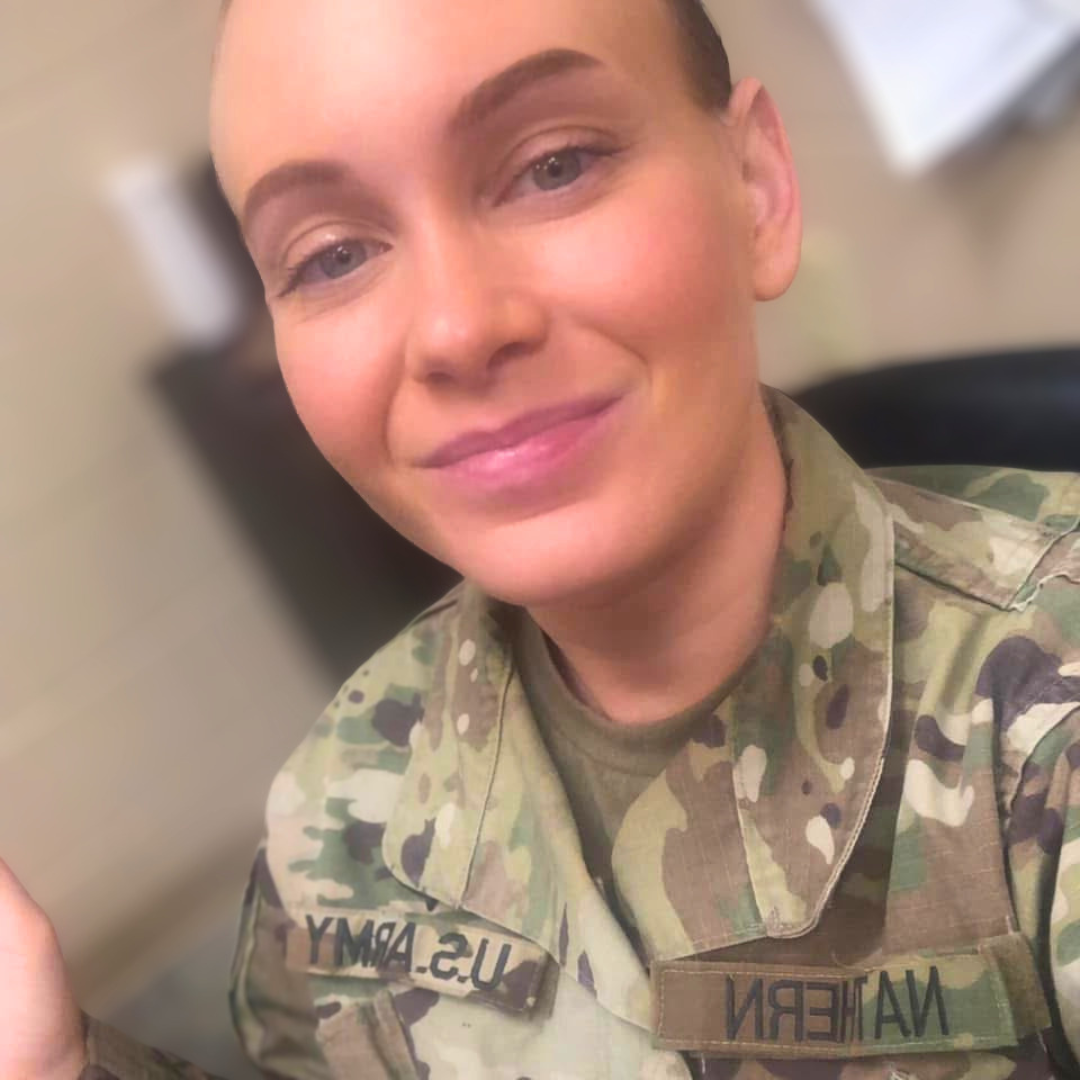
In this episode of the Billy Dees Podcast, the conversation blends commentary and interview in a way that reflects the show’s core identity—thoughtful, conversational, and grounded in real-world perspectives. Billy welcomes Nicole Nathern-Hedrick, a rising voice on TikTok and social media, where she shares commentary centered on faith, traditional values, and cultural analysis. What unfolds is a wide-ranging discussion that touches on politics, media, language, and the psychological forces shaping modern discourse.

Nicole’s background adds an important dimension to the conversation. A former member of the U.S. Army, she speaks candidly about how her service influenced her worldview, maturity, and sense of responsibility. Like many Americans, she describes her political awareness as something that developed over time—particularly during the turbulent years around 2019 and 2020. Rather than adopting rigid ideological labels, she frames her perspective as evolving, shaped by observation and lived experience rather than strict partisan alignment.

A central theme throughout the episode is the power of language and how it influences perception. Nicole discusses what she sees as a shift in how words are used in public discourse—arguing that language is increasingly being shaped in ways that can divide rather than clarify. She connects this idea to broader concerns about social trust, cultural polarization, and the ways information is presented in the digital age. The conversation explores how emotionally charged messaging often replaces nuanced discussion, making it harder for people to engage in objective analysis.

The discussion also ventures into deeper territory with Nicole’s concept of what she calls the “architecture of thought reform.” Drawing from personal observation and academic study, she outlines patterns she believes are present in modern culture, including emotional manipulation, isolation, and the use of loaded language. Whether listeners agree or disagree, the segment highlights a broader concern shared by many today: how media environments and online platforms shape not just opinions, but the way people think.

Find Nicole on TikTok

Billy and Nicole also examine the role of social media—particularly platforms like TikTok—in shaping public conversation. Nicole emphasizes her intention to present ideas in a calm, neutral tone, encouraging viewers to think critically rather than react emotionally. This approach, she suggests, is part of why her content resonates with a growing audience. The episode underscores how independent creators are carving out space for alternative perspectives in an increasingly crowded digital landscape.

Another key thread in the conversation is the importance of maintaining composure in difficult discussions. Nicole shares practical strategies, such as journaling and preparing thoughtful responses, to help individuals stay grounded when faced with emotionally charged debates. The idea of “not taking the bait” becomes a recurring theme—an appeal for more intentional, reflective engagement rather than reactive exchanges.

Ultimately, this episode offers a snapshot of the broader cultural moment: a time marked by rapid change, heightened emotion, and competing narratives about truth and identity. Through their dialogue, Billy Dees and Nicole Nathern-Hedrick invite listeners to step back, examine assumptions, and consider how they engage with the world around them.

Whether you’re interested in cultural commentary, political discussion, or the psychology behind modern communication, this episode delivers a thought-provoking conversation that encourages deeper reflection—and perhaps a more measured approach to the noise of everyday discourse.

The Rise of the “Patriot Economy” – Billy Dees Talks Marketing, Politics, and the Psychology of Giving with Jeff Kruszyna

Jeff Kruszyna

On this episode of The Billy Dees Podcast, Billy Dees sits down with Jeff Kruszyna, founder and CEO of JMK Victory, a direct response marketing agency that has helped raise more than $100 million for political campaigns, PACs, veterans’ organizations, and advocacy groups.

The conversation explores the intersection of politics, marketing, and cultural identity in modern America. From the long-term impact of September 11th to the rise of what Kruszyna calls the “patriot economy,” the discussion examines how values-driven consumerism is reshaping business, fundraising, and political campaigns

From 9/11 to a Career in Political Marketing

Jeff Kruszyna’s path into political marketing began with a defining moment in American history.

As an 18-year-old freshman studying computer science at Stony Brook University, Kruszyna was walking across campus when he first heard reports that a plane had struck the World Trade Center. Like many Americans, he rushed to a television and watched events unfold in real time.

That moment changed the trajectory of his life.

Feeling a renewed sense of purpose and patriotism, Kruszyna switched his major from computer science to political science, graduating summa cum laude and Phi Beta Kappa. He soon became involved in the conservative movement and direct response fundraising, eventually building a career helping organizations connect with supporters and donors.

More than two decades later, he has worked extensively with political campaigns and nonprofits focused on issues ranging from veterans’ advocacy to constitutional liberties.

The Emergence of the “Patriot Economy”

One of the central themes of the discussion is Kruszyna’s concept of the “patriot economy.”

According to him, a growing number of Americans are making purchasing decisions based not only on price or convenience—but on shared values and ideological alignment.

Consumers increasingly want to know:

  • What a company stands for
  • Whether its leadership reflects their beliefs
  • Where their money ultimately goes

In recent years, major brands have taken public stances on social and political issues, particularly during the COVID-19 era. In response, many entrepreneurs have launched alternative businesses aimed specifically at consumers who want to support pro-America, pro-freedom, or constitutional values.

The result is a parallel marketplace where products—from coffee to cell phone services—are marketed directly to consumers who want their spending to reflect their political or cultural identity.

A Changing Political Landscape

Billy Dees also raises a broader concern about the current political climate.

In decades past, he notes, political rivals such as Ronald Reagan and Tip O’Neill or Bill Clinton and Newt Gingrich could fiercely disagree while still operating within a shared political framework.

Today, the landscape feels different.

Many Americans now identify strongly with political or cultural “teams,” often consuming information primarily through algorithms that reinforce their existing beliefs. According to Kruszyna, this is both a benefit and a challenge of the digital age.

Social media has made communication easier than ever—but it has also intensified ideological echo chambers.

Despite this polarization, Kruszyna argues that most Americans still share a core sense of national pride and common ground. The challenge for campaigns and organizations is communicating messages that resonate beyond partisan noise.

The Psychology Behind Fundraising

Another major focus of the episode is the psychology of giving.

Kruszyna explains that successful fundraising—whether for political campaigns or nonprofits—comes down to three core elements:

  1. Emotion – People respond to stories that move them.
  2. Identity – Donors want to support causes that align with who they are.
  3. Mission – Clear, compelling goals motivate action.

Direct response marketing, particularly direct mail fundraising, relies heavily on storytelling. A well-crafted fundraising letter often highlights a real person or situation to illustrate the organization’s mission.

The goal is to create a personal connection that encourages the reader to act—whether by signing a petition, joining a campaign, or making a donation.

Why Direct Mail Still Works in the Digital Age

One of the more surprising insights from the conversation is that direct mail remains a powerful fundraising tool, even in the age of social media and digital marketing.

While email and text messaging are inexpensive and immediate, physical mail offers something digital channels often cannot: attention and memorability.

Kruszyna points out that:

  • Email inboxes are crowded and easy to scroll past.
  • A physical letter often stays visible in a home for days.
  • The mailbox today is less competitive than it once was.

Direct mail also blends art and science. Every detail—from envelope color to font choice to postage style—is carefully designed to capture attention within the few seconds someone spends sorting their mail.

The ultimate objective is simple: persuade the recipient to open the letter and engage with the message.

Lessons for Modern Political Campaigns

As the conversation turns toward upcoming election cycles, Kruszyna emphasizes one critical lesson for campaigns:

Start early.

Building a donor base and grassroots support network takes time. Campaigns that delay fundraising efforts often struggle to build the momentum needed for long-term success.

He recommends an omni-channel strategy that includes:

  • Direct mail
  • Email marketing
  • Digital advertising
  • Text messaging
  • Grassroots outreach

Each channel reinforces the others, helping campaigns maintain consistent engagement with supporters.

A Conversation About Politics, Media, and Identity

The interview ultimately becomes more than a discussion about fundraising or marketing tactics.

It is a broader conversation about how identity, politics, and consumer behavior intersect in modern America. As cultural divisions deepen and technology continues to reshape communication, organizations and campaigns must find new ways to connect with audiences who increasingly view the world through ideological lenses.

For Billy Dees, the discussion highlights both the challenges and the opportunities of the current era.

Whether through politics, nonprofit work, or entrepreneurship, the growing emphasis on values-driven engagement is transforming how Americans vote, donate, and spend their money.

Listen to the full episode of The Billy Dees Podcast to hear the complete conversation with Jeff Kruszyna and explore how marketing strategy, political identity, and storytelling are shaping today’s fundraising landscape.

Cinda Gault — Writing Women, History, and Identity

In this episode of the podcast, Billy Dees sits down with Canadian author Cinda Gault for a sweeping, thoughtful conversation that moves fluidly between literature, feminism, history, politics, and culture. What unfolds is not just an interview about books—it’s an exploration of how identity is shaped, challenged, and remembered across decades.

Cinda Gault

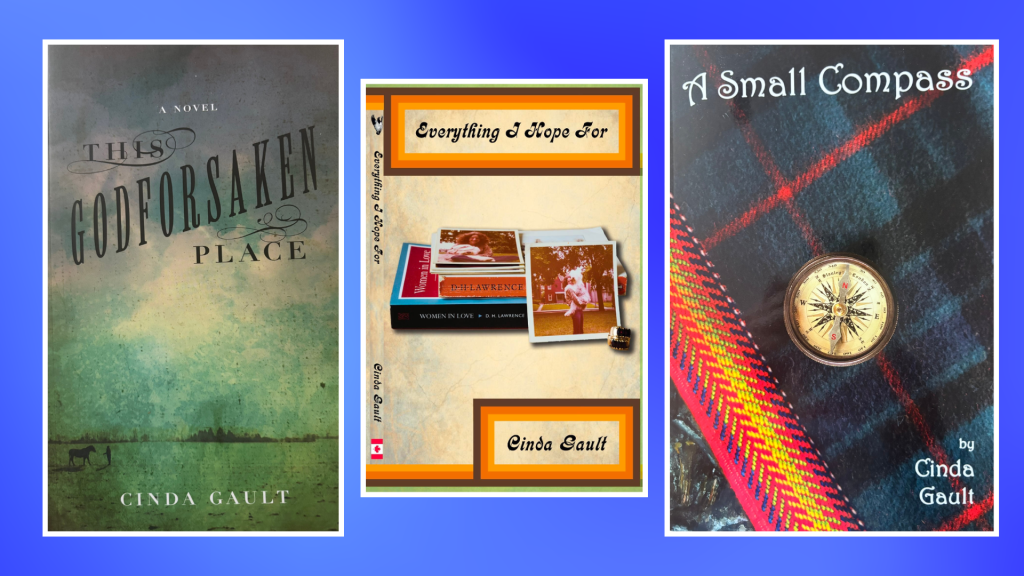
Cinda Gault, author of This Godforsaken Place, A Small Compass, and Everything I Hope For, brings a rare combination of lived experience, academic rigor, and storytelling instinct to the microphone. The result is a dialogue that feels both deeply personal and intellectually expansive.


From Feminist Activism to Fiction

Cinda Gault’s journey to fiction didn’t begin with dreams of literary fame—it began with activism.

As a young woman in 1970s Canada, she was immersed in second-wave feminism, helping establish rape crisis centers and shelters for victims of domestic violence. Armed with an undergraduate degree in psychology from the University of Guelph and later an MA in criminology from the University of Toronto, she worked in social services—including a stint as a prison guard in a men’s prison.

Eventually, she discovered something important about herself: she didn’t want to manage people—she wanted to tell stories.

Her first published novel, a Harlequin Super Romance released in 1988, emerged from that realization. Writing romance, she notes, is far trickier than people assume. Getting two characters to fall in love is easy. Keeping them in meaningful conflict for 350 pages—without making either look foolish—is the real craft.

Years later, revisiting that manuscript (originally typed on a manual typewriter) became a meditation on how technology changes—but human emotion doesn’t. The landlines, phone booths, and tape recorders had to be updated. The romance itself held steady.

“People fall in love now the way they always have.”


The 1970s: A Divided Memory

One of the episode’s most compelling segments centers on the 1970s.

Billy recalls childhood freedom in the United States—bikes, Evel Knievel ramps, and a life lived outdoors without screens. Cinda Gault, by contrast, remembers a “heady” period of political awakening as a university student in Canada.

Under Prime Minister Pierre Trudeau, Canada experienced a surge of nationalism alongside second-wave feminism. For women, the era meant access—to education, to careers, to autonomy. The birth control pill became widely available. Women entered professions previously closed to them. University enrollment patterns would eventually flip from male-dominated to female-majority.

Yet the conversation avoids nostalgia traps. Both host and guest reflect on how movements evolve—and sometimes overcorrect.

Cinda Gault observes that the feminism of her generation was rooted in a simple demand: “Get out of my way.” It was about autonomy and responsibility. Today, she suggests, identity politics has sometimes shifted from equality to equity in ways that complicate that earlier clarity.

It’s not a condemnation—but a generational reflection.


Canada, Autonomy, and the Abortion Question

One of the most illuminating moments in the episode comes when Billy raises a surprising fact: Canada is the only Western nation without a federal abortion law.

Cinda Gault explains the history, referencing the legal battles of Dr. Henry Morgentaler and the 1988 Supreme Court decision that struck down Canada’s abortion law. Unlike the United States—where abortion remains a central, polarizing issue—Canada’s legislative structure and constitutional culture have produced a different outcome.

She ties this to Canada’s unique national formation: a country born from compromise between French and British identities. Without a singular cultural narrative like America’s “melting pot,” Canada evolved with an instinct toward pluralism—“leave people room.”

The discussion is nuanced and civil. Rather than turning partisan, it becomes a reflection on how national identity shapes law, and how literature reflects cultural undercurrents long before legal systems codify them.


Music, Community, and Cultural Shifts

From politics, the conversation pivots to music—another defining force of the 1960s and 70s.

Billy recalls the communal experience of gathering around a hi-fi system to listen to new albums—music as event, as conversation, as cultural glue. Cinda Gault agrees, recounting how even her children were stunned by the originality of albums like Abbey Road.

Both acknowledge that while good music still exists, the shared cultural moment has fractured in the age of earbuds and streaming algorithms.

It’s a subtle but powerful theme of the episode: technology advances, but something communal may be lost.


History, Myth, and What Survives

Cinda Gault’s historical fiction is rooted in a central question: What survives history—and what doesn’t?

She shares the story of discovering an obscure footnote about Isobel Gunn, a woman who disguised herself as a man to work for the Hudson’s Bay Company in the early 1800s and was only discovered when she gave birth in a remote trading post.

The archival records detail weather, cargo, employee duties. What they don’t record are hopes, fears, motivations—the interior life.

That’s where fiction steps in.

Her comparison of Annie Oakley to Wayne Gretzky becomes emblematic of her approach: recognizing excellence and complexity beyond political alignment. Oakley, she notes, embodied strength and independence—yet wasn’t aligned with feminist movements. History doesn’t always fit ideological boxes.

The conversation even touches on figures like Jesse James, exploring how cultural memory can romanticize criminals depending on who tells the story. It’s a reminder that mythmaking is as much about identity as it is about fact.


Identity, Progress, and Personal Responsibility

Perhaps the most resonant theme of the episode is balance.

Cinda Gault acknowledges that major gains were made in women’s rights during her lifetime. She also questions whether modern discourse sometimes forgets that progress has occurred. Billy echoes this, suggesting that refusing to acknowledge improvement can make meaningful reform harder.

They agree on one key principle: equality ultimately means seeing one another as individuals.

It’s a rare moment in modern media—an honest, respectful exchange across national and generational lines without shouting, slogans, or caricature.


Final Thoughts

This episode stands out not just for its literary insights, but for its tone. It’s curious. It’s measured. It’s exploratory.

Cinda Gault brings academic depth, activist history, and storytelling passion to the discussion. Billy Dees brings cultural reflection and a willingness to ask hard questions without hostility.

Together, they create something increasingly uncommon in today’s media landscape: a long-form conversation that trusts the audience to think.

For readers interested in historical fiction, Canadian identity, feminism, or simply how stories shape nations, this is an episode worth hearing—and Cinda Gault’s books are worth reading.

When Activism Collides With Science: Billy Dees Talks Evolution, Ideology, and Truth With Dr. Marc J. Defant

Dr. Marc J. Defant

In this episode of The Billy Dees Podcast, Billy sits down with Dr. Marc J. Defant, a professor of geology and geochemistry at the University of South Florida whose work bridges the physical sciences and evolutionary psychology. With publications in top-tier journals like Nature and funding from organizations such as the National Science Foundation and National Geographic, Dr. Defant brings serious scientific credentials to a conversation that tackles one of the most controversial issues of our time: what happens when ideology begins to override evidence in academia.

Dr. Marc J. Defant has been on shows like the Joe Rogan Experience and the Dinesh D’Souza Podcast, and on this episode, he talks to Billy.

The discussion spans far beyond surface-level culture war talking points. Dr. Defant explains how evolutionary psychology emerged from biology and why human behavior—including sex differences, mate selection, competition, and social roles—cannot be explained by culture alone. Drawing from anthropology, neuroscience, and cross-cultural data, he outlines how traits like masculinity and femininity are deeply rooted in our evolutionary past, shaped over hundreds of thousands of years in hunter-gatherer societies. Billy pushes the conversation into real-world implications, exploring how modern debates over gender, masculinity, pay gaps, and social expectations often ignore biological realities in favor of politically convenient narratives.

What makes this episode stand out is its willingness to ask uncomfortable questions without demonizing individuals. Billy and Dr. Defant emphasize the importance of balance: acknowledging discrimination where it exists, while also rejecting the idea that society is governed by hidden systems designed to oppress. They discuss how concepts like “toxic masculinity,” social constructionism, and the politicization of psychology may be doing more harm than good—especially to young men navigating identity, purpose, and responsibility in an increasingly hostile cultural climate.

Ultimately, this conversation is about intellectual honesty. From the evolution of the human brain to modern academic institutions, Billy Dees and Dr. Marc Defant argue that truth matters more than ideology—and that science loses its value the moment it becomes activism in a lab coat. It’s a thoughtful, wide-ranging discussion that challenges listeners to reconsider what they’ve been told, ask better questions, and remain open to evidence, even when it’s inconvenient.

If you’re interested in long-form conversations that don’t shy away from complexity, this is an episode you won’t want to miss.