Perfect Media Productions, LLC is a media production and digital marketing service. We produce audio for radio, podcasts, and voice-overs. We also record and/or edit video for websites and social media.
This is the production home of the Billy Dees Podcast and other great podcasts.
Our blog section features a variety of topics including media, business, and pop culture.
When people think about marketing, public appearances, political campaigns, or building a personal brand, they naturally tend to focus on the visuals. Cameras, lighting, graphics, staging, and presentation all get plenty of attention.
But there is another part of the equation that can make or break how you are perceived: audio.
In this video, I take a technical—and decidedly non-political—look at a recent video of Amy Acton that circulated online and became the subject of criticism from her opponents. My point isn’t about politics or about taking sides. It’s about what happened to the sound, and what could have been done differently.
Oddly enough, many Acton supporters who are defending this clip don’t fully understand what went wrong.
Live events create a complicated audio environment. The sound that works for an audience sitting in an auditorium isn’t necessarily the sound that should be sent to television, social media, or other media outlets. A live audience has its own acoustics, crowd noise, applause, cheering, and the natural sound coming from the stage. The media feed needs to be mixed separately so that the person speaking—and the reaction of the audience—sound natural and balanced.
In the example discussed in the video, the speaker’s microphone is isolated and sounds noticeably different from what you would expect when someone is addressing a crowd. A properly designed media mix could have combined the speaker’s microphone with strategically placed ambient microphones, creating a much more natural representation of the event.
And that’s the larger lesson.
Poor audio can make a good presentation look bad.
Whether you’re a business owner, CEO, political candidate, public speaker, nonprofit leader, or someone building a personal brand, everything you say is part of your brand. If the audio sounds harsh, thin, distorted, overly isolated, or disconnected from the environment, the audience may not consciously understand what’s wrong—but they will notice that something doesn’t sound right.
I’ve spent a good portion of my career working with audio, and I realize that people like me are sometimes dismissed as “audio geeks.”
That’s okay.
But when you’re putting yourself, your company, your campaign, or your organization in front of an audience, it might be worth listening to the audio geeks before the bad recording becomes the thing everyone remembers.
As we head into the fall season, I’m encouraged by where The Billy Dees Podcast stands. The past year has been one of our strongest in terms of audience growth, and it’s been rewarding to see the results of a deliberate, long-term strategy.
From the beginning, I’ve approached the podcast much like a traditional radio program. It isn’t a content marketing vehicle for another product or service—it is the product. That perspective has shaped every decision we’ve made over the past decade.
Several factors have contributed to our recent growth:
• Building on a decade of consistency. With more than 10 years of publishing episodes, we’ve established a reputation for dependable, high-quality content and professional conversations.
• Investing in podcast SEO. We’ve placed a greater emphasis on search optimization within the major podcast platforms, making it easier for new listeners to discover the show organically.
• Prioritizing the audience experience. The podcast remains free across all major listening platforms and social media channels, including Substack. We also avoid interrupting the conversation with mid-roll advertising. Sponsor messages are limited to the beginning of each episode, allowing listeners to enjoy an uninterrupted discussion.
• Respecting our audience’s time. Episodes average approximately 38 minutes and rarely exceed an hour, making them well-suited for commutes, workouts, and busy schedules.
• Maintaining a professional editorial approach. The focus has always been on thoughtful interviews and informed commentary rather than outrage, personal attacks, or performative debate.
Growth in podcasting rarely happens overnight. It comes from consistently delivering value, refining your strategy, investing in discoverability, and respecting your audience.
I’m grateful to every guest who has shared their expertise and to every listener who has subscribed, shared an episode, or recommended the show to others. Thank you for being part of the journey. I’m looking forward to what we’ll accomplish together this fall.
I’ve been following the ongoing debate about audio podcasts versus video podcasts, and I have to admit, some of the arguments are interesting—and some of them are downright amusing.
One point that keeps coming up is that most podcasts are still consumed as audio. People listen while driving, exercising, working around the house, or doing just about anything else. That’s absolutely true.
The other common argument is that audio is easier for creators. You don’t have to worry about lighting, camera angles, editing visuals, or even what you’re wearing. If video stresses you out, the advice is often simple: skip it and just record audio.
From a practical standpoint, I understand that advice.
But I think something important gets lost when we reduce audio to simply being the easier option.
To me, spoken-word audio is an art form.
I can’t imagine legendary voices like Paul Harvey treating audio as the format they chose because they didn’t have to get dressed for the camera. Their voices carried emotion, personality, and imagination. They understood that the human voice has a unique ability to connect with people in a way that’s difficult to replicate anywhere else.
When someone listens to an audio podcast, your voice travels just a few inches into a microphone and ends up directly in their ears. It’s an incredibly personal experience. There are no visual distractions. The listener is focused entirely on your words, your pacing, your emotion, and your delivery.
That’s powerful.
As creators, I think we should approach audio differently than we often do. Instead of thinking, “At least I don’t have to be on camera,” we should ask ourselves:
How can I make this audio experience memorable?
How can I communicate genuine passion?
How can I paint pictures with nothing more than my voice?
How can I create a story that lives in the listener’s imagination?
Even subtle vocal inflection can completely change the way a story is experienced. A simple sentence can become suspenseful, emotional, humorous, or dramatic depending entirely on how it’s delivered.
That’s the beauty of audio.
Now, don’t misunderstand me—video absolutely has its place.
On The Billy Dees Podcast, many of the authors and guests I interview appreciate having professionally produced video. It gives them content they can share on YouTube, embed on their websites, and use across social media. That’s an important part of today’s content marketing landscape, and I understand why it matters.
But I don’t think audio should be viewed as the consolation prize.
Audio deserves its own creative approach.
When I record an audio-only episode, I want to think about rhythm, pacing, tone, pauses, and emotion. I want listeners to hear the enthusiasm in my voice and visualize what I’m describing. If they can build the scene in their own imagination, then the audio has done something video can’t always accomplish.
The next time you’re deciding between an audio podcast and a video podcast, don’t simply ask which one is easier.
Ask yourself which format best serves your message.
And if you choose audio, embrace it for what it is—not just a practical alternative, but a storytelling medium with a unique ability to connect, inspire, and leave a lasting impression.
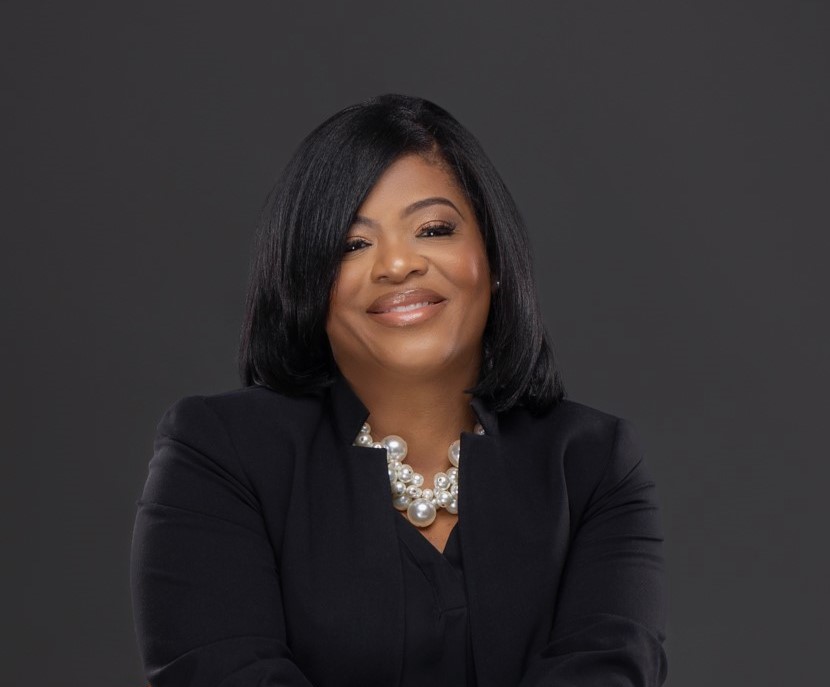
Starting a business is often celebrated as the ultimate expression of independence, ambition, and creativity. But what happens when it’s time to step away—or when life unexpectedly forces that decision? That’s the central question explored in Billy Dees’ engaging conversation with entrepreneur attorney and business strategist Scherrie L. Prince, who helps founders build businesses that are designed not only to grow, but to last.
Scherrie L. Prince
Throughout the discussion, Prince emphasizes a concept that many entrepreneurs overlook: every business should begin with the end in mind. Too many owners focus exclusively on launching and growing their companies without considering succession, disability, partnership disputes, retirement, or even death. Her philosophy is simple—if you don’t create a plan for your business and your estate, the state already has one waiting for you, and chances are you won’t like it. She encourages entrepreneurs to think about exit strategies from “day zero,” long before they believe they’ll ever need one.
The conversation also dives into the importance of building a solid legal and operational foundation. Prince explains that every business owner should have essential documents in place, including updated beneficiary designations, wills or trusts when appropriate, and clear partnership or operating agreements. These aren’t just legal formalities—they’re safeguards that protect families, business partners, employees, and the future of the company itself. As businesses become more visible, they also become more vulnerable to lawsuits, financial problems, employee disputes, and internal conflicts, making preparation even more critical.
Billy and Scherrie also challenge one of today’s most common business myths: that every company must constantly chase explosive growth. Prince argues that success isn’t measured by becoming the next Amazon or Walmart. For many entrepreneurs, building a stable, profitable business that supports their desired lifestyle is a far greater achievement than endless expansion. Growth should always align with the owner’s personal goals—not someone else’s definition of success. This refreshing perspective reminds listeners that sustainable businesses often outperform businesses that grow too quickly and become overextended.
Another fascinating segment explores why partnerships often begin with excitement but later become strained. Prince compares business partnerships to marriages, noting that people change over time and unforeseen challenges inevitably arise. Without clear agreements that outline responsibilities, conflict resolution, ownership rights, and exit procedures, even the strongest partnerships can deteriorate into expensive legal disputes. The lesson is clear: difficult conversations at the beginning of a business relationship are far easier than difficult lawsuits later.
Artificial intelligence also enters the conversation, not as an apocalyptic threat, but as a practical business tool that must be managed responsibly. Billy raises concerns about AI’s growing role in both business and personal decision-making, especially among younger generations. Prince agrees that AI can significantly improve efficiency, but cautions that companies must establish policies governing its use. Mishandling confidential information through AI platforms could expose businesses to data breaches, legal liability, and the loss of valuable intellectual property. Like any tool, AI provides tremendous benefits only when used thoughtfully.
One of the most inspiring parts of the interview centers on the entrepreneurial mindset itself. Billy points out that small business owners are often unfairly portrayed as greedy or uncaring, when in reality many sacrifice personal comfort simply to make payroll and support their employees. Prince echoes that sentiment, explaining that entrepreneurship requires resilience, courage, and long-term thinking. She distinguishes between founders who become trapped working in their businesses and those who eventually learn to work on them by building systems, delegating responsibility, and developing leadership rather than trying to do everything themselves.
For aspiring entrepreneurs, Prince offers one of the episode’s most memorable ideas: consider the cost of inaction. Many people hesitate to start businesses because they’re afraid of failure, yet they rarely calculate the opportunities they’re losing by doing nothing. Time will pass regardless. The question becomes whether you’ll spend those years building something of your own or wondering what might have happened if you’d taken the leap. Success doesn’t require knowing everything on day one—it requires surrounding yourself with trusted advisors and remaining willing to learn along the way.
Billy Dees closes the conversation by highlighting Prince’s own mission through her Play Big Faster Podcast, where she shares practical advice with founders and business leaders. Just like this interview, her work focuses on actionable strategies rather than empty motivation. Listeners walk away with valuable insights on legal planning, business growth, leadership, succession, and the importance of building companies that are prepared for both opportunity and uncertainty.
This episode serves as an excellent reminder that entrepreneurship isn’t simply about starting a business—it’s about building something resilient enough to survive life’s inevitable changes. Whether you’re launching your first venture, growing an established company, or simply dreaming about becoming your own boss someday, Billy Dees and Scherrie L. Prince deliver practical wisdom that can help entrepreneurs make smarter decisions today while preparing for tomorrow.
On this episode of The Billy Dees Podcast, Billy Dees sits down with Jeff Kruszyna, founder and CEO of JMK Victory, a direct response marketing agency that has helped raise more than $100 million for political campaigns, PACs, veterans’ organizations, and advocacy groups.
The conversation explores the intersection of politics, marketing, and cultural identity in modern America. From the long-term impact of September 11th to the rise of what Kruszyna calls the “patriot economy,” the discussion examines how values-driven consumerism is reshaping business, fundraising, and political campaigns
From 9/11 to a Career in Political Marketing
Jeff Kruszyna’s path into political marketing began with a defining moment in American history.
As an 18-year-old freshman studying computer science at Stony Brook University, Kruszyna was walking across campus when he first heard reports that a plane had struck the World Trade Center. Like many Americans, he rushed to a television and watched events unfold in real time.
That moment changed the trajectory of his life.
Feeling a renewed sense of purpose and patriotism, Kruszyna switched his major from computer science to political science, graduating summa cum laude and Phi Beta Kappa. He soon became involved in the conservative movement and direct response fundraising, eventually building a career helping organizations connect with supporters and donors.
More than two decades later, he has worked extensively with political campaigns and nonprofits focused on issues ranging from veterans’ advocacy to constitutional liberties.
The Emergence of the “Patriot Economy”
One of the central themes of the discussion is Kruszyna’s concept of the “patriot economy.”
According to him, a growing number of Americans are making purchasing decisions based not only on price or convenience—but on shared values and ideological alignment.
Consumers increasingly want to know:
What a company stands for
Whether its leadership reflects their beliefs
Where their money ultimately goes
In recent years, major brands have taken public stances on social and political issues, particularly during the COVID-19 era. In response, many entrepreneurs have launched alternative businesses aimed specifically at consumers who want to support pro-America, pro-freedom, or constitutional values.
The result is a parallel marketplace where products—from coffee to cell phone services—are marketed directly to consumers who want their spending to reflect their political or cultural identity.
A Changing Political Landscape
Billy Dees also raises a broader concern about the current political climate.
In decades past, he notes, political rivals such as Ronald Reagan and Tip O’Neill or Bill Clinton and Newt Gingrich could fiercely disagree while still operating within a shared political framework.
Today, the landscape feels different.
Many Americans now identify strongly with political or cultural “teams,” often consuming information primarily through algorithms that reinforce their existing beliefs. According to Kruszyna, this is both a benefit and a challenge of the digital age.
Social media has made communication easier than ever—but it has also intensified ideological echo chambers.
Despite this polarization, Kruszyna argues that most Americans still share a core sense of national pride and common ground. The challenge for campaigns and organizations is communicating messages that resonate beyond partisan noise.
The Psychology Behind Fundraising
Another major focus of the episode is the psychology of giving.
Kruszyna explains that successful fundraising—whether for political campaigns or nonprofits—comes down to three core elements:
Emotion – People respond to stories that move them.
Identity – Donors want to support causes that align with who they are.
Direct response marketing, particularly direct mail fundraising, relies heavily on storytelling. A well-crafted fundraising letter often highlights a real person or situation to illustrate the organization’s mission.
The goal is to create a personal connection that encourages the reader to act—whether by signing a petition, joining a campaign, or making a donation.
Why Direct Mail Still Works in the Digital Age
One of the more surprising insights from the conversation is that direct mail remains a powerful fundraising tool, even in the age of social media and digital marketing.
While email and text messaging are inexpensive and immediate, physical mail offers something digital channels often cannot: attention and memorability.
Kruszyna points out that:
Email inboxes are crowded and easy to scroll past.
A physical letter often stays visible in a home for days.
The mailbox today is less competitive than it once was.
Direct mail also blends art and science. Every detail—from envelope color to font choice to postage style—is carefully designed to capture attention within the few seconds someone spends sorting their mail.
The ultimate objective is simple: persuade the recipient to open the letter and engage with the message.
Lessons for Modern Political Campaigns
As the conversation turns toward upcoming election cycles, Kruszyna emphasizes one critical lesson for campaigns:
Start early.
Building a donor base and grassroots support network takes time. Campaigns that delay fundraising efforts often struggle to build the momentum needed for long-term success.
He recommends an omni-channel strategy that includes:
Direct mail
Email marketing
Digital advertising
Text messaging
Grassroots outreach
Each channel reinforces the others, helping campaigns maintain consistent engagement with supporters.
A Conversation About Politics, Media, and Identity
The interview ultimately becomes more than a discussion about fundraising or marketing tactics.
It is a broader conversation about how identity, politics, and consumer behavior intersect in modern America. As cultural divisions deepen and technology continues to reshape communication, organizations and campaigns must find new ways to connect with audiences who increasingly view the world through ideological lenses.
For Billy Dees, the discussion highlights both the challenges and the opportunities of the current era.
Whether through politics, nonprofit work, or entrepreneurship, the growing emphasis on values-driven engagement is transforming how Americans vote, donate, and spend their money.
Listen to the full episode of The Billy Dees Podcast to hear the complete conversation with Jeff Kruszyna and explore how marketing strategy, political identity, and storytelling are shaping today’s fundraising landscape.
Our relationship with social media has continually evolved. Over the past year, two significant shifts have reshaped the landscape.
First, feeds are no longer primarily driven by user follows. Instead, algorithms now prioritize “for you” content based on user behavior. As a result, many of your followers may not see your posts, depending on the platform.
Second, social media business models have diversified. Subscription-based services and political influences have altered user bases across platforms. Where most users once engaged with two or three major platforms, new apps emerge constantly, demanding attention.
For The Billy Dees Podcast, podcast listens have increased across platforms like Apple Podcasts, Spotify, Audible, and Goodpods. We attribute this to digital media consumers actively searching for content on dedicated podcast platforms. With a well-established 10-year presence, we benefit from this shift, driven by the decline of legacy media, particularly cable news.
Our priority remains creating high-quality content for our loyal listeners rather than chasing social media followers. The connection between social media engagement and podcast listens is not as strong as it once was.
That said, we still value a social media presence but are refining our approach. Moving forward, we will focus on Facebook and X (formerly Twitter). Facebook allows for more detailed discussions, while X keeps us engaged with real-time trends—this combination feels right for 2025.
Meanwhile, platforms like TikTok, Bluesky, and Clapper will take a backseat. Managing multiple platforms demands significant resources, and our audience shouldn’t have to monitor too many.
If you’d like to follow us on social media, Facebook and X@BillyDees are the best places. More importantly, we encourage you to subscribe to The Billy Dees Podcast on your favorite podcast platform—it’s free, and you won’t miss an episode.
In this episode, we dive into the Biden-Trump debate and the RFK Jr. campaign, focusing on the branding and marketing aspects rather than the debate content itself. We contrast Biden’s weaker brand with Trump’s stronger one, underscoring the critical role branding plays in politics.
We also explore the candidacy of RFK Jr. as a new and revitalized contender, highlighting the necessity of a robust brand to captivate voters. RFK Jr. has the opportunity to leverage dissatisfaction with both Biden and Trump to enhance his brand and attract support.
Our discussion emphasizes the importance of branding in politics and the need for candidates to market themselves effectively to voters. Produced in the aftermath of the Biden-Trump debate, this episode examines the implications of branding on political campaigns.
Here is a 2 minute sizzler video. The full episode is available on your favorite podcasting platform and below for your convenience. The video version is also available on Rumble.