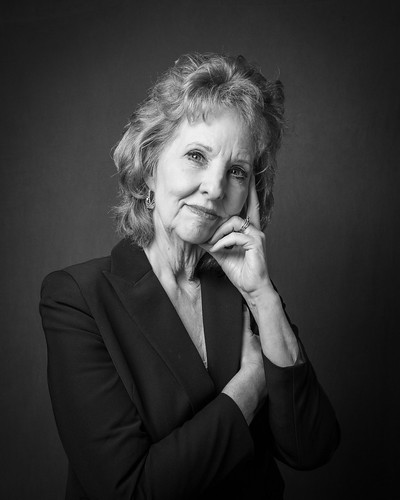
Eric Robinson Tells his Journey from Pastor to the FBI

Billy Dees welcomes a guest whose life story reads like a screenplay — but one grounded in reality.

Eric Robinson spent 24 years as a Special Agent with the FBI. Before that, he pastored a Baptist church. Soon, he’ll add “published author” to the list.

What unfolded in this episode wasn’t just a law enforcement interview. It was a layered discussion about faith, justice, politics, violence, and the human toll of seeing society at its worst — all through the lens of someone who has stood in both the pulpit and the breach.

From Ministry to the FBI: An Unlikely Pivot

Eric RobInson

Robinson’s journey begins in faith.

Raised in a Christian household, he entered ministry not out of dramatic calling but from conviction and personal growth during college. He and his wife even planned missionary work overseas before life circumstances kept them stateside. He eventually planted a church in Western New York, serving as senior pastor.

But the pastoral role came with a cost.

Unlike television portrayals of clergy, Robinson described ministry as deeply personal and emotionally consuming. His church aimed to reach those who “didn’t fit in” — people wrestling with addiction, broken marriages, trauma, and despair. Rather than keeping professional distance, he internalized their struggles.

The result? Stress-induced headaches every day for two years. He made a decision that would alter the trajectory of his life: apply to the FBI.

The FBI Reality: Less Drama, More Grind

Robinson joined the Bureau shortly after 9/11. Though initially placed in counterterrorism, he was soon moved to a drug squad in Chicago. Over his career, he worked:

  • White-collar crime
  • Counter-terrorism
  • Crimes against children
  • Gangs and narcotics
  • Public corruption
  • SWAT operations

He also served as a firearms and tactics instructor.

The contrast between Hollywood and reality became a recurring theme. Crime dramas suggest instant wiretaps, magical databases, and constant action. Robinson dismantled those myths:

  • Wire taps require weeks of internal vetting before a judge even sees paperwork.
  • There is no omniscient supercomputer pulling secrets from thin air.
  • Most days involve computer work, subpoenas, interviews, and paperwork.

If someone filmed a “typical” day, he joked, it would be rated R — not for violence, but for agents yelling about malfunctioning computers.

Counseling Skills in Interrogation Rooms

One of the most compelling elements of the discussion was how Robinson’s pastoral background enhanced his investigative work.

In ministry, people come seeking help. In law enforcement, people often come guarding secrets. Yet the underlying skill — drawing people out — remained the same.

Robinson explained that effective interrogation is less about memorized tactics and more about human connection, patience, and psychological awareness. His counseling experience proved invaluable when interviewing witnesses, victims, informants, and suspects.

Interestingly, he also addressed a darker consequence of the job: cynicism.

When you spend years investigating drug cartels or financial fraudsters, it becomes easy to see the worst in everyone. Robinson acknowledged the danger of letting exposure to criminality distort one’s view of society.

Politics, Perception, and the Two FBIs

Billy Dees raised a timely and controversial topic: Has the FBI become politicized?

Robinson offered a nuanced answer. “There are two FBIs,” he said. There’s the Washington, D.C. leadership that dominates headlines — and then there are field agents focused on working cases. In his experience, the vast majority of agents care about one thing: investigating crimes and bringing offenders to justice.

He noted that field offices often dislike interference from D.C., regardless of which party controls the administration. Politics may influence priorities at the top, but the rank-and-file agents operate largely outside that spotlight.

Terrorism: The Modern Threat Landscape

The conversation shifted to terrorism, and Robinson’s perspective was sobering.

While catastrophic attacks remain possible, he emphasized that the more immediate threat often comes from the “homegrown violent extremist” — individuals radicalized online rather than trained abroad.

Modern terrorist organizations, he explained, have evolved. Instead of coordinating complex group operations, they encourage lone actors to commit violence independently. The barrier to entry is lower, and the psychological pull can be powerful.

Yet he also grounded the conversation in reality: devastating terror doesn’t require advanced weaponry. A single individual with a rifle can shut down a city.

Split-Second Decisions and Use of Force

One of the most intense moments of the episode came when Robinson described a SWAT operation involving a mentally unstable woman barricaded with her child.

As a breacher — the agent responsible for breaking down doors — he was positioned at the front. When a gunshot rang out, that was the team’s trigger to enter.

In that moment, he recalled thinking: “Some of us are going to get shot — and that’s going to hurt.”

The entry was ultimately delayed, and another team later neutralized the threat. But Robinson’s reflection revealed something deeper than tactical analysis: the gravity of split-second decisions.

He emphasized two truths:

Officers must train rigorously because their reactions may be judged frame-by-frame later. The last thing any responsible officer wants is to harm someone unnecessarily.

Through the FBI Citizens Academy simulations he helped run, civilians often discovered how shockingly fast these life-or-death decisions unfold.

Faith After the Fire

Perhaps the most meaningful thread was Robinson’s faith. Billy asked directly: more faith now or less?

Robinson’s answer was thoughtful: “More faith, less practice.”

His time in the Bureau reshaped how he approaches belief. Where once he emphasized “truth in love,” he now feels compelled to lead with love — while still holding to truth.

Kindness, he said, has never failed him — not even in interrogation rooms.

The Book

Robinson’s upcoming memoir, tentatively titled Irreverend (a play on being both a reverend and occasionally irreverent), chronicles humorous, surprising, and compelling moments from his career.

An earlier working title, Preacher to Breacher, captures the arc perfectly: from shepherding souls to breaking doors.

For listeners of the Billy Dees Podcast, it represents a natural extension of the conversation — especially given the booming popularity of true crime and writing communities online.

Final Thoughts

This episode wasn’t just about the FBI. It was about vocation, transformation, and identity.

Eric Robinson’s life challenges simple categories. He has counseled the broken and arrested the dangerous. He has trained with firearms and wrestled with theology. He has experienced adrenaline and compassion fatigue — and emerged with deeper faith and sharper insight.

In an era of polarized narratives about law enforcement and patriotism, this conversation offered something rare: complexity.

And perhaps that’s the real takeaway, behind the badge, behind the pulpit, behind the politics — there are human beings navigating impossible decisions, trying to get it right.

The Billy Dees Podcast is available on all podcast platforms.
When Activism Collides With Science: Billy Dees Talks Evolution, Ideology, and Truth With Dr. Marc J. Defant

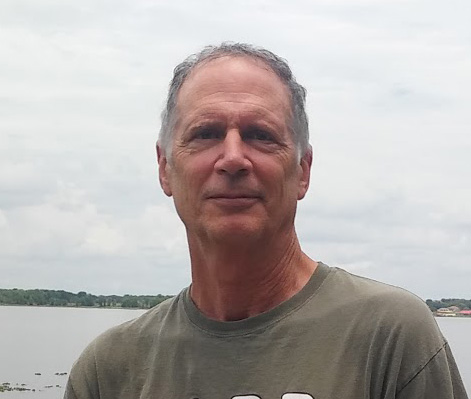
Dr. Marc J. Defant

In this episode of The Billy Dees Podcast, Billy sits down with Dr. Marc J. Defant, a professor of geology and geochemistry at the University of South Florida whose work bridges the physical sciences and evolutionary psychology. With publications in top-tier journals like Nature and funding from organizations such as the National Science Foundation and National Geographic, Dr. Defant brings serious scientific credentials to a conversation that tackles one of the most controversial issues of our time: what happens when ideology begins to override evidence in academia.

Dr. Marc J. Defant has been on shows like the Joe Rogan Experience and the Dinesh D’Souza Podcast, and on this episode, he talks to Billy.

The discussion spans far beyond surface-level culture war talking points. Dr. Defant explains how evolutionary psychology emerged from biology and why human behavior—including sex differences, mate selection, competition, and social roles—cannot be explained by culture alone. Drawing from anthropology, neuroscience, and cross-cultural data, he outlines how traits like masculinity and femininity are deeply rooted in our evolutionary past, shaped over hundreds of thousands of years in hunter-gatherer societies. Billy pushes the conversation into real-world implications, exploring how modern debates over gender, masculinity, pay gaps, and social expectations often ignore biological realities in favor of politically convenient narratives.

What makes this episode stand out is its willingness to ask uncomfortable questions without demonizing individuals. Billy and Dr. Defant emphasize the importance of balance: acknowledging discrimination where it exists, while also rejecting the idea that society is governed by hidden systems designed to oppress. They discuss how concepts like “toxic masculinity,” social constructionism, and the politicization of psychology may be doing more harm than good—especially to young men navigating identity, purpose, and responsibility in an increasingly hostile cultural climate.

Ultimately, this conversation is about intellectual honesty. From the evolution of the human brain to modern academic institutions, Billy Dees and Dr. Marc Defant argue that truth matters more than ideology—and that science loses its value the moment it becomes activism in a lab coat. It’s a thoughtful, wide-ranging discussion that challenges listeners to reconsider what they’ve been told, ask better questions, and remain open to evidence, even when it’s inconvenient.

If you’re interested in long-form conversations that don’t shy away from complexity, this is an episode you won’t want to miss.

Unearthing the Ninth Century: A Conversation with Author D.H. Morris

On this episode of The Billy D’s Podcast, Billy sits down with historical novelist D.H. Morris for a fascinating deep dive into one of the most overlooked yet pivotal periods in European history—the ninth century. Morris, author of The Girl of Many Crowns, brings to life the true story of Judith, the first princess of France, and Baldwin Iron Arm, a knight whose courage and defiance helped shape the future of Europe. Drawing from meticulous research and personal genealogical discovery, Morris explains how this era—often mislabeled as the “Dark Ages”—was actually a time of political upheaval, cultural renaissance, and the very formation of the nations we recognize today.

D.H. Morris

Throughout the conversation, Morris paints a vivid picture of a volatile world marked by Viking invasions, civil wars among Charlemagne’s descendants, and high-stakes political marriages involving children barely into their teens. Judith’s life alone reads like epic fiction: married at twelve for political alliance, widowed twice by sixteen, imprisoned by her own father, and ultimately escaping across Europe in a daring act of love and defiance. Billy and Morris explore how these real historical events rival any modern drama, and how power, ambition, propaganda, and personal courage in the ninth century mirror many of the struggles we still see today.

The interview also offers insight into Morris’s creative and research process. Working from Latin chronicles, royal correspondence, and church records, she explains how she stayed faithful to historical truth while dramatizing events to make them come alive for modern readers. Morris reflects on how human nature—greed, love, loyalty, fear, and resilience—transcends time, making history endlessly relevant. The Girl of Many Crowns emerges not just as a historical novel, but as a reminder that the choices made over a thousand years ago still echo through our world today.

Zolal Habibi – Iran – The Alternative and Democratic Change

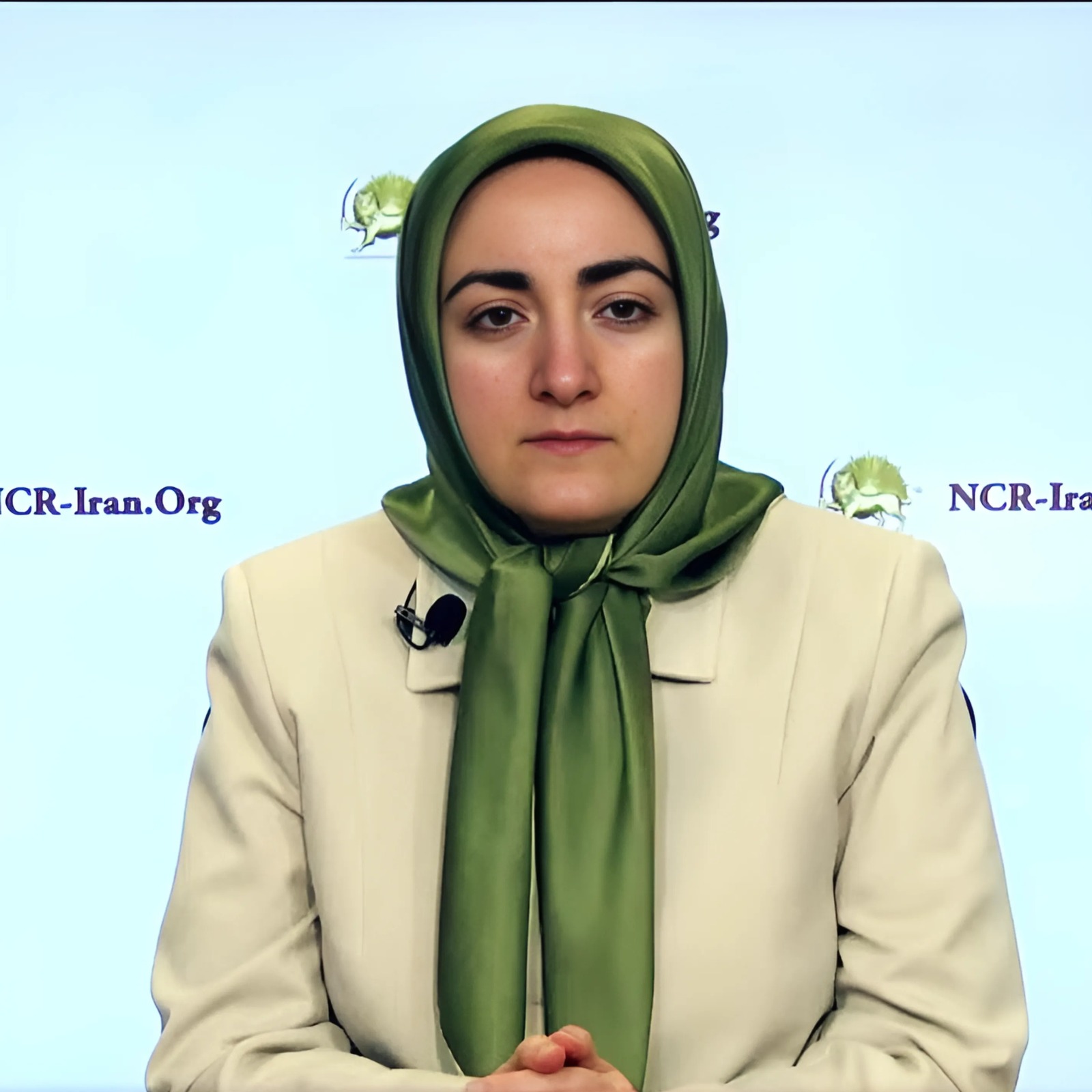
Zolal Habibi

In this powerful episode of The Billy Dees Podcast, Billy sits down with Iranian human rights activist Zolal Habibi for an in-depth and deeply personal conversation about Iran’s past, present, and possible future. Zolal shares her extraordinary journey into activism, shaped by the loss of her father during the 1988 massacre of political prisoners, and explains her work with the National Council of Resistance of Iran (NCRI). The discussion provides crucial context many Americans may not be familiar with, challenging oversimplified narratives about Iran before and after the 1979 revolution and explaining how a popular uprising for freedom was ultimately hijacked by a far more brutal theocratic dictatorship.

The conversation explores the realities of life under authoritarian rule, the failures of both monarchy and the current regime, and why Iranians remain deeply skeptical of foreign intervention while still seeking international solidarity. Zolal outlines the NCRI’s vision for a secular, democratic republic rooted in human rights, gender equality, and the separation of religion and state. She also discusses the Ten-Point Plan championed by Maryam Rajavi, highlighting why women have emerged as a leading force in Iran’s resistance movement and how decades of organized opposition have laid the groundwork for meaningful change from within.

Billy and Zolal also address the urgency of the current moment: widespread protests, brutal crackdowns, internet shutdowns, mass arrests, and executions. They examine what meaningful international support could look like without repeating past mistakes, emphasizing accountability, recognition of the Iranian people’s right to resist tyranny, and an end to policies that embolden the regime. This episode is a sobering yet hopeful look at a generational struggle for freedom, offering listeners rare insight into the resilience of the Iranian people and the real possibilities for a democratic future if the world chooses to stand with them.

These are the sites Zolal Habibi refers to during the interview. maryamrajavi4change.com and ncr-iran.org/en/

Questioning Narratives, Media Power, and Due Process: A Deep Conversation with Filmmaker, Sara Alessandrini

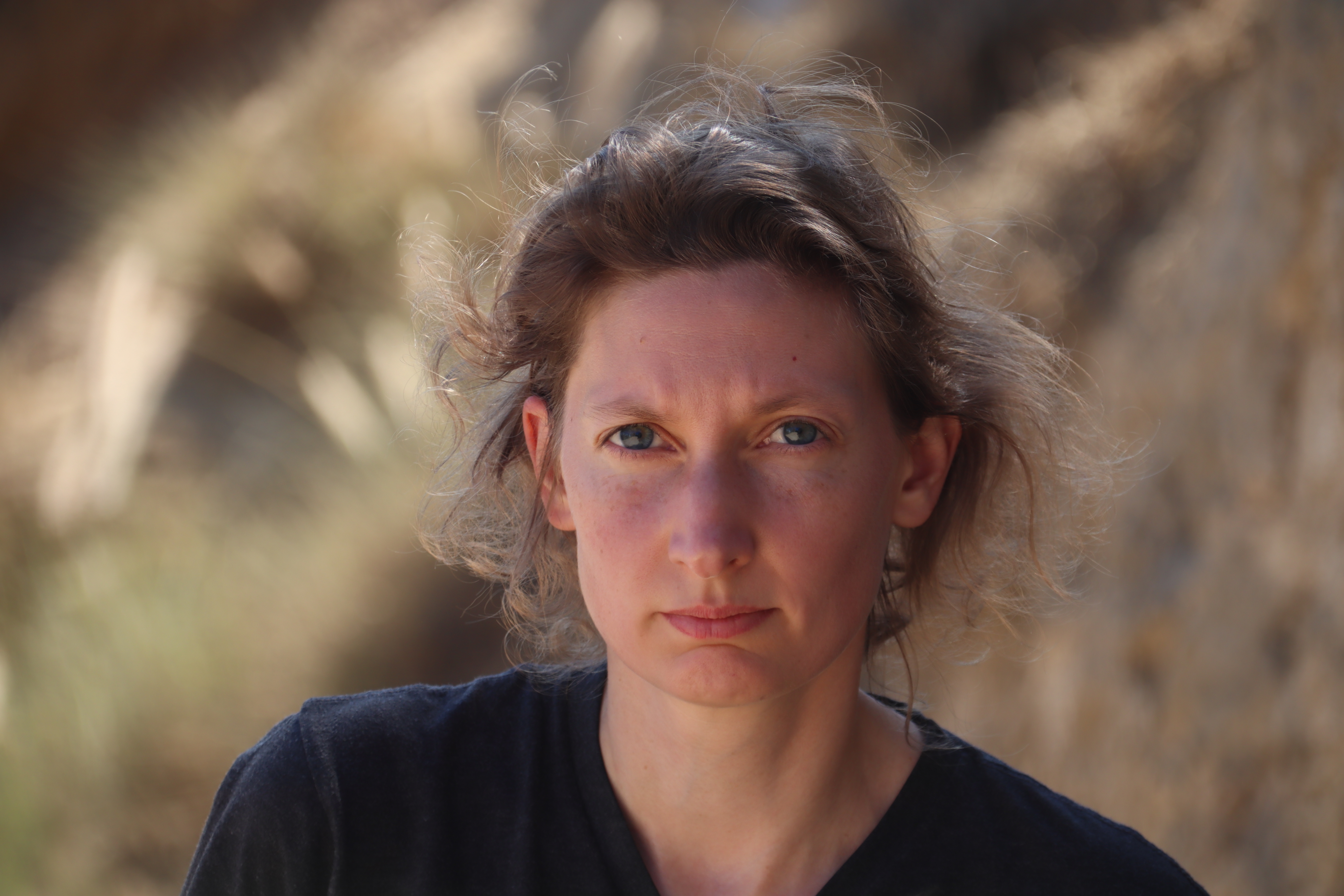
Sara Alessandrini

In this episode of The Billy Dees Podcast, Billy sits down with Italian filmmaker and social commentator Sara Alessandrini for a wide-ranging, thoughtful discussion that cuts to the heart of today’s political and cultural tensions. Sara is the creator of the docu-series This Is What New Yorkers Say, a multi-episode project examining the rise and fall of former New York Governor Andrew Cuomo, the role of legacy media, and the broader consequences of a culture increasingly driven by outrage rather than evidence. What begins as a discussion about one political figure quickly evolves into a much deeper examination of media narratives, public opinion, and the erosion of nuanced discourse.

Sara shares her journey from Italy to the United States, explaining why America’s openness to reinvention, entrepreneurship, and reinvention drew her in. From that international vantage point, she offers a perspective that many Americans rarely hear—one shaped by lived experience in Europe, where government systems, labor protections, immigration policies, and social safety nets often function very differently than how they are idealized in U.S. political debates. Throughout the conversation, she challenges both left- and right-wing orthodoxies, arguing that good intentions do not always lead to good outcomes, especially when long-term consequences are ignored.

At the center of the discussion is Sara’s documentary work on Cuomo and the broader implications of how accusations are handled in the court of public opinion. She raises difficult but necessary questions about due process, the limits of movements like #MeToo, and what happens when standards are lowered to the point where perception outweighs evidence. Billy and Sara explore how media amplification can rapidly transform public figures from heroes to villains, often without space for facts, context, or proportionality. The conversation also expands into topics like political polarization, the breakdown of shared reality, immigration, socialism versus capitalism, and the growing sense that society has lost the ability to have honest, good-faith disagreements.

This episode is not about defending any one politician or ideology—it’s about encouraging critical thinking, resisting manipulation, and reclaiming the ability to ask uncomfortable questions without fear of social exile. Thought-provoking, candid, and at times challenging, this conversation is a must-listen for anyone concerned about the future of media, democracy, and civil discourse. Sara Alessandrini brings a rare blend of intellectual honesty and international perspective, making this a substantive and reflective episode.

At the Crossroads – Lessons from 2025 and the Uncertain Path to 2026

This episode of The Billy D’s Podcast brings back fan-favorite co-host Cynthia Elliott for a wide-ranging, thought-provoking conversation about where we’ve been—and where we’re headed.

Recorded at the end of a turbulent year, Billy and Cynthia reflect on the unpredictability of 2025 and look ahead to what 2026 may hold. With a mix of realism and cautious optimism, they explore the growing sense of unease many people feel, shaped by nonstop news cycles, cultural shifts, and rapid technological change.

At the heart of the discussion is artificial intelligence—its promise, its risks, and its unavoidable impact on jobs, mental health, and society at large. Cynthia draws on her work as an intuitive and founder of the SoulTech Foundation to unpack how AI could drive medical breakthroughs, reshape the workforce, and accelerate the Fourth Industrial Revolution, while also raising serious concerns about unemployment, regulation, and human purpose. The conversation goes beyond technology, touching on universal income, the mental health crisis, and why emotional intelligence and consciousness must evolve alongside machines if society is going to remain stable.

The episode also dives into broader cultural and geopolitical themes, including energy breakthroughs, the new space race, social media burnout, Hollywood’s declining influence, and the growing divide between toxic online narratives and real-world human connection.

Billy and Cynthia don’t shy away from uncomfortable topics—whether it’s political polarization, gender dynamics, or the erosion of community—but they approach them with candor and depth.

The result is a compelling end-of-year conversation that challenges listeners to think critically about the future, their own awareness, and what it will take to navigate the years ahead.

Andrea LeDew – “Polemics – Political Poems and Prose”

Andrea LeDew

In this episode of The Billy Dees Podcast, Billy welcomes author and poet Andrea LeDew, whose new book Polemics: Political Poems & Prose spans nearly a decade of American political history—from 2016 through early 2025. The conversation explores her creative process, her background in law and literature, and the personal experiences that shape her work.

Andrea explains that Polemics began as a way to process political events that felt unsettling or out of step with the American ideals she grew up with. Each poem in the collection is paired with a short explanation of the real-world event that inspired it, turning the book into both a creative and historical meditation. Her work ranges from sharp satire to somber reflection, and she discusses how humor sometimes helps her strip powerful figures of their mystique, while other moments call for a more serious, even foreboding tone.

Billy and Andrea dive into the long tradition of poets responding to political and historical moments, and Andrea shares examples—such as the James Comey “loyalty” episode and Trump’s “lunatic” tweet—that sparked specific poems. They also explore how her opinions on issues like Confederate statues have changed over time, influenced in part by her travels in Europe and a deeper understanding of how symbols are interpreted by different communities.

Beyond politics, the conversation takes a personal turn as Andrea describes raising a son with autism, navigating special education, homeschooling, and the social challenges families often face. She pushes back against misconceptions—especially the false link between vaccines and autism—and emphasizes how little support exists once children age out of school. Her legal background, she says, has played a role in advocating for her son and understanding the broader structural obstacles families encounter.

Andrea also talks about her lifelong love of rhyme and traditional poetic structure, describing it as both a creative discipline and a way to preserve the musicality of language in an age when memorization is rare. She recently completed the painstaking work of recording her audiobook, an experience Billy relates to from his own broadcasting career.

Throughout the episode, listeners are treated to an insightful, thoughtful exchange about writing, politics, history, disability, and the evolving story of America itself. Andrea’s reflections offer not only context for her book but a reminder of how personal and political narratives intertwine.